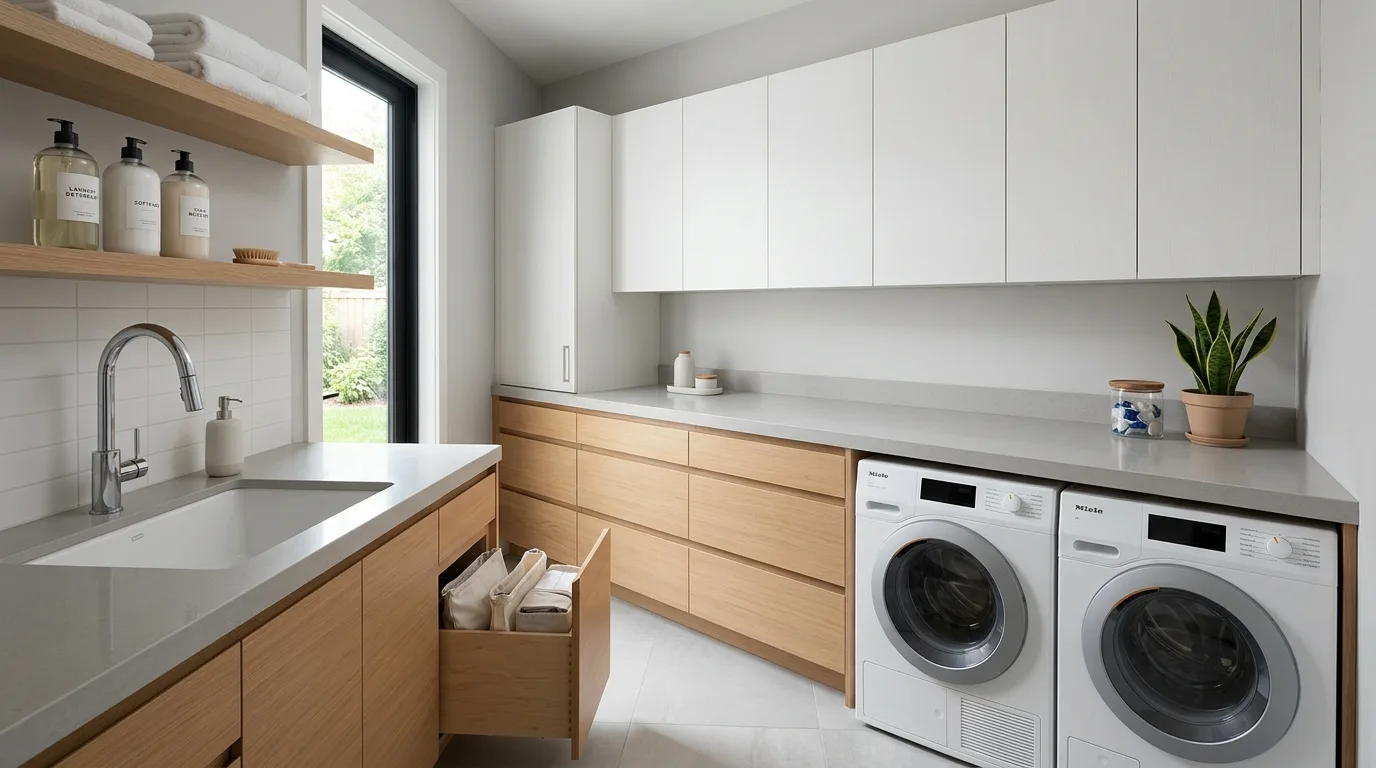
Laundry rooms become frustrating when the space has to do too many jobs without a clear system for where anything belongs. Better organization makes the routine faster, but it also reduces the visual clutter that can make the room feel much busier than it really is.
The most effective systems are built around the actual flow of laundry: sorting, washing, drying, folding, hanging, and putting away. Once the room supports those steps properly, it becomes much easier to keep it neat between loads.
Create a dedicated sorting zone
Sorting becomes easier when the laundry room gives it a defined home instead of making it happen wherever baskets happen to land. A clear sorting zone reduces mess immediately and also makes the rest of the room feel more orderly because the workflow has an actual starting point.
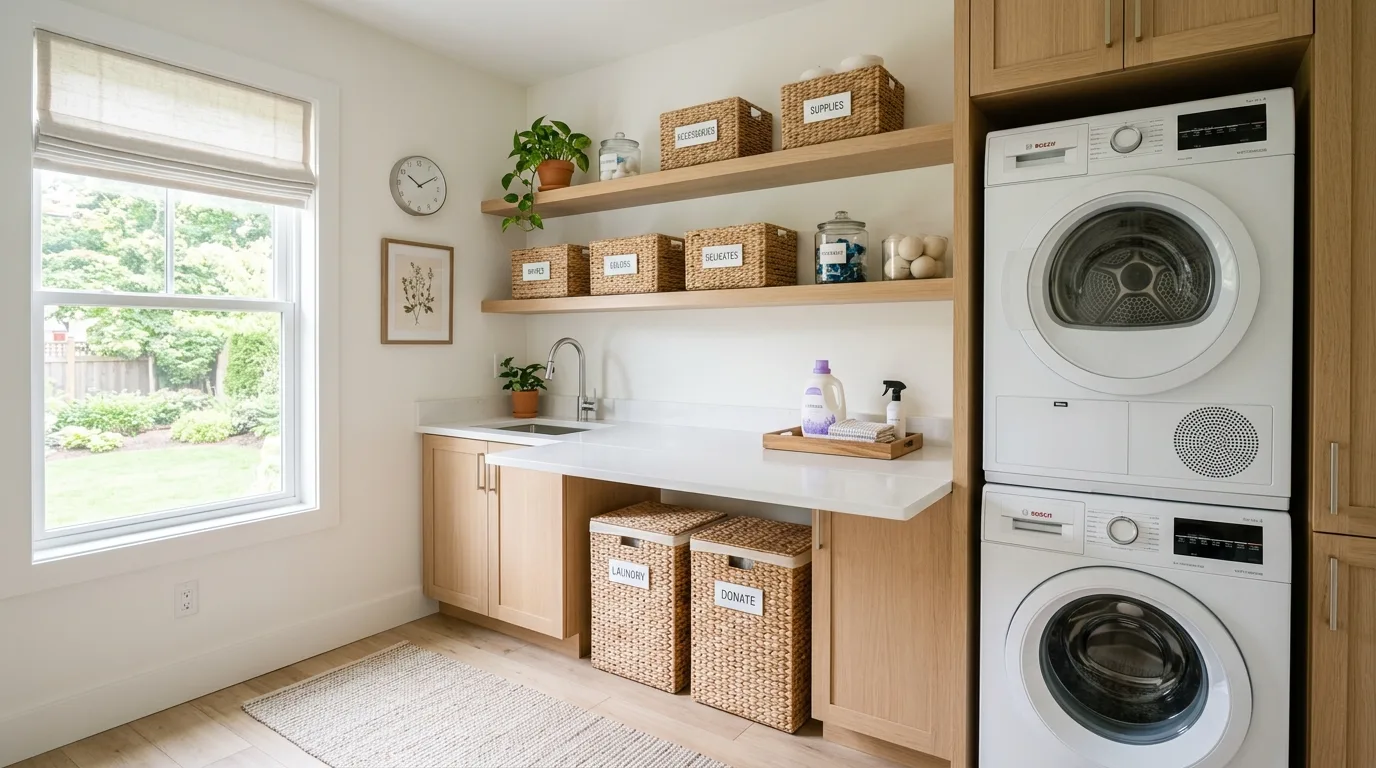
Hide supplies inside better cabinetry
Supplies create a surprising amount of visual clutter in a laundry room, which is why closed storage is so effective there. Once detergent, sprays, cloths, and extras are tucked behind doors or into organized cabinets, the room feels far calmer and more functional day to day.

Keep a folding surface truly usable
A folding surface makes a laundry room significantly more efficient because it gives clean clothes an obvious next step before they start spreading across machines or nearby furniture. Even a modest countertop can improve the routine once it is kept clear and easy to reach.
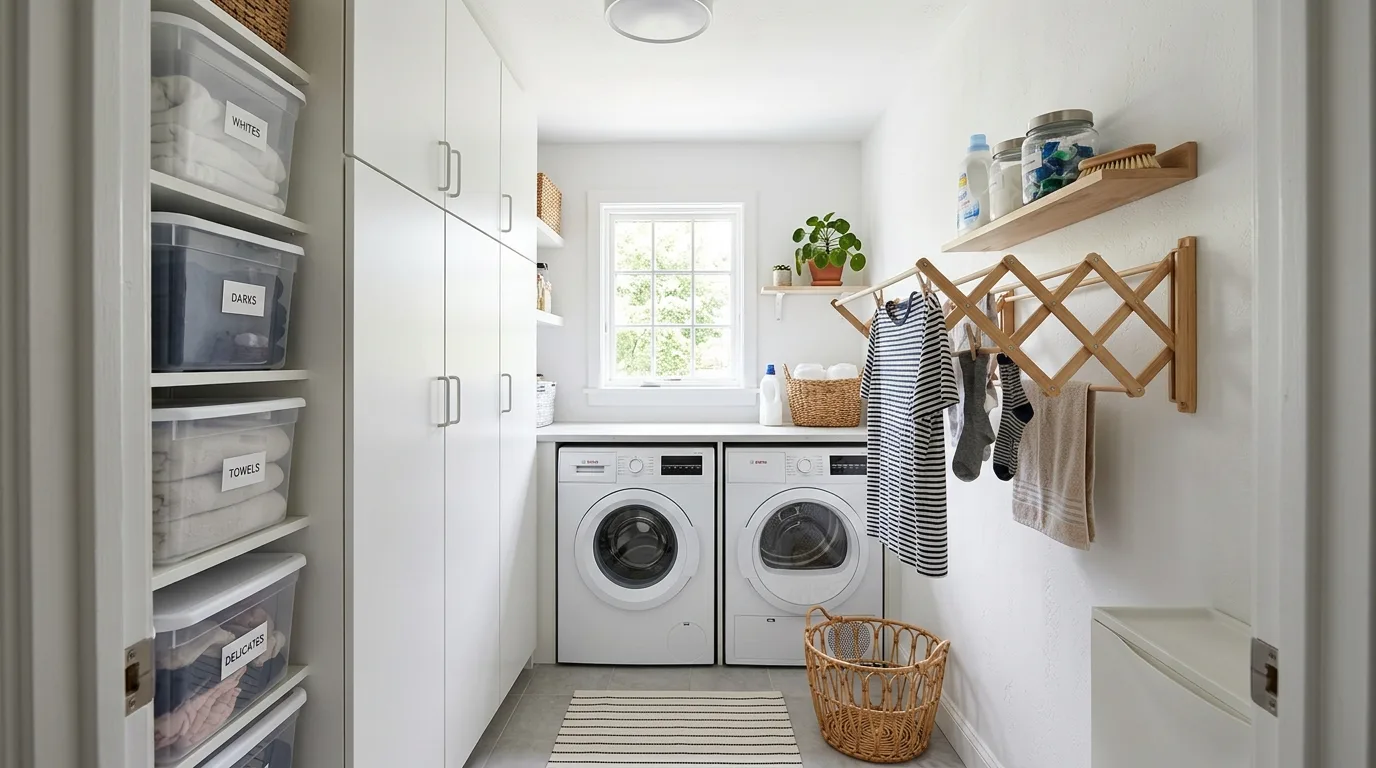
Add hanging space for the next step
Hanging space is one of those laundry room details that feels optional until it becomes immediately necessary. Adding a rod, rack, or wall-mounted option keeps garments from draping across the room and helps the space function as a complete process zone instead of only a machine corner.
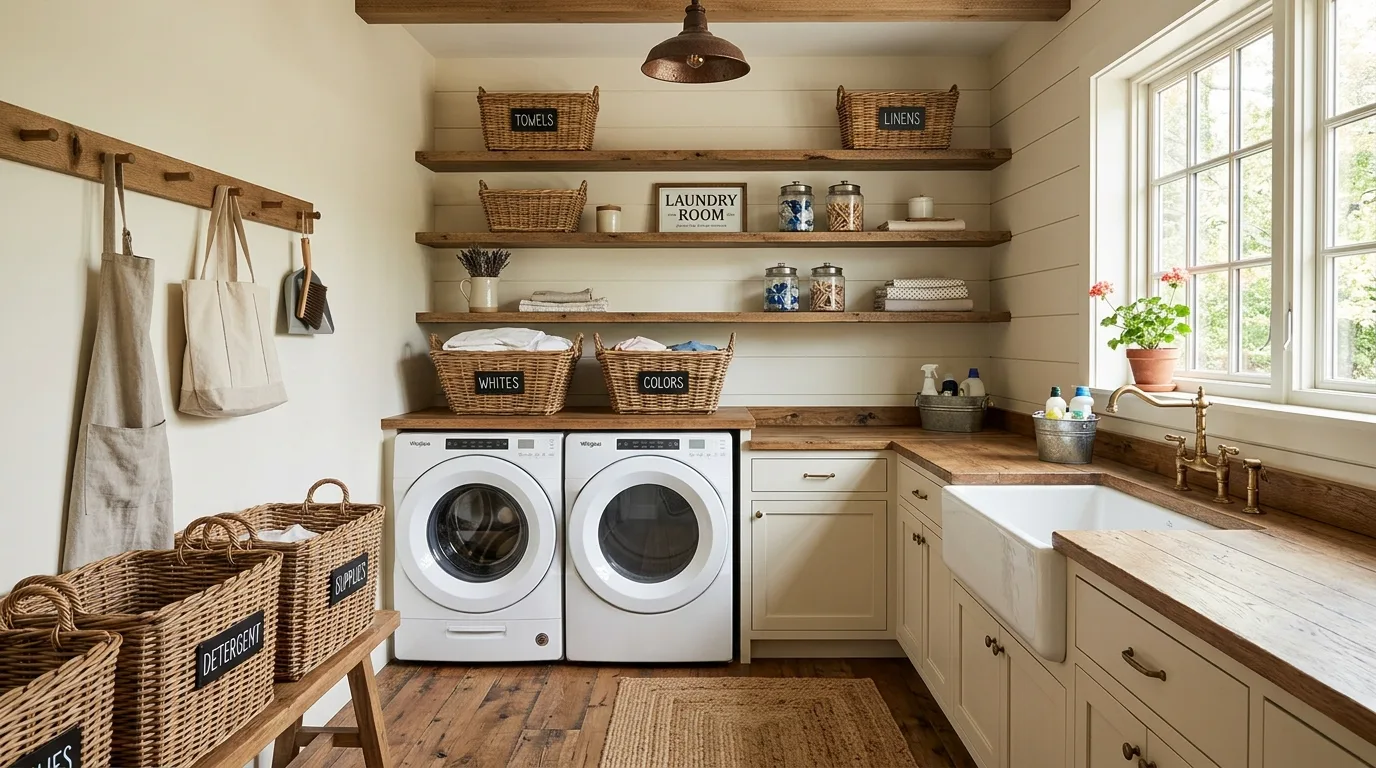
Use bins for separate supply categories
Bins and baskets are especially useful in a laundry room because they separate categories that would otherwise compete for the same limited shelves. They make it easier to keep stain supplies, cloths, dryer items, and overflow sorted without making the room feel too fussy or overmanaged.
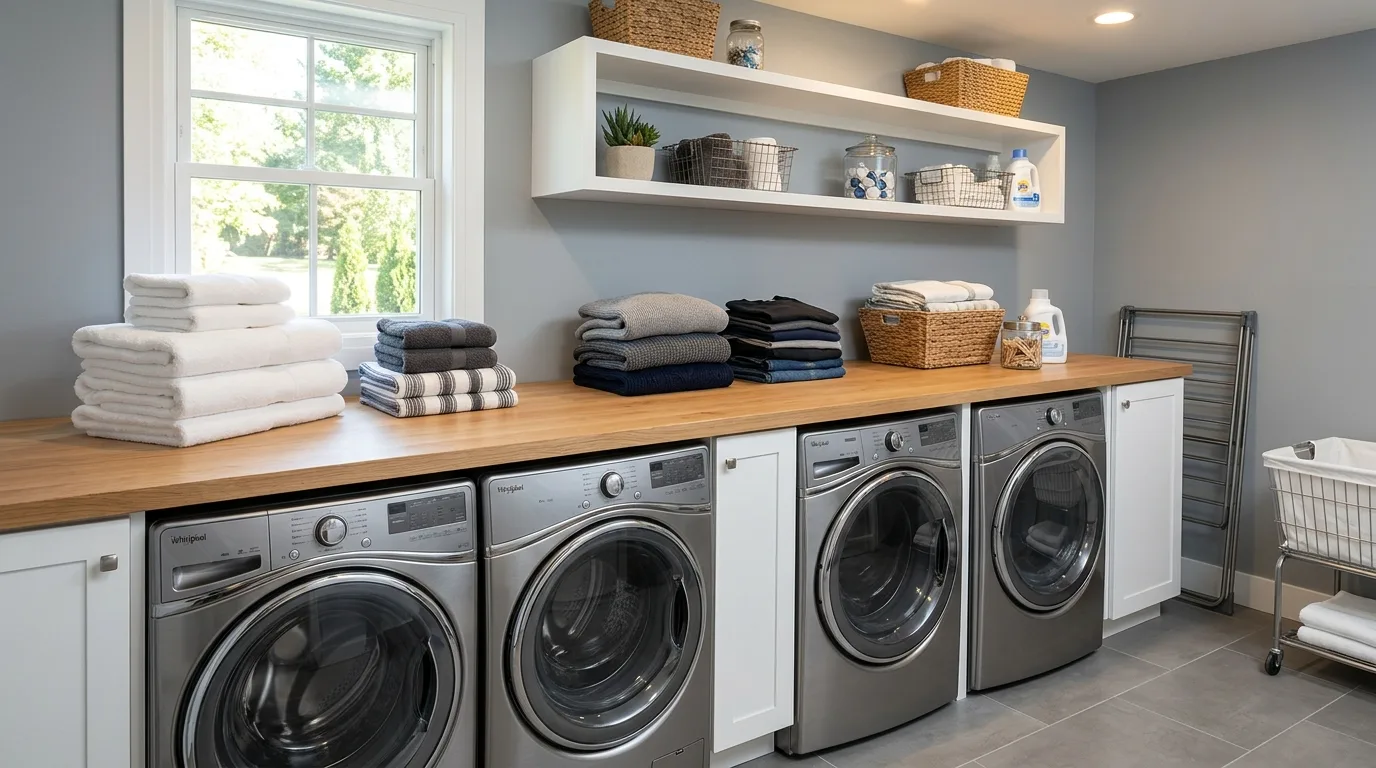
Move more storage onto the wall
Wall storage helps the laundry room stay cleaner because it removes categories from the main work surfaces and puts them into easy reach without taking up more floor space. That one shift usually makes the room feel much less cramped and much more intentional overall.
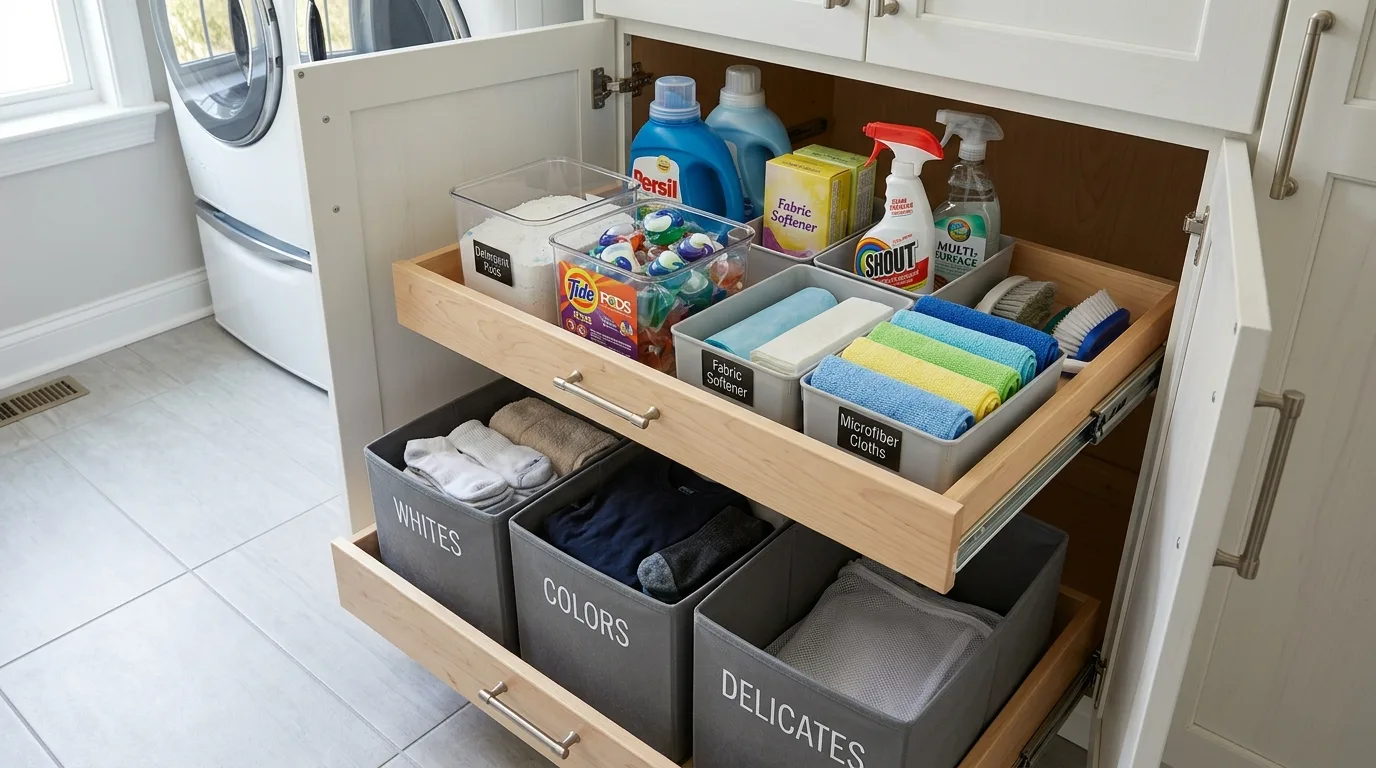
Organize shelves around the laundry routine
A well-used shelf works best when it is organized by actual routine rather than by decorative symmetry. The things you need for each step should be closest to that task, which helps the room feel smoother and cuts down on unnecessary back-and-forth movement.
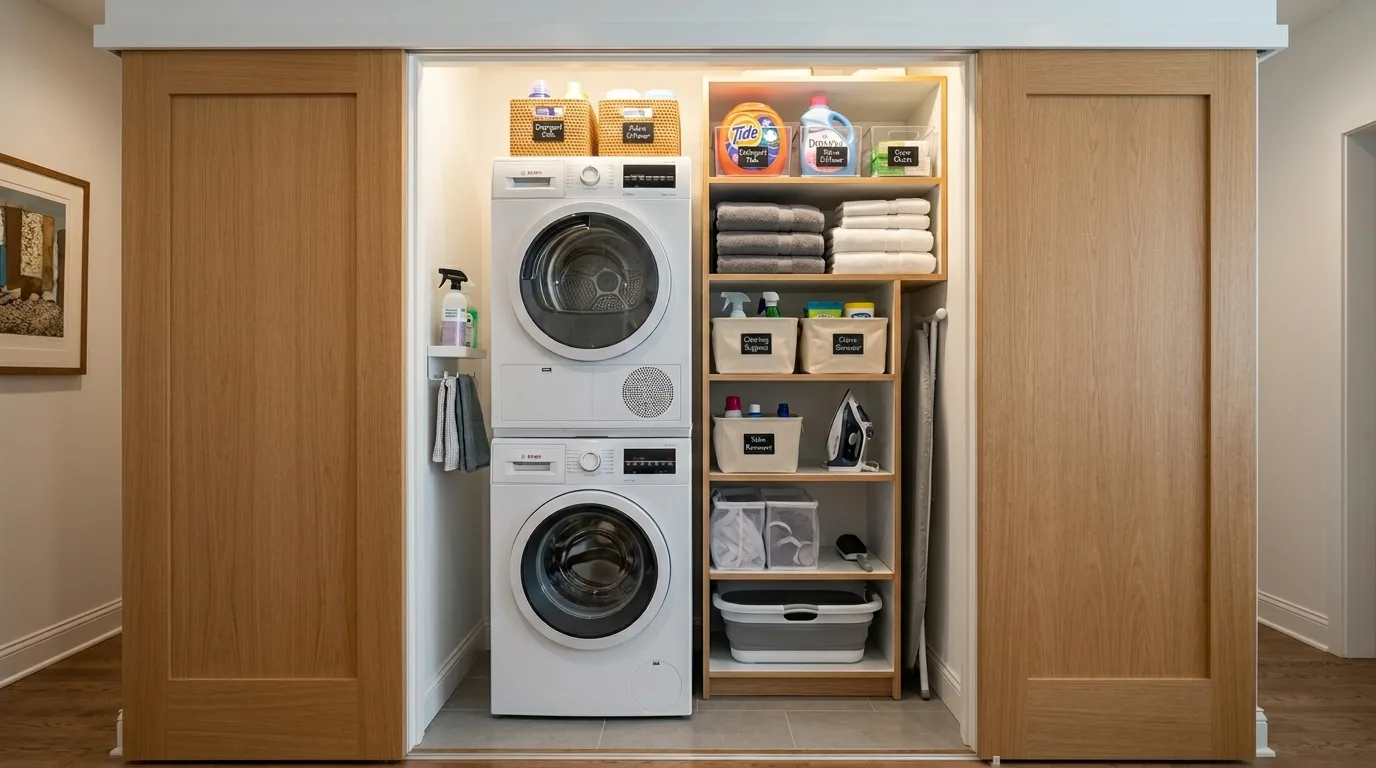
Use hooks to catch the things that drift
Hooks are often one of the smallest changes with the biggest practical payoff in a laundry room. They catch the things that would otherwise end up draped over doors or counters, and they help the room feel more prepared for real use instead of merely tidy in theory.
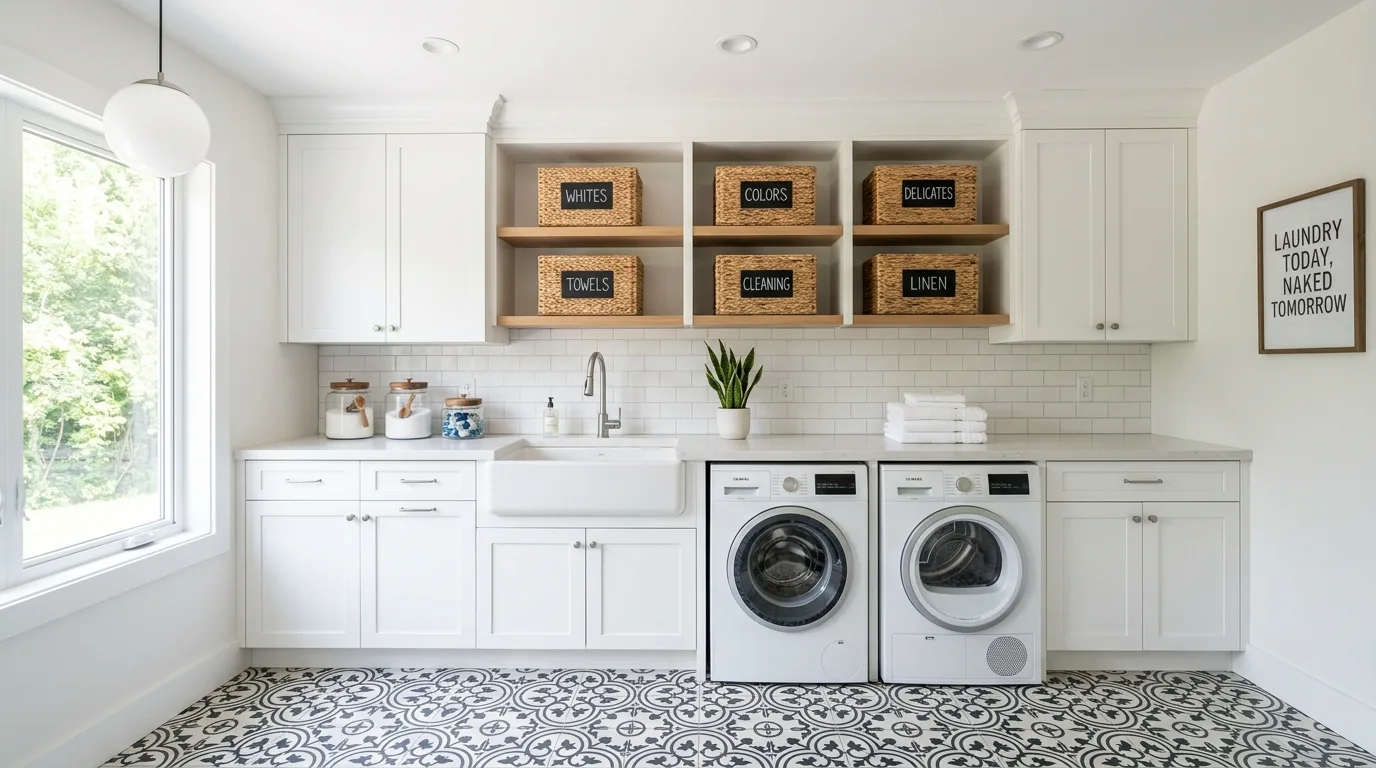
Let light finishes support a cleaner look
Lighter finishes can make a laundry room feel more spacious, but organization is what keeps that brightness from getting lost under clutter. Once shelves, baskets, and surfaces are working well, the room holds onto its cleaner appearance much longer between resets.
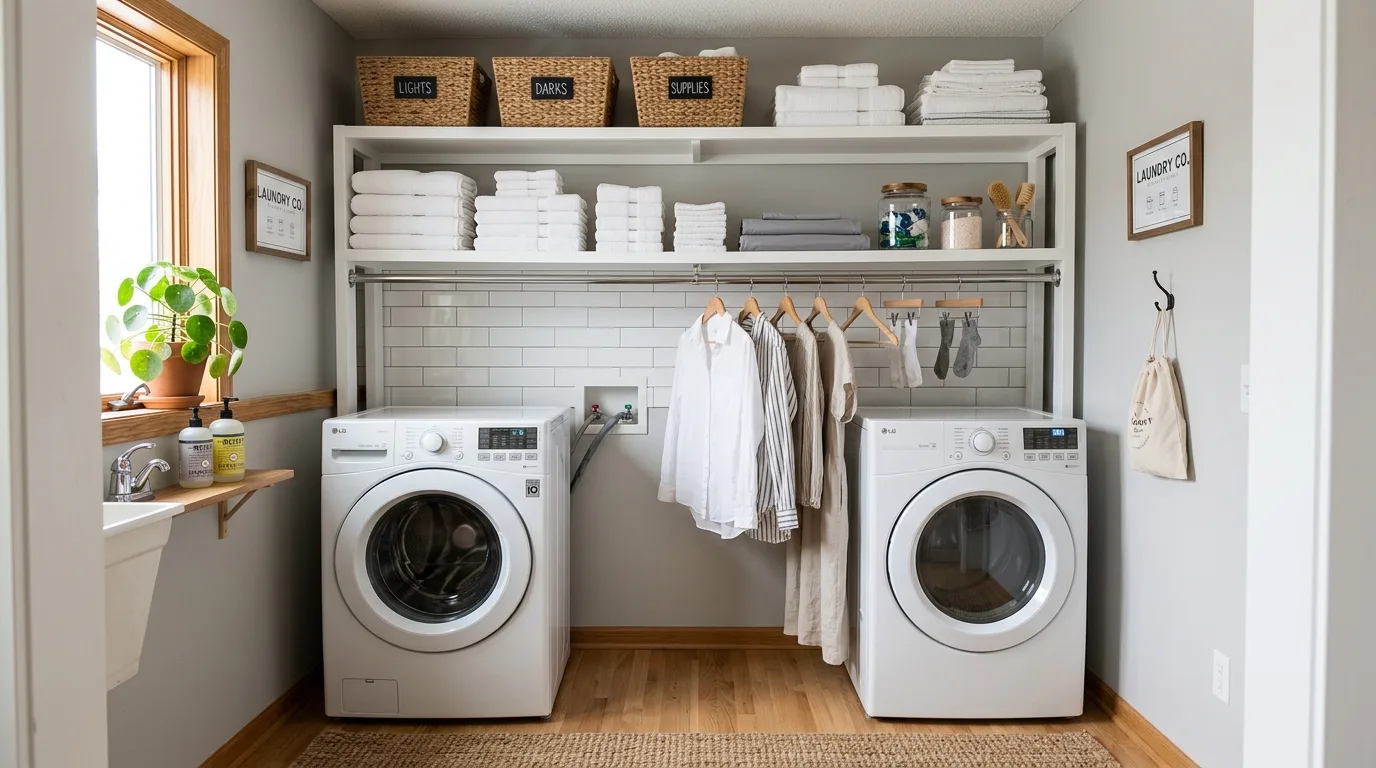
Use lower storage for bulk everyday items
Under-counter or lower-cabinet space becomes much more efficient when it is assigned to practical, high-volume categories instead of functioning as a hidden dumping area. The better those lower zones are structured, the easier the whole room becomes to maintain.
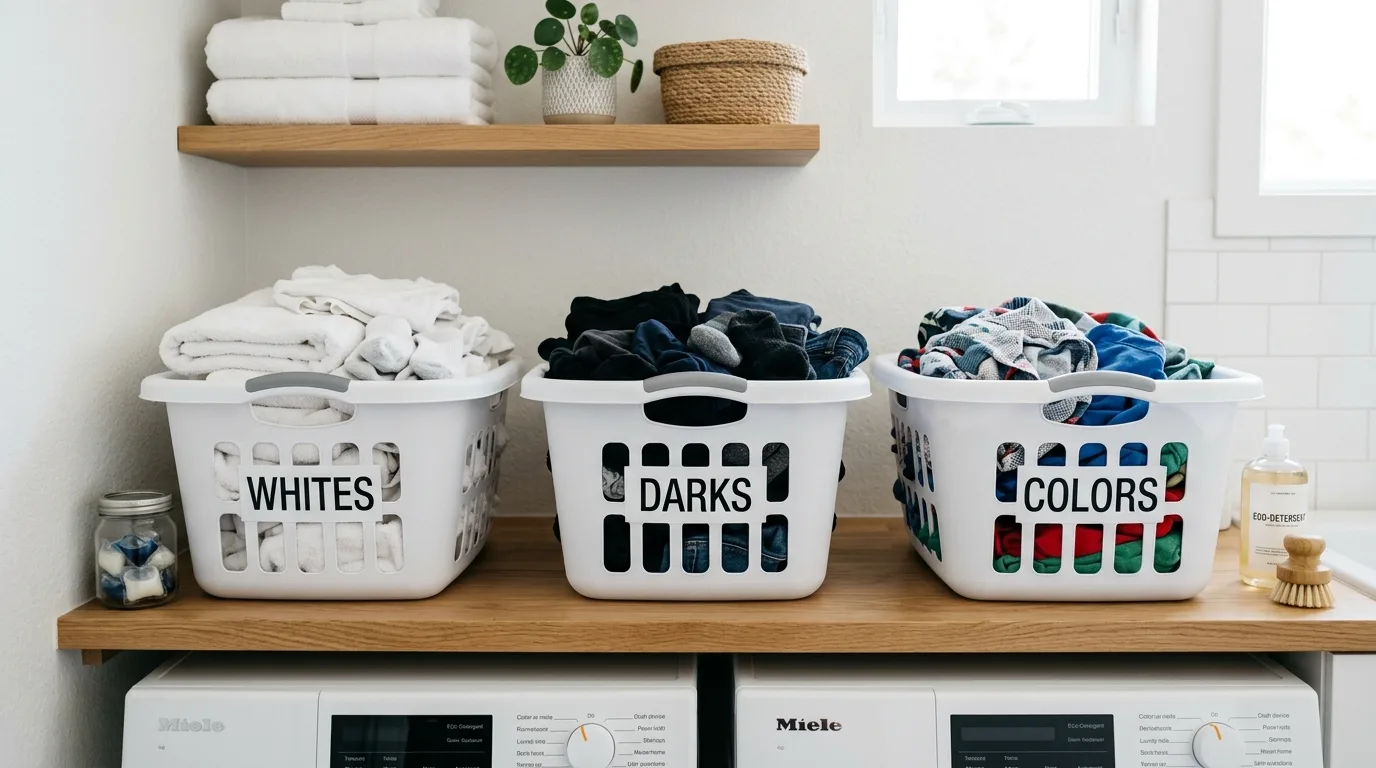
Label containers that tend to get mixed up
Labels can be helpful in a laundry room when more than one person uses the space or when several similar containers sit next to one another. They reduce hesitation and help keep the system consistent, which matters most in rooms that support repetitive household routines.
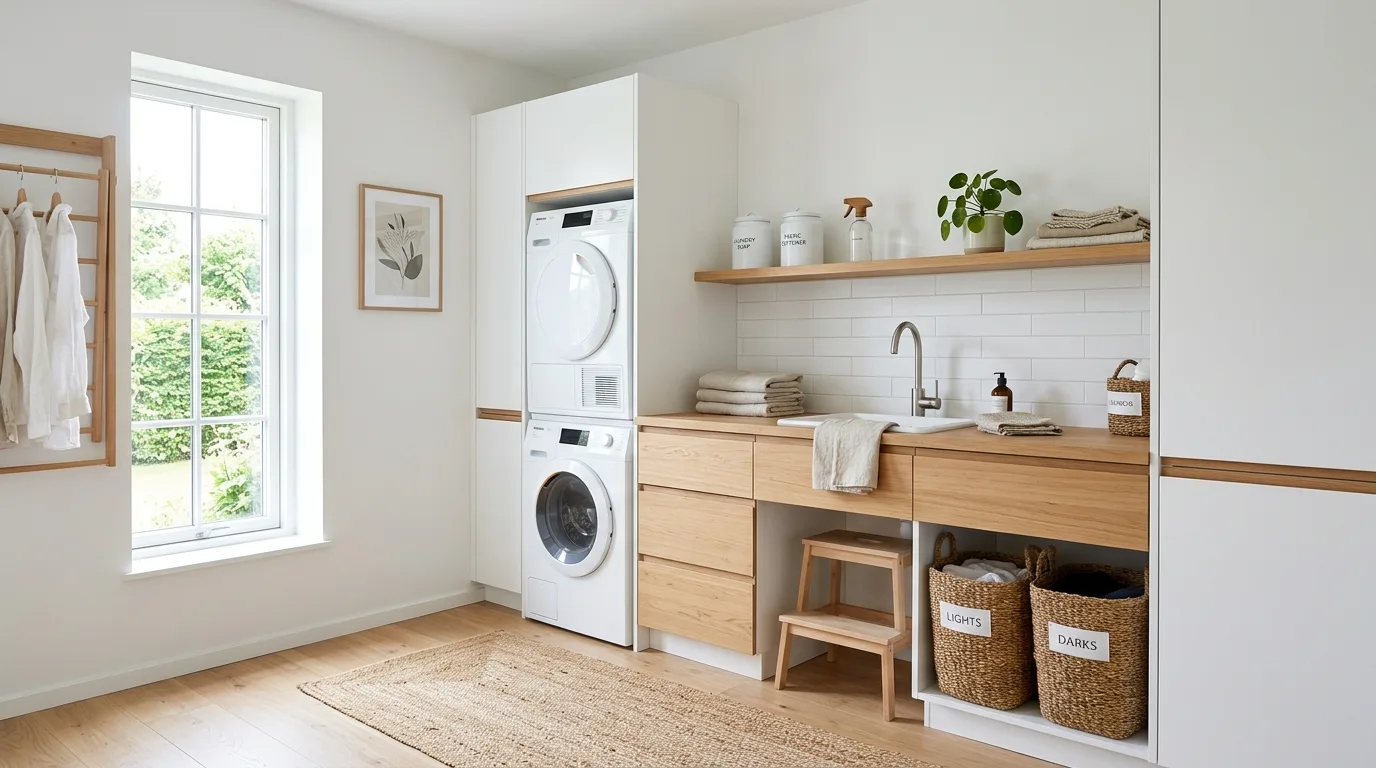
Give air-dry items a clear place to go
Drying racks or air-dry zones need to feel integrated into the room so they are easy to use without taking over it. Once they have a clear place, delicate items stop interrupting the entire space and the room feels more complete in how it handles real laundry needs.
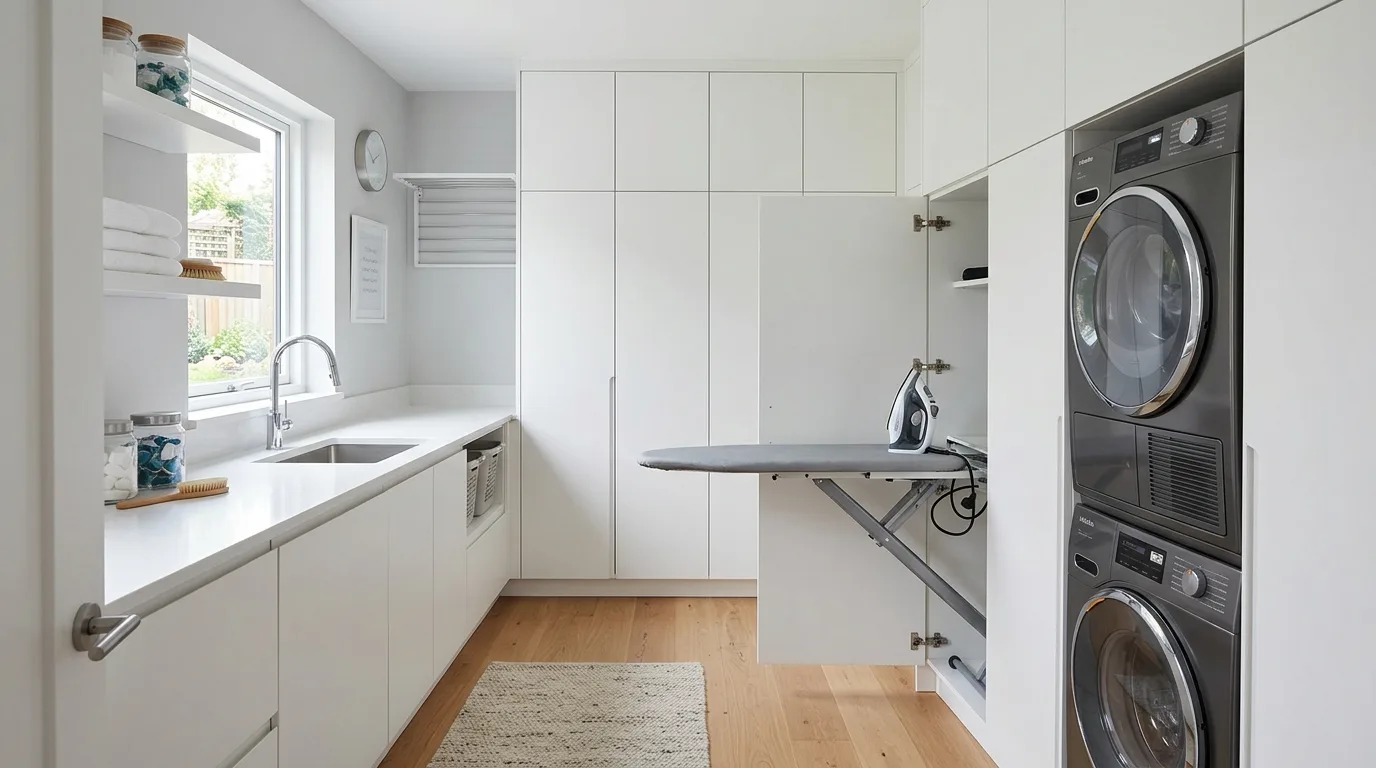
Reduce exposed clutter to protect visual calm
Visual calm in a laundry room comes from limiting what stays exposed at all times. When only the most necessary items are visible and the rest are contained properly, the space feels more polished and far less exhausting to look at while you work in it.
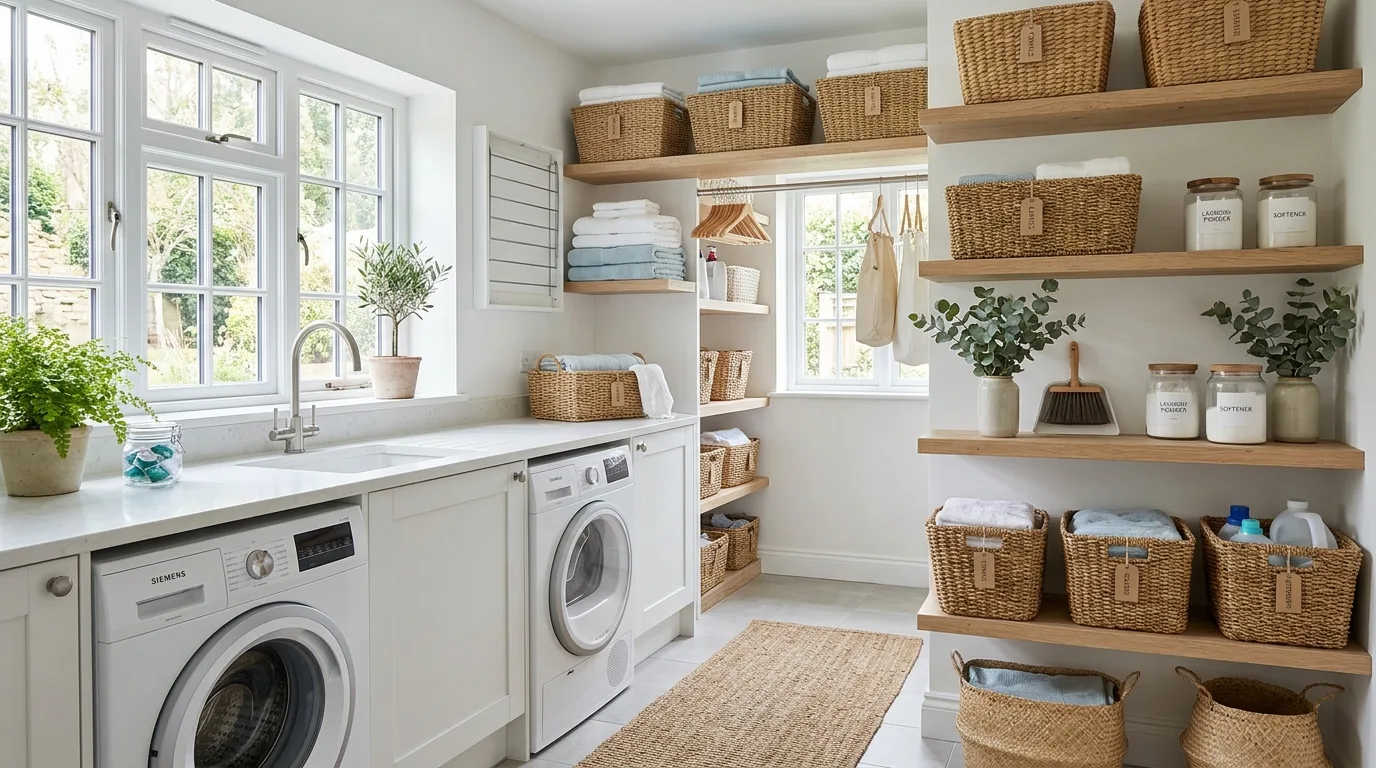
Finish with a room that stays easier to reset
A laundry room stays clutter-free when the system supports what actually happens there every week rather than relying on one big clean-up now and then. Once the room has clear categories, good surfaces, and storage matched to the routine, it becomes much easier to keep in working order.