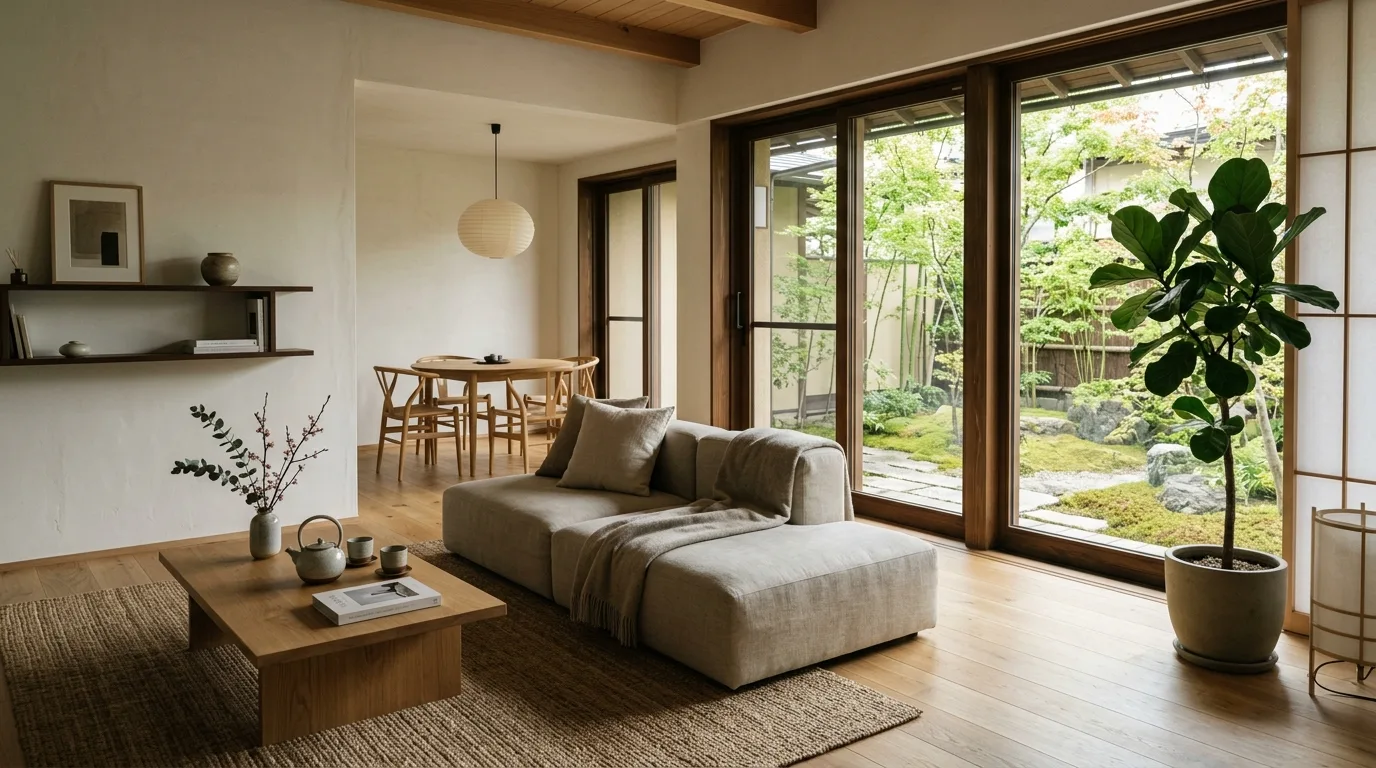
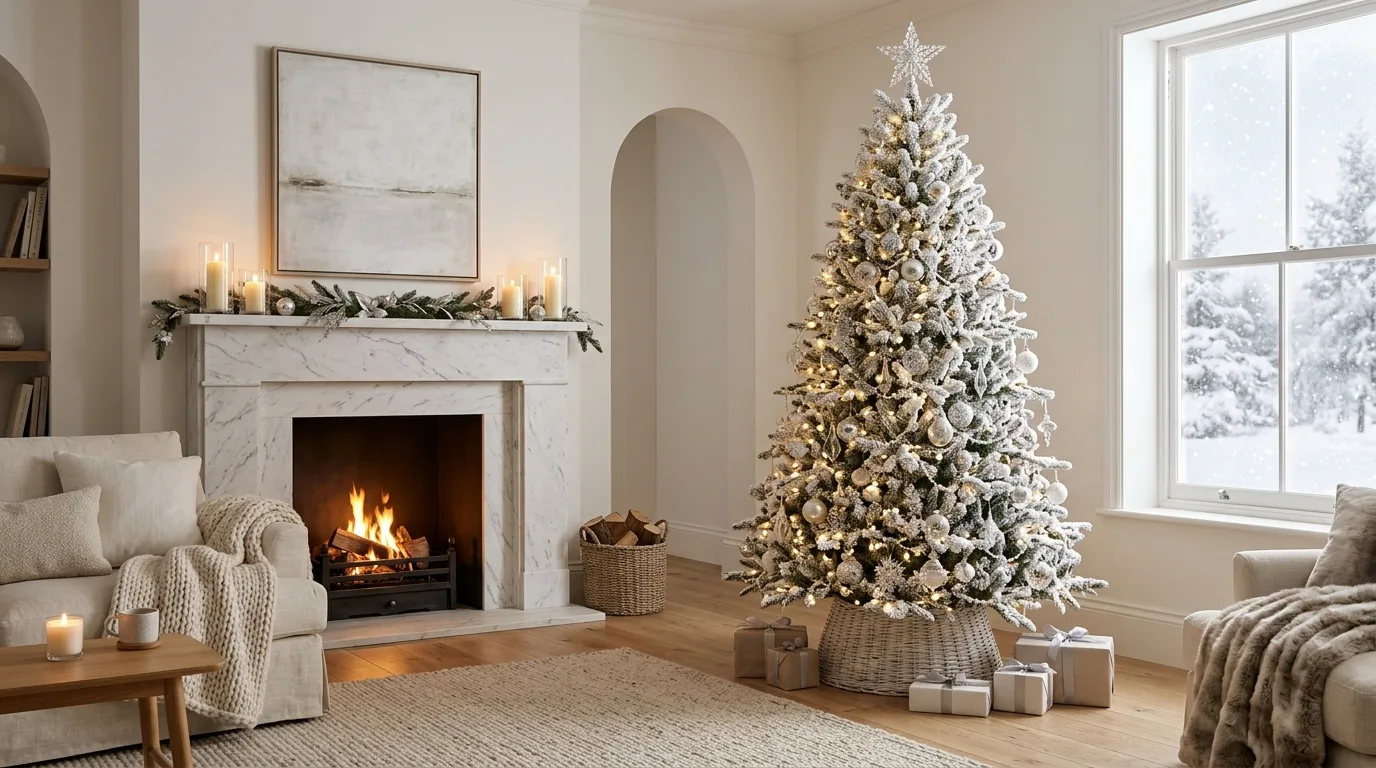
Japandi interiors are most compelling when they feel both disciplined and warm. The style borrows from Japanese restraint and Scandinavian comfort, but the real success comes from how those influences are balanced into rooms that feel peaceful without turning cold or empty.
A calm and balanced home rarely depends on one statement piece. Instead, it emerges from proportion, material, light, and thoughtful editing, all of which make Japandi spaces feel grounded, breathable, and quietly beautiful to live in every day.
Start with a softer low-contrast palette
Japandi interiors usually begin with a palette that feels low in contrast and easy on the eye. Warm whites, oat tones, sand, muted gray, soft charcoal, and natural wood all help the home feel settled, which is essential for creating the calm that this style is known for.
Choose furniture with clean but gentle lines
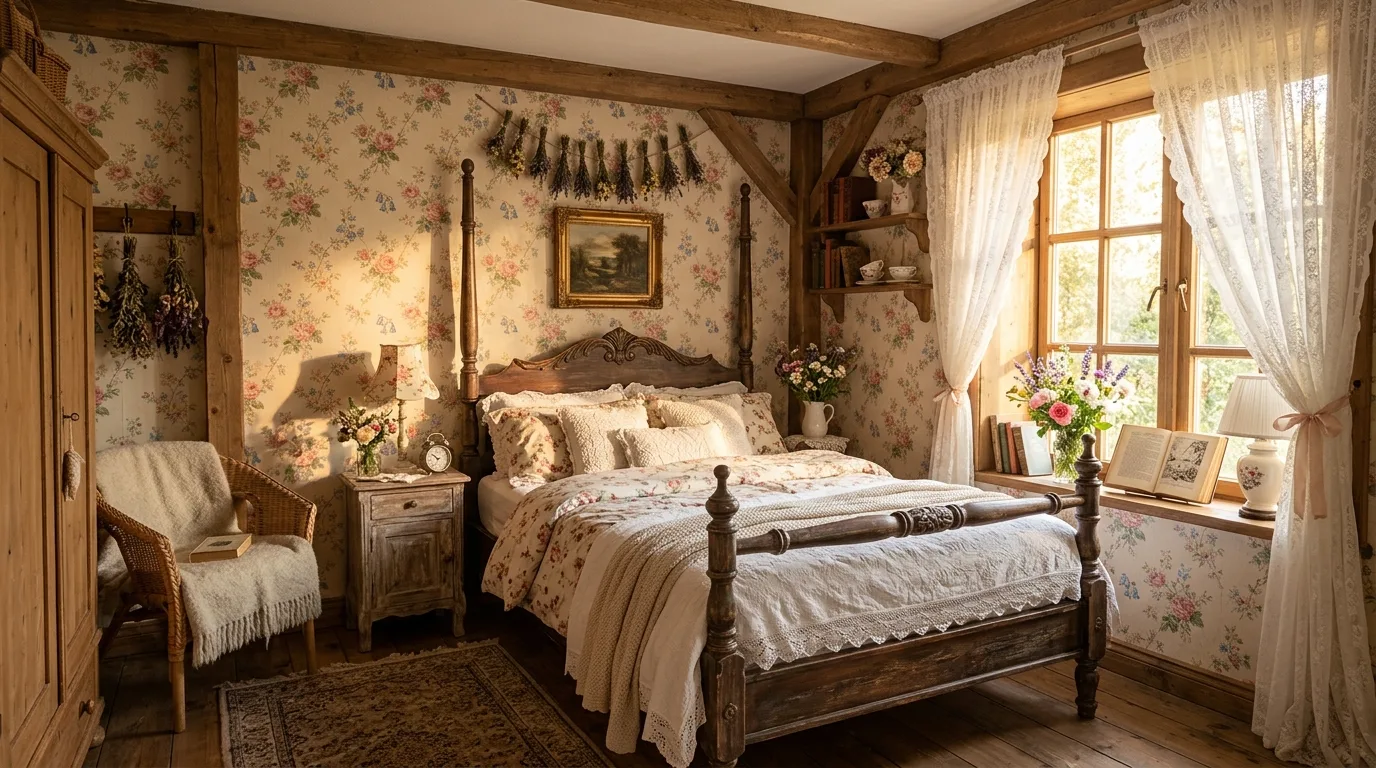
Furniture in a Japandi home works best when the shapes are clean but not severe. Low profiles, softened edges, and quietly sculptural silhouettes make the space feel intentional while still leaving enough warmth for the rooms to feel comfortable rather than strict.
Let natural wood carry the warmth
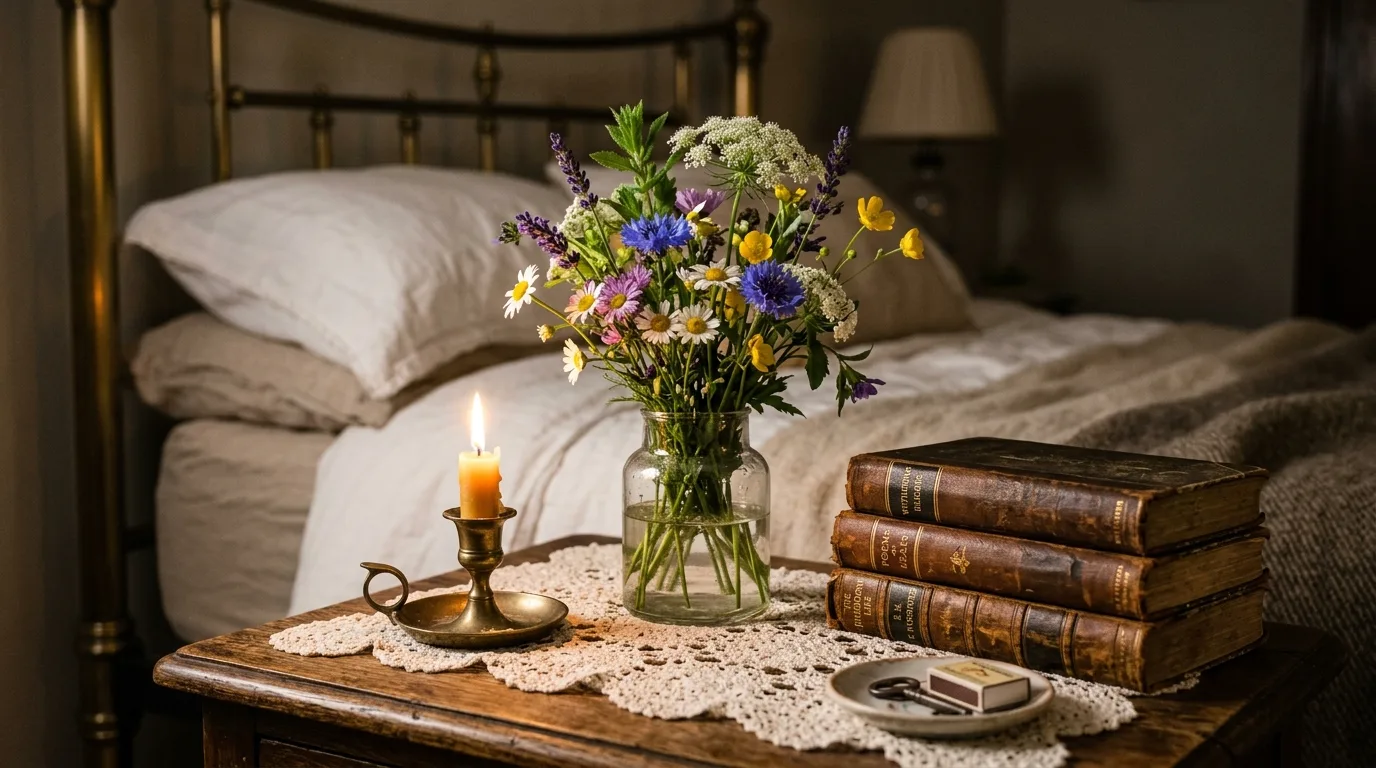
Wood is one of the most important materials in Japandi interiors because it carries much of the emotional warmth of the style. When tones stay natural and grain is allowed to remain visible, the home feels more grounded and connected to material honesty.
Protect negative space instead of filling it
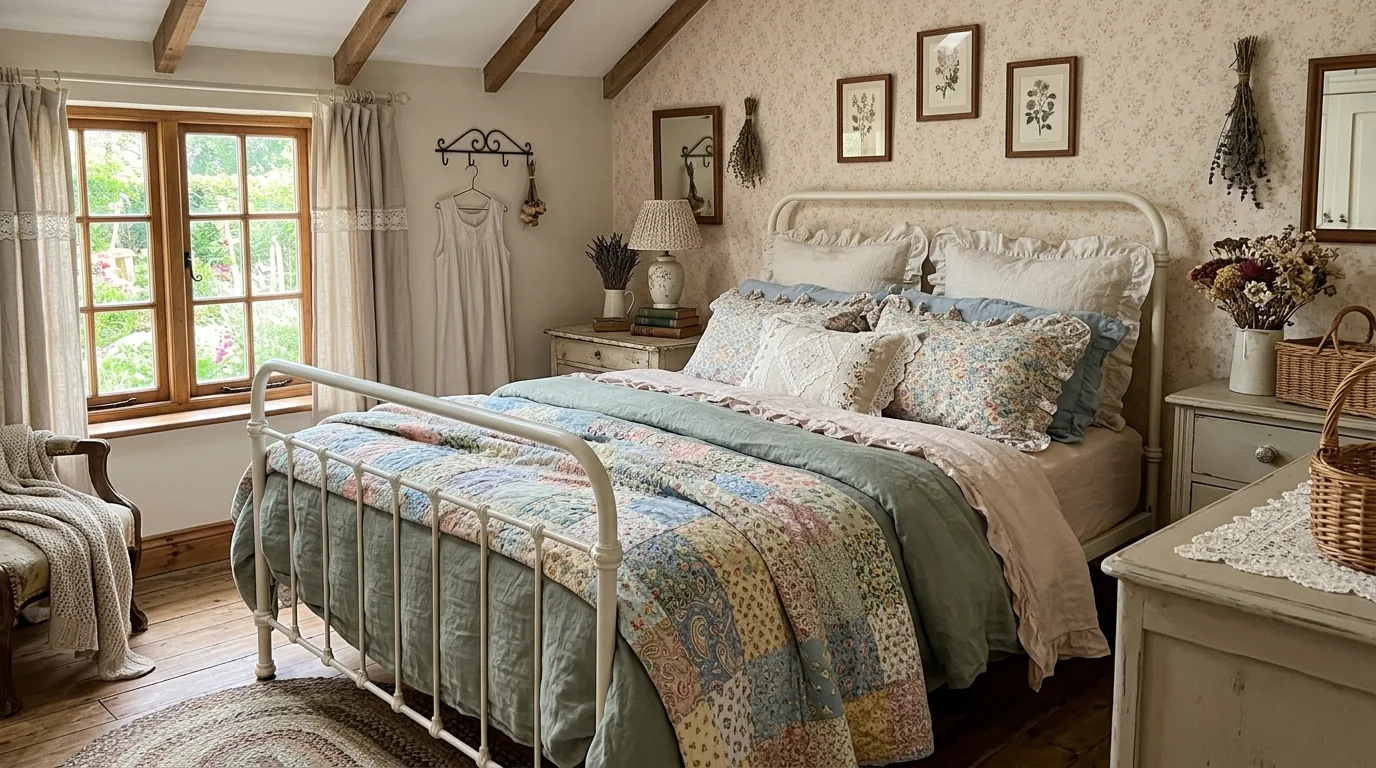
Negative space matters in Japandi design because emptiness is not treated as something that needs to be filled. Open surfaces, breathing room around furniture, and quieter walls all help the eye rest, which is part of what makes the home feel balanced and restorative.
Use textiles to soften restrained rooms
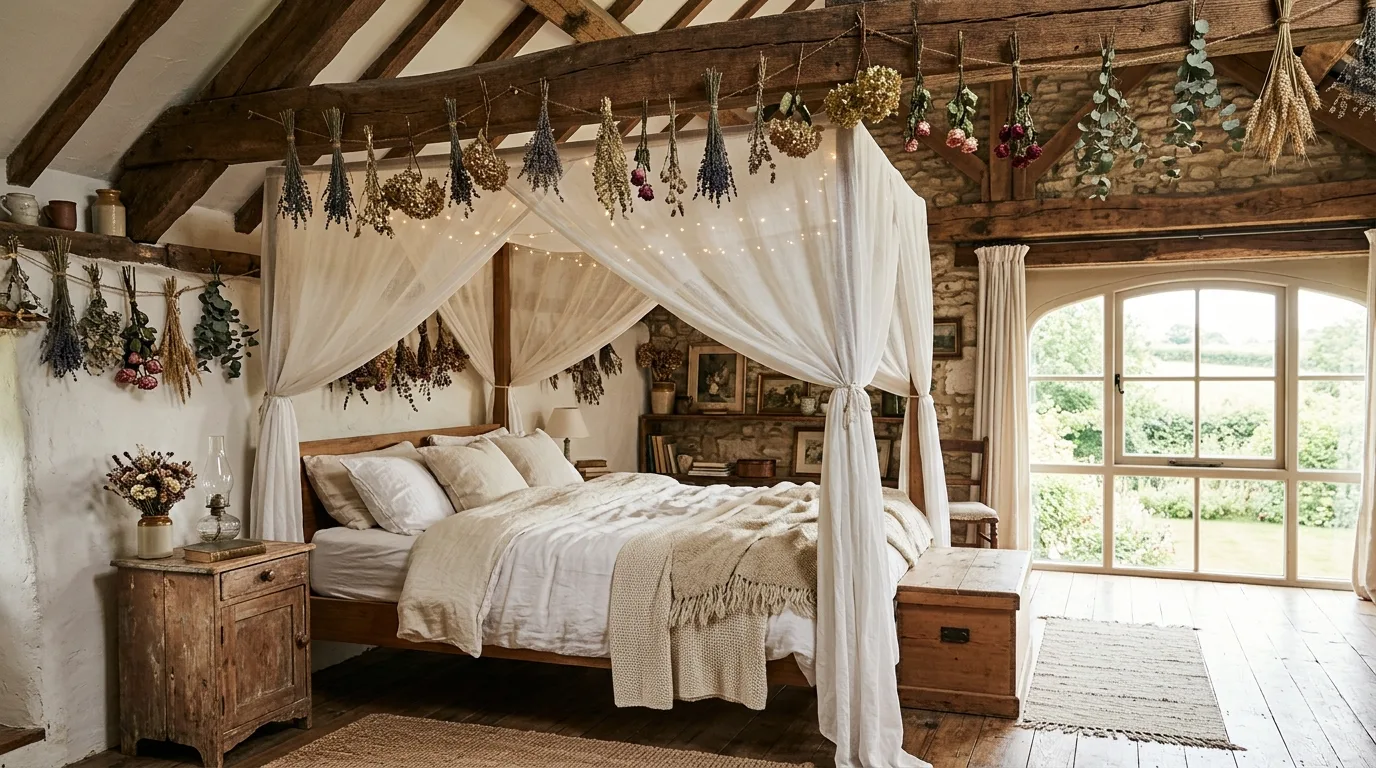
Textiles keep Japandi rooms from feeling too bare by adding softness where architecture and furniture stay more restrained. Linen, wool, cotton, and woven fibers bring depth through texture rather than through busier pattern, which fits the style much more naturally.
Keep the lighting diffused and calm
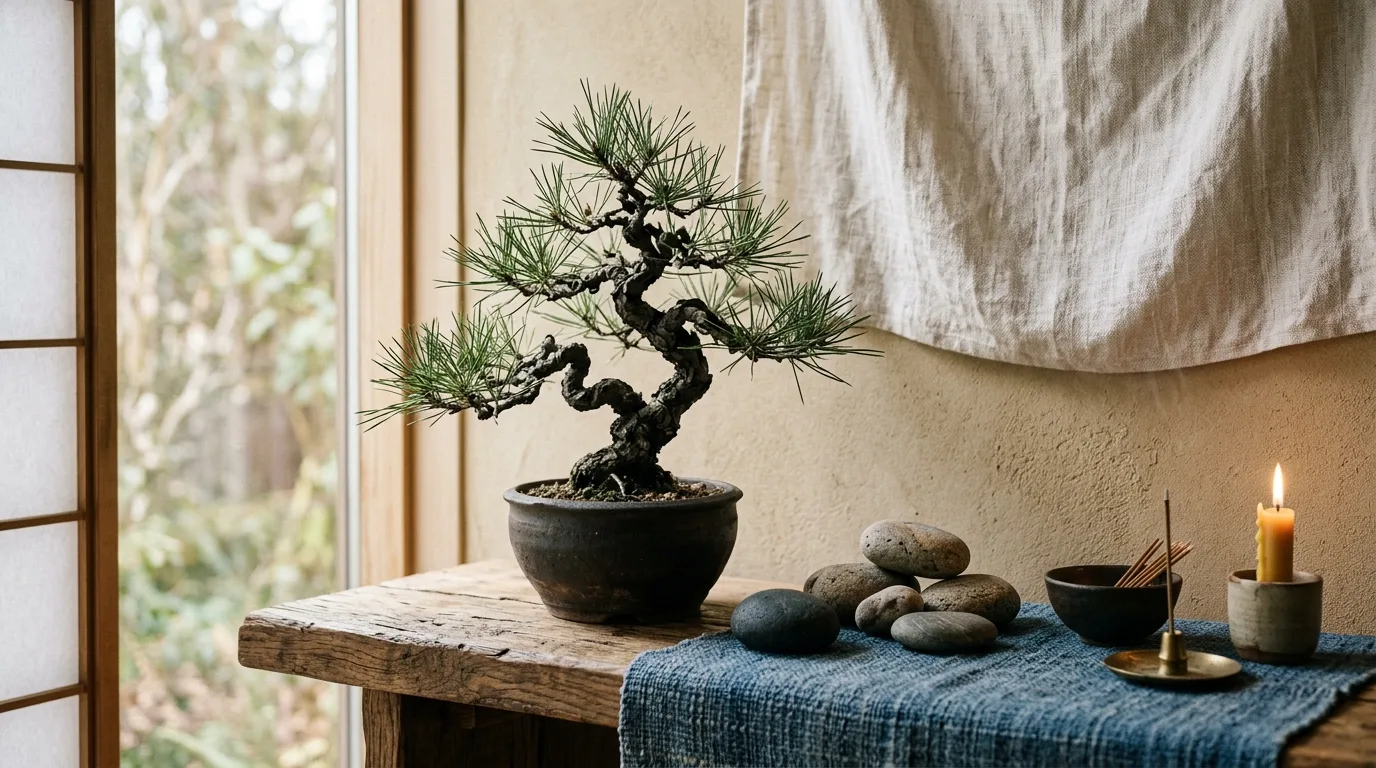
Lighting should feel diffused and calm in a Japandi interior because strong glare can disturb the serenity the rooms are trying to create. Lamps with soft shades, paper-inspired forms, and warmer evening light all help the home feel more meditative and welcoming.
Edit decor down to fewer better objects
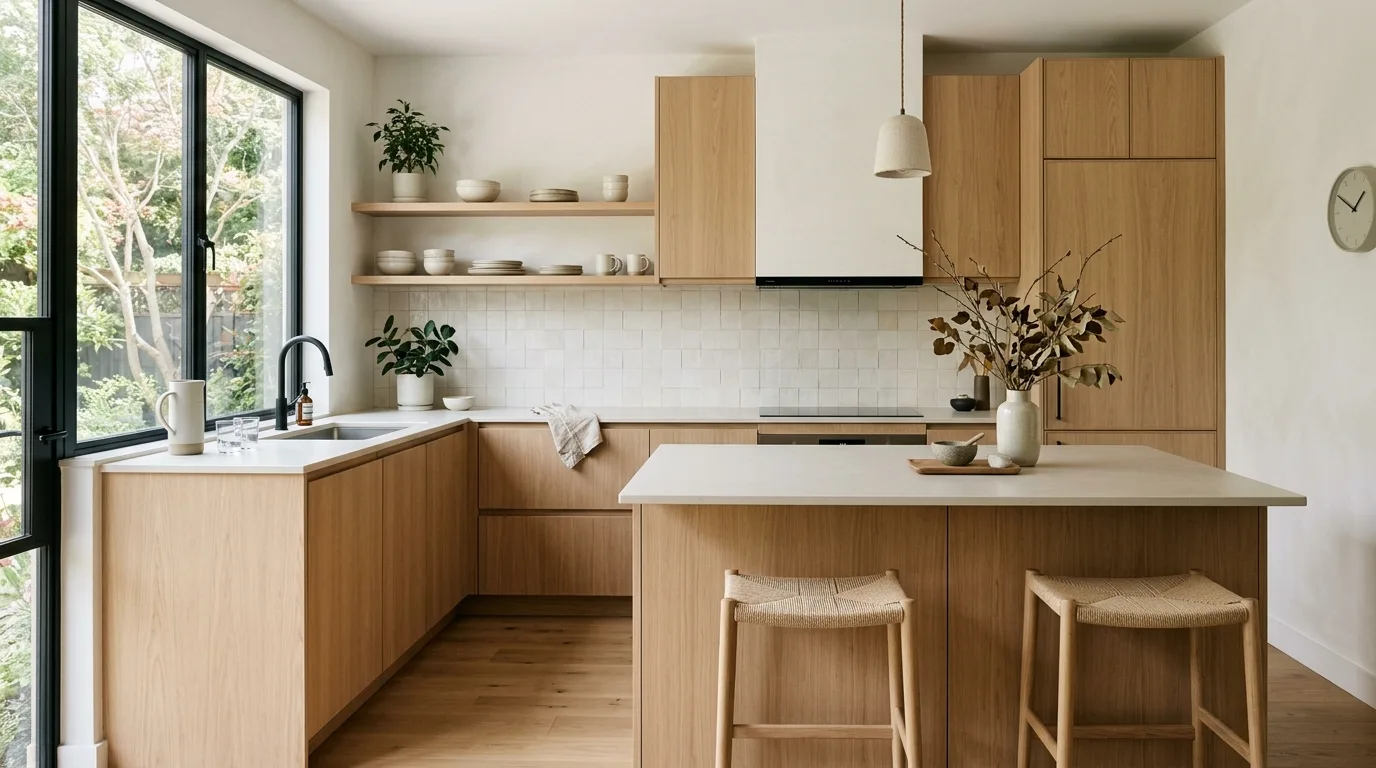
Decor should stay selective in Japandi spaces because too many objects weaken the clarity that makes the style so appealing. A few strong ceramics, branches, books, or handmade vessels usually say more than shelves crowded with accessories ever could.
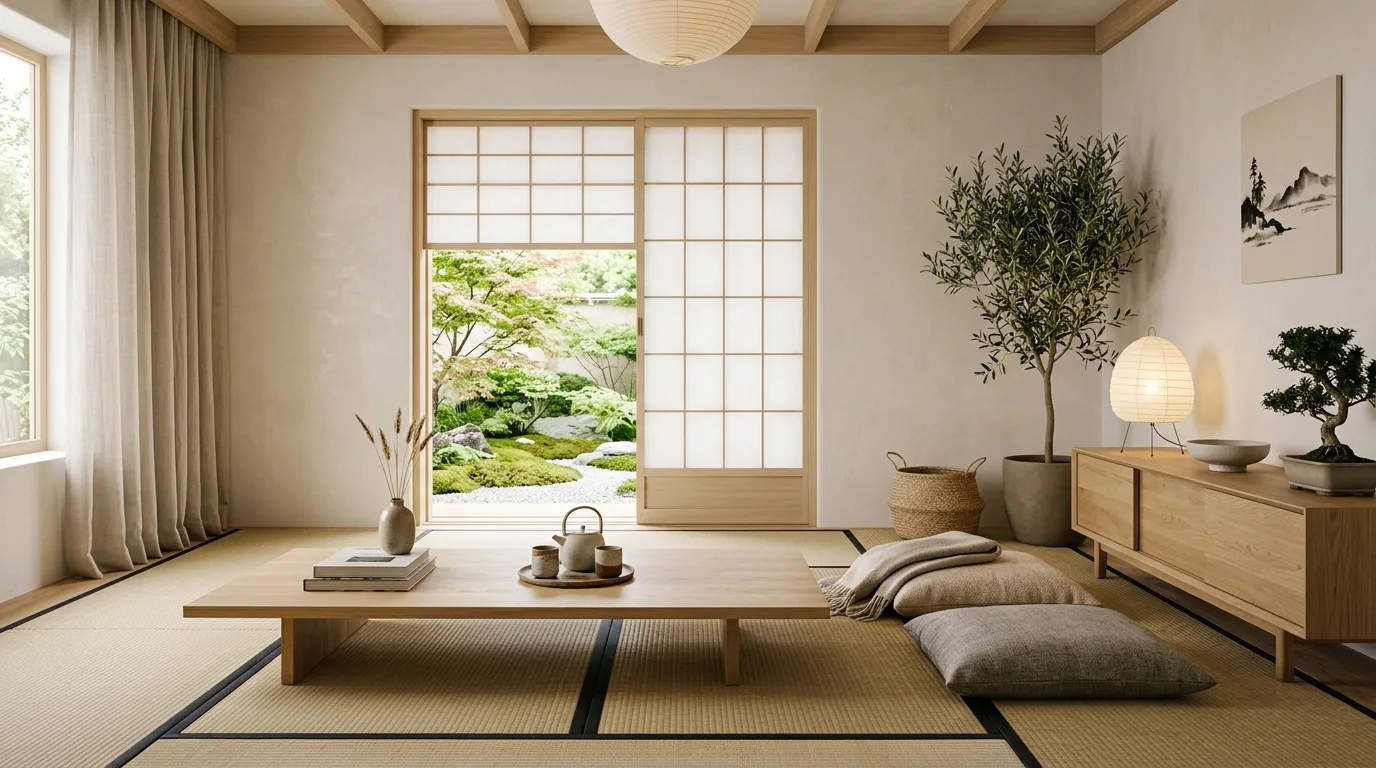
Rely on natural materials for depth
Natural materials are what keep Japandi interiors from becoming abstract exercises in minimalism. Stone, clay, wood, paper, linen, and soft plant life all bring sensory richness into the rooms so they feel lived in, not merely visually disciplined.
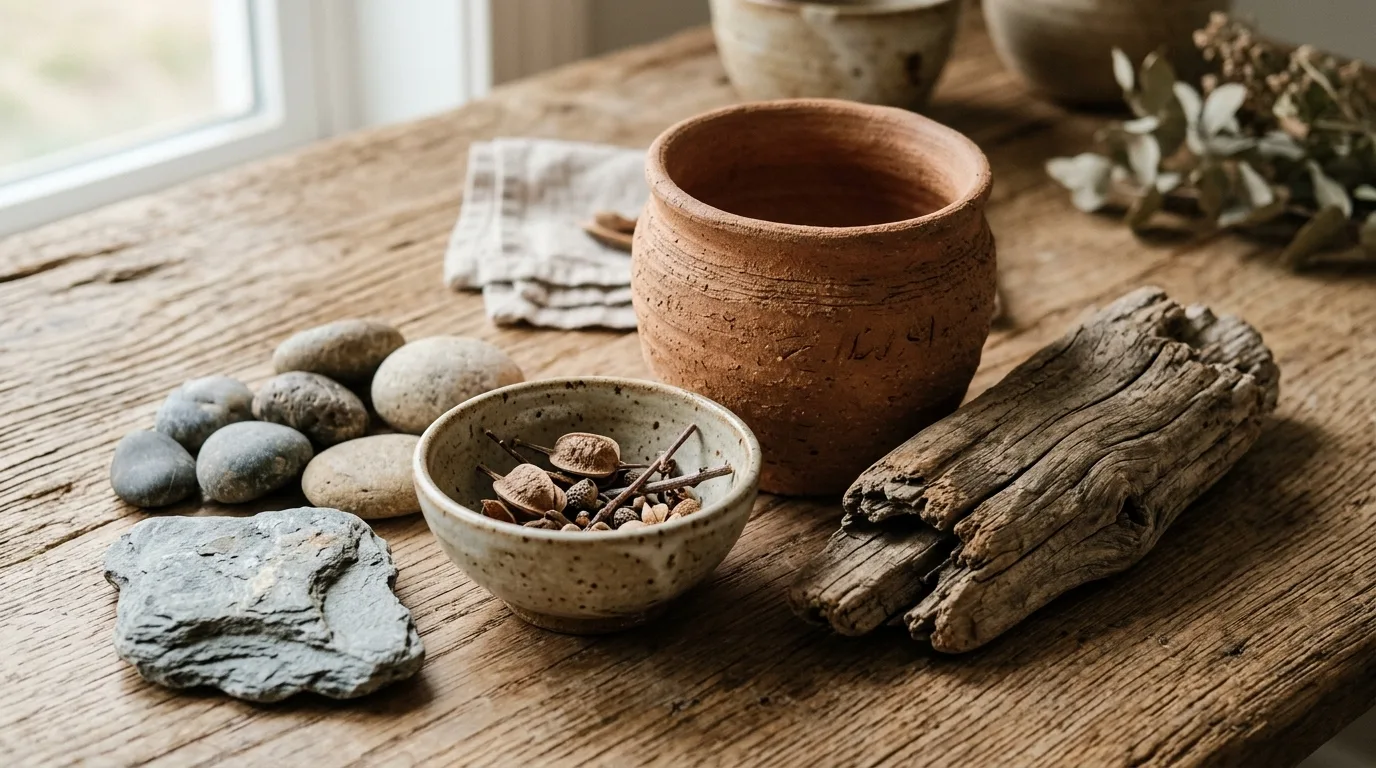
Hide storage so the rooms can breathe
Storage needs to disappear as much as possible in this style because visual clutter breaks the sense of calm very quickly. Hidden cabinetry, cleaner shelving, and tighter everyday systems help the rooms stay open and balanced even during ordinary daily use.
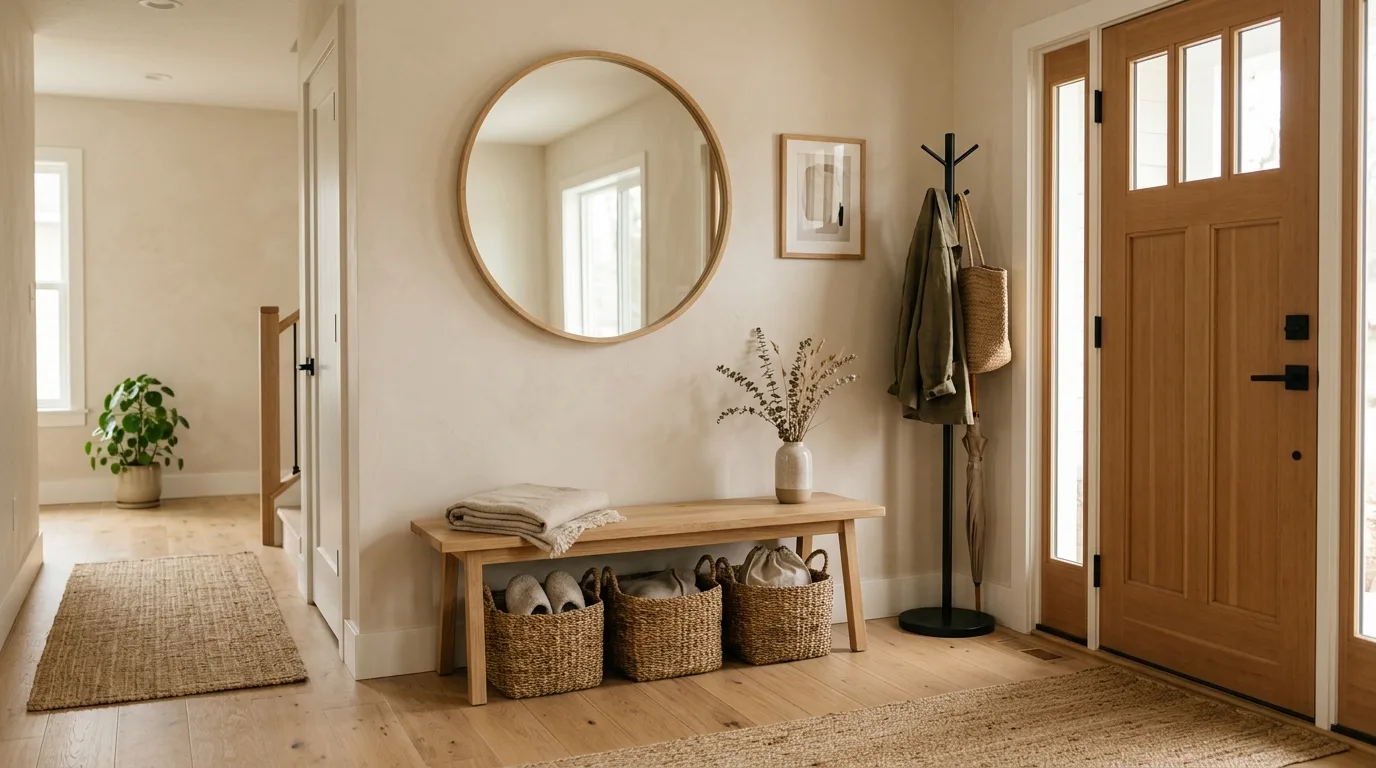
Keep the lines and proportions in harmony
A Japandi room becomes stronger when the architecture and furnishings share the same rhythm. Lines should feel related, heights should feel considered, and decorative choices should support the same sense of ease rather than pulling attention in conflicting directions.
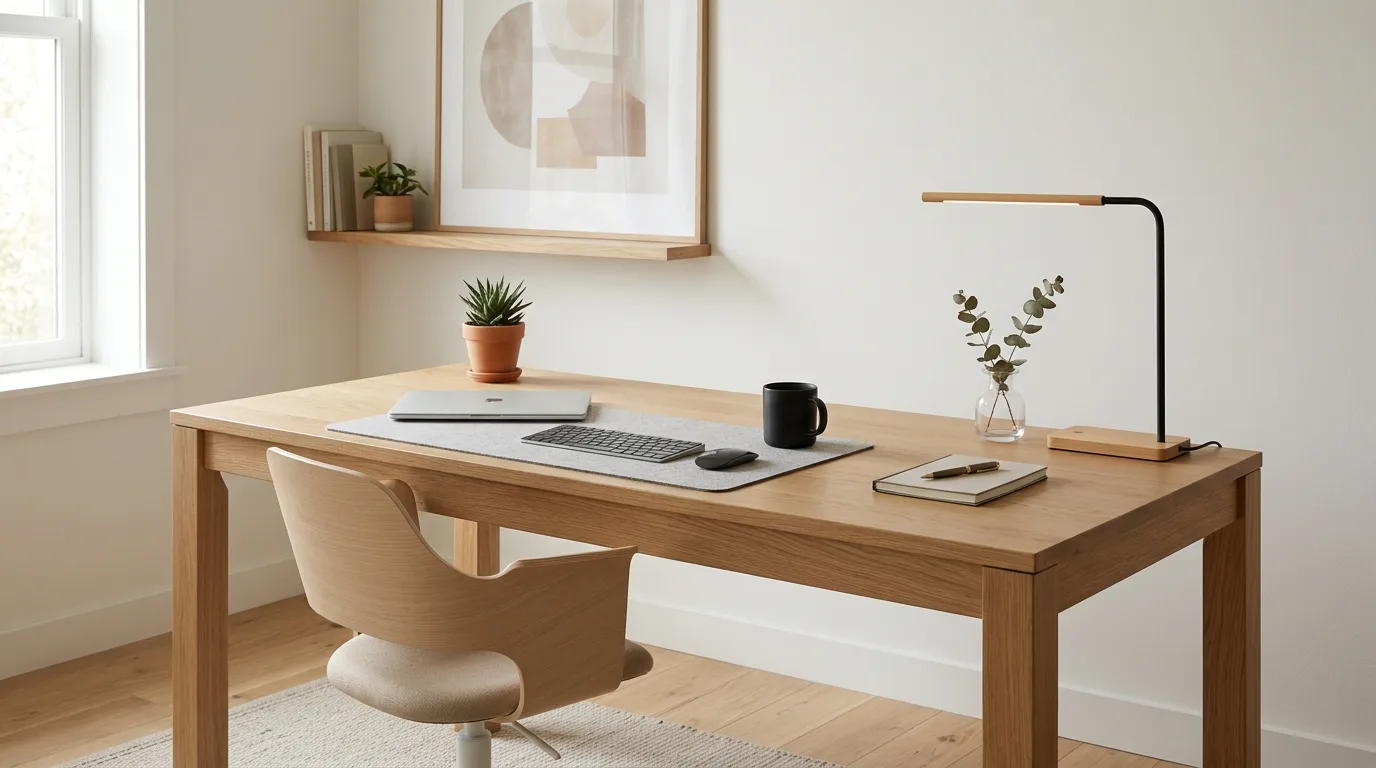
Use plants as quiet living accents
Plants belong in Japandi interiors when they are used as quiet living accents rather than as excessive decoration. A single branch, a sculptural tree, or a carefully placed pot can add life and softness while still preserving the restraint the style depends on.
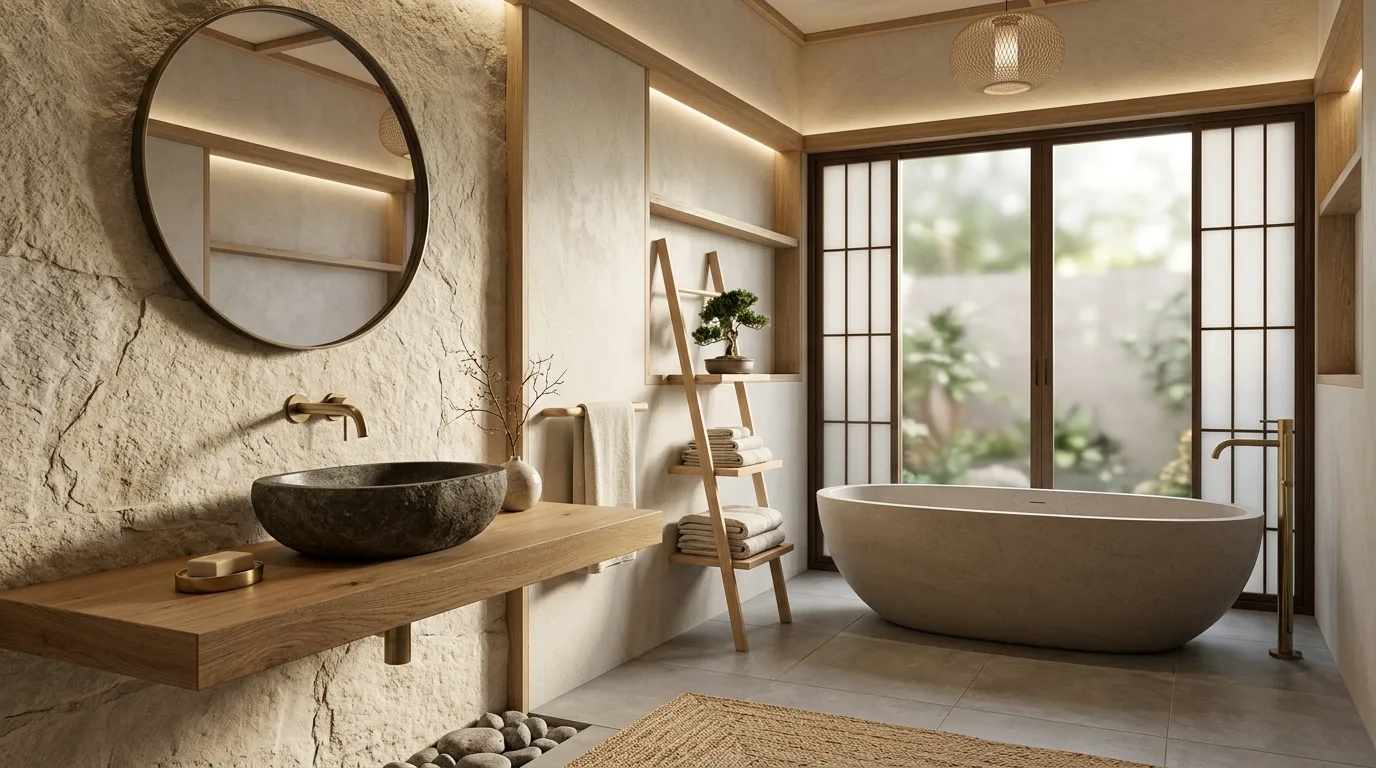
Layer warmth gradually instead of forcing it
Japandi homes feel especially comforting when warmth is layered slowly instead of declared loudly. The balance of emptiness and texture, structure and softness, is what makes the style emotionally effective rather than simply trend-conscious.
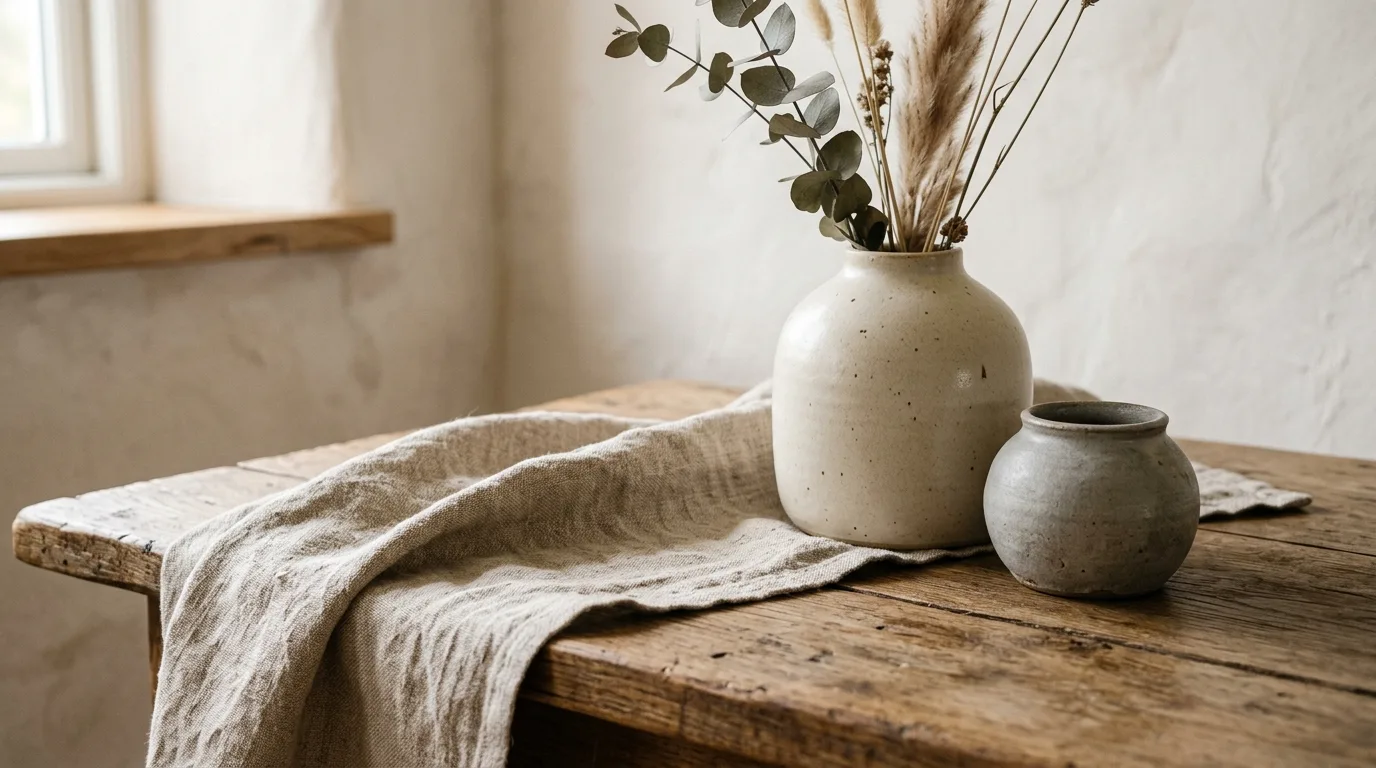
Finish with a home that feels truly balanced
The most balanced Japandi interiors are the ones where calm is built into every decision, from palette and storage to material and proportion. Once those elements are aligned, the home feels quieter, clearer, and much easier to inhabit with intention every day.