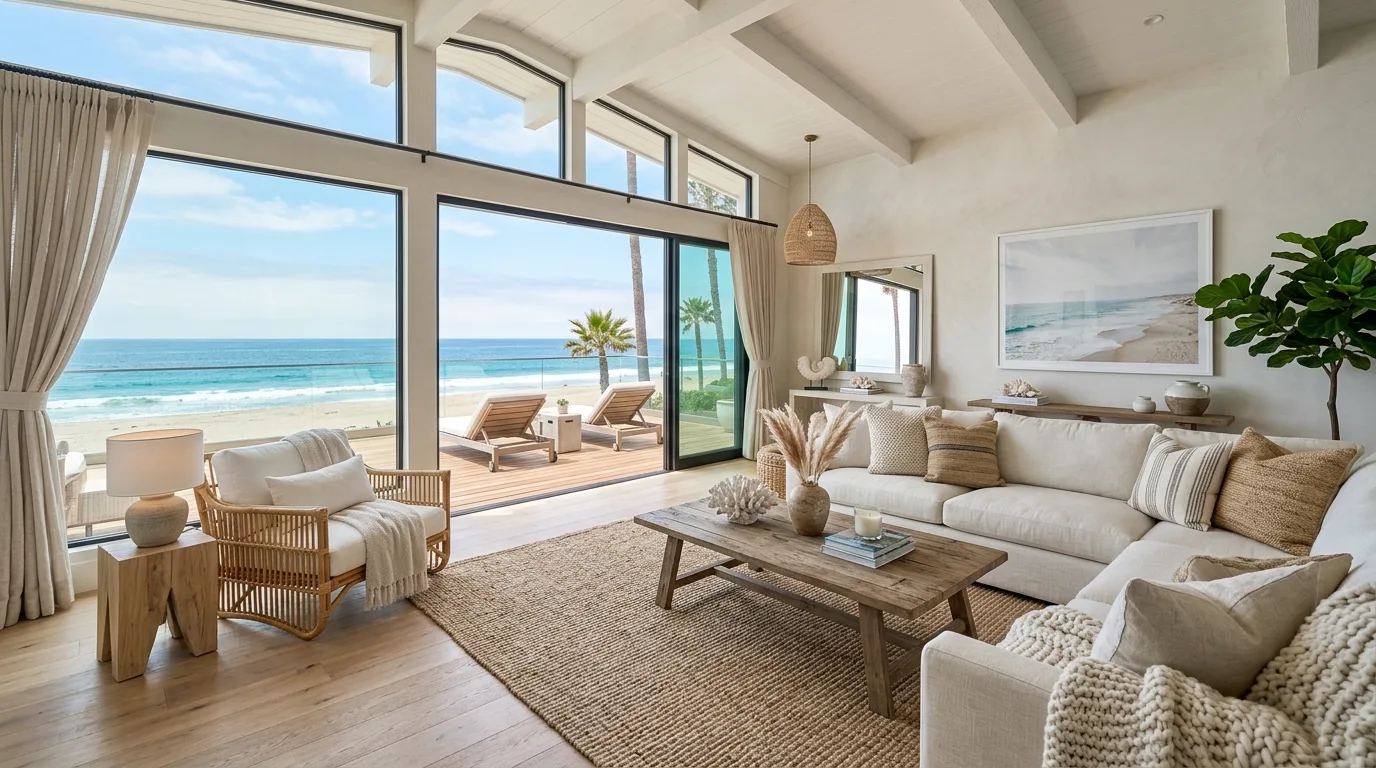
Coastal decor works when it feels airy and relaxed instead of themed. The strongest spaces use light, texture, and natural materials to suggest the feeling of the coast without depending on obvious nautical references everywhere.
A good beach-house mood often comes from balance: enough blue, sand, white, and wood to feel fresh, but enough restraint that the home still feels calm and comfortable for daily living.
Start with a lighter coastal palette
A light palette is one of the strongest tools in coastal decor because it helps the room feel breezy before any accessories are even added. Soft whites, sandy neutrals, and pale blue or green create the kind of open atmosphere that makes a home feel closer to the coast without looking forced.
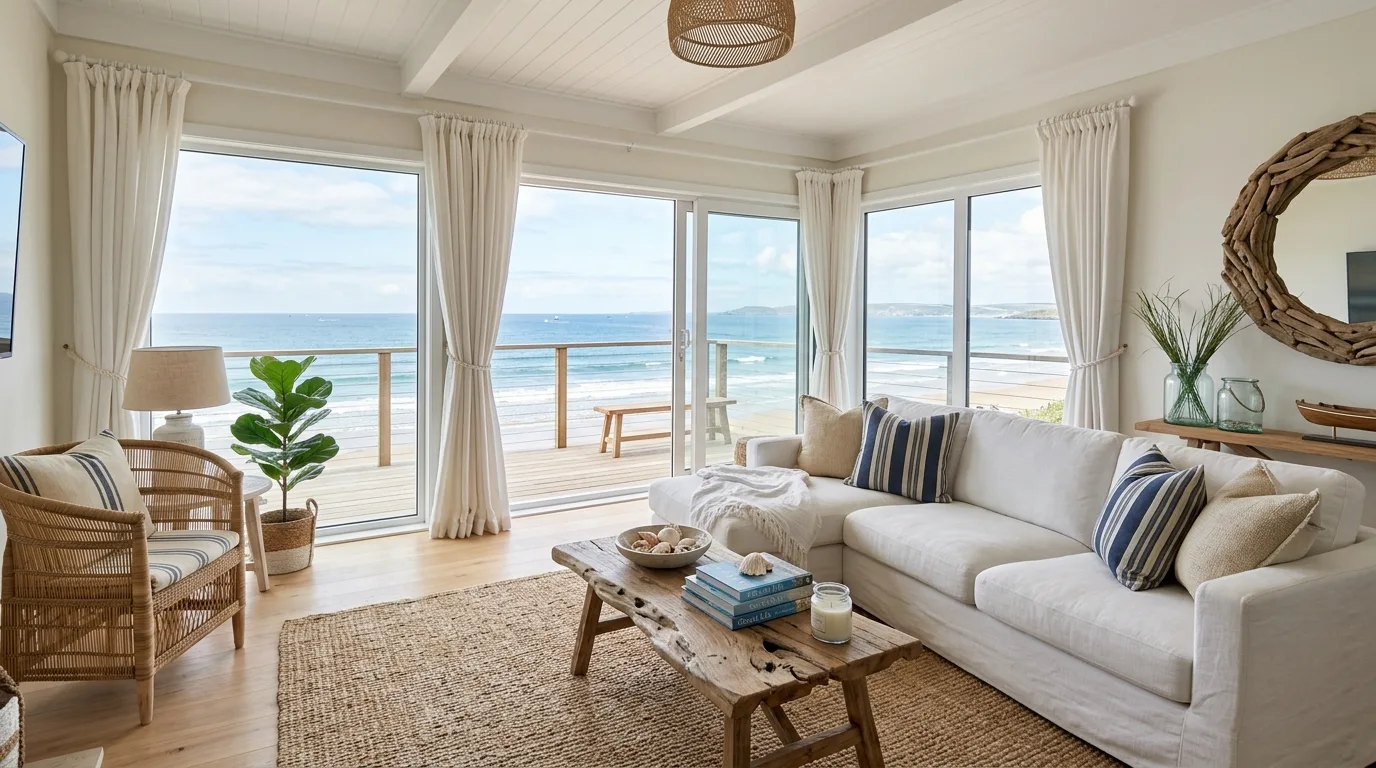
Bring in natural wood for warmth
Natural wood brings warmth into a coastal room and keeps the space from feeling too pale or overly polished. Weathered, whitewashed, or lightly toned wood works especially well because it supports the relaxed mood while still giving the room some grounding contrast.
Use linen and cotton to keep the room breathable
Linen and cotton are ideal coastal fabrics because they move the room away from stiffness and toward something softer and more breathable. Their texture helps the decor feel natural and lived in, which is one of the reasons coastal spaces become so welcoming when handled well.
Choose softer furniture shapes for comfort
A coastal living room feels more convincing when the furniture shapes stay casual and comfortable rather than ornate. Softer silhouettes, generous seating, and lighter visual weight help the room feel like a place to settle into, which is central to the whole beach-house mood.
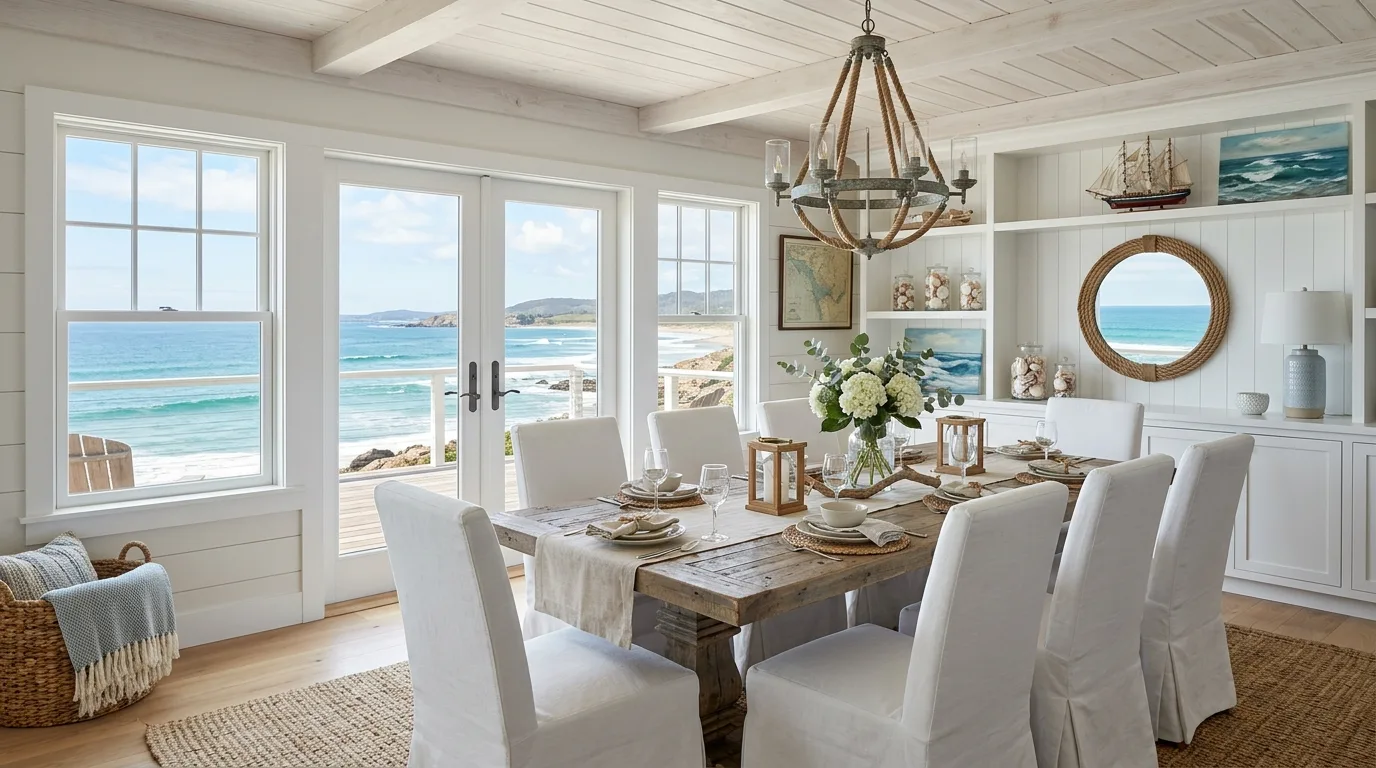
Use blue as an accent instead of a takeover
Blue is most effective in coastal decor when it is used as a supporting tone rather than turning the whole room into one obvious color story. A few well-placed blue accents can suggest the sea beautifully while still allowing neutrals, wood, and texture to carry much of the atmosphere.
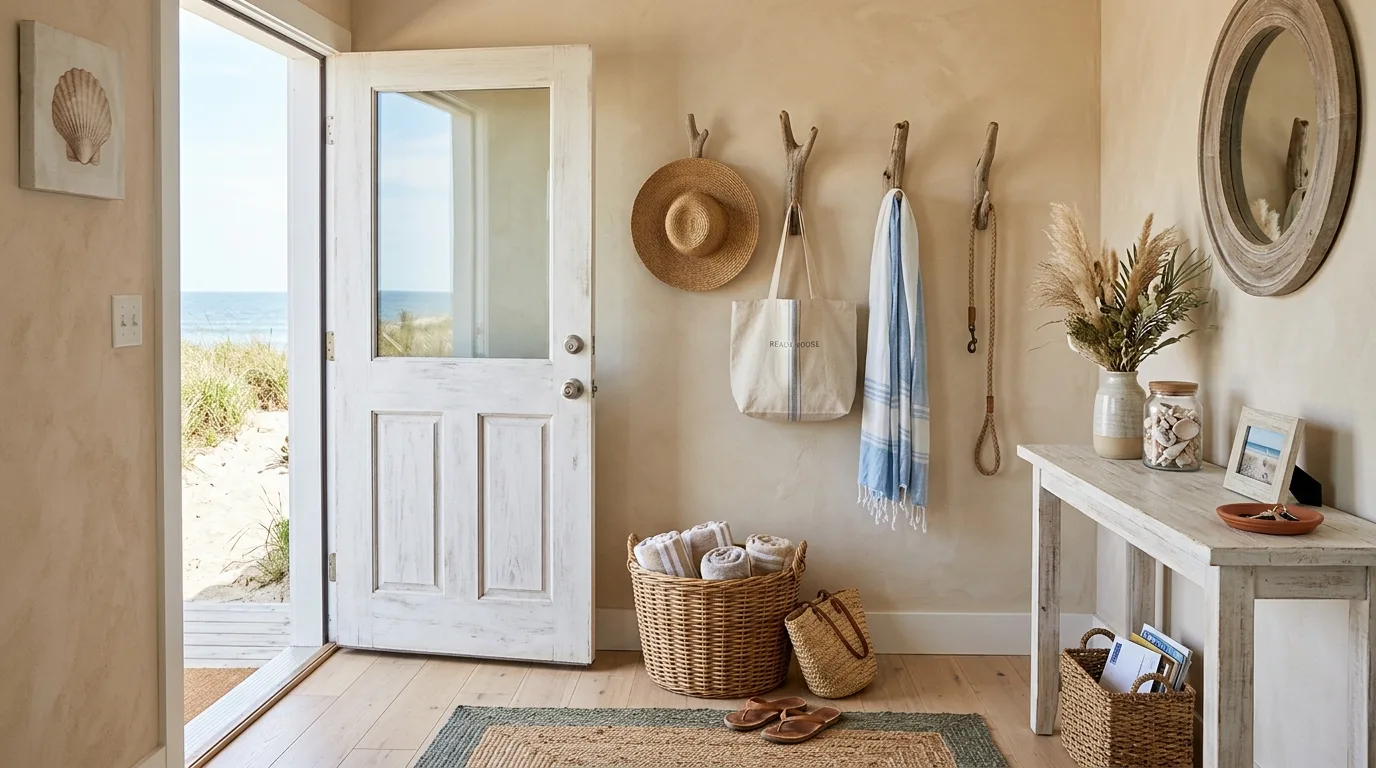
Layer woven texture for a beachy feel
Woven materials like rattan, jute, and seagrass help coastal rooms feel layered because they bring in texture without visual heaviness. These materials soften the sharper edges of furniture and architecture, which is often what makes the overall space feel more relaxed and natural.
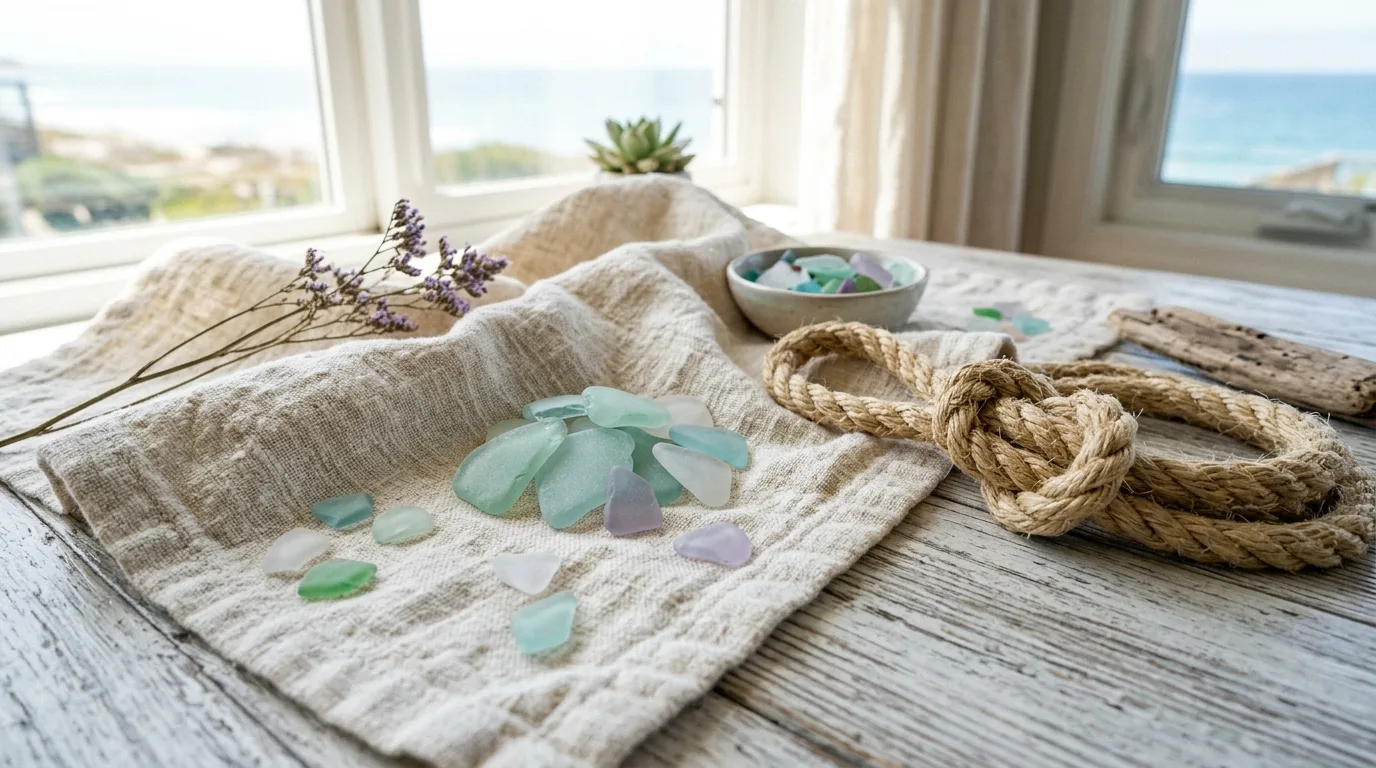
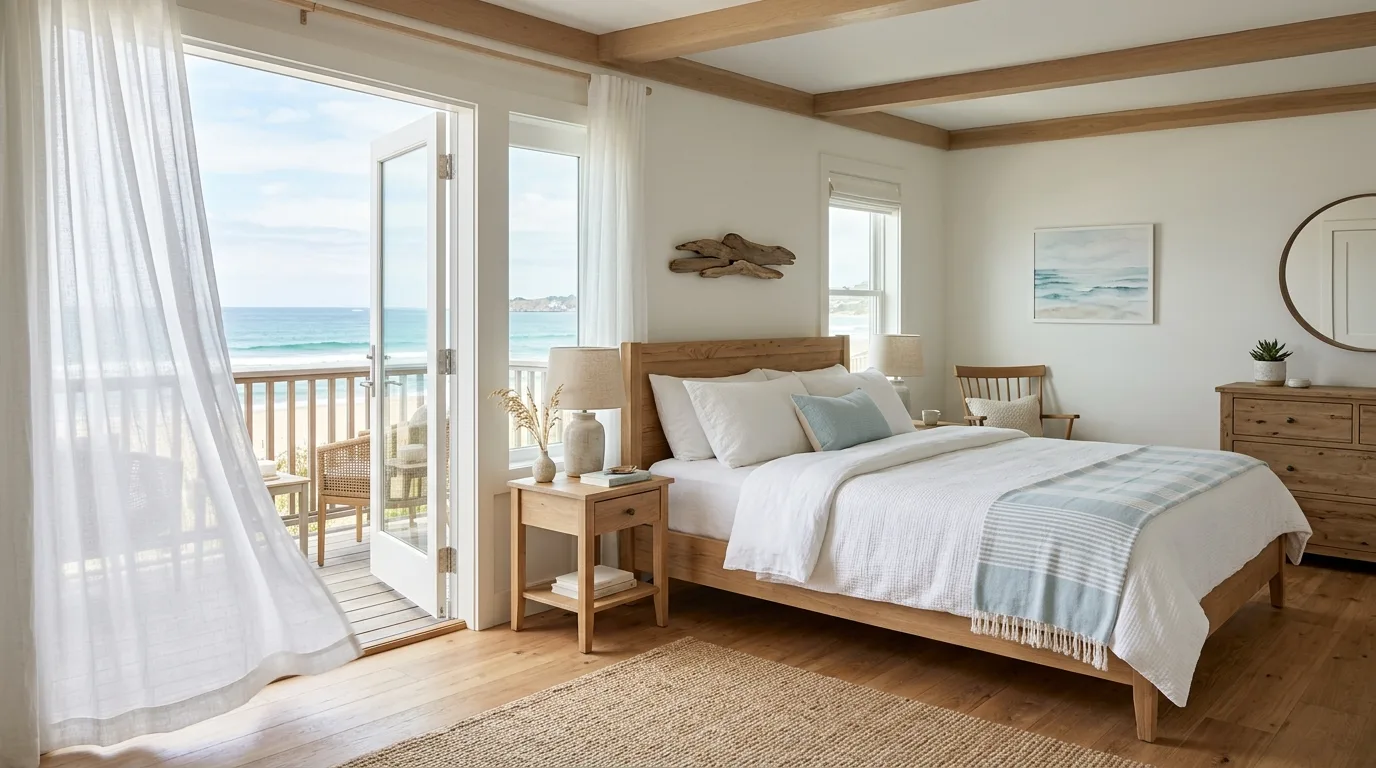
Keep coastal bedrooms especially airy
A coastal bedroom works best when it feels airy enough to rest in rather than overloaded with decorative references. Light bedding, soft color, and gentle texture are usually more effective than too many themed pieces, because they let the room stay peaceful while still carrying the seaside mood.
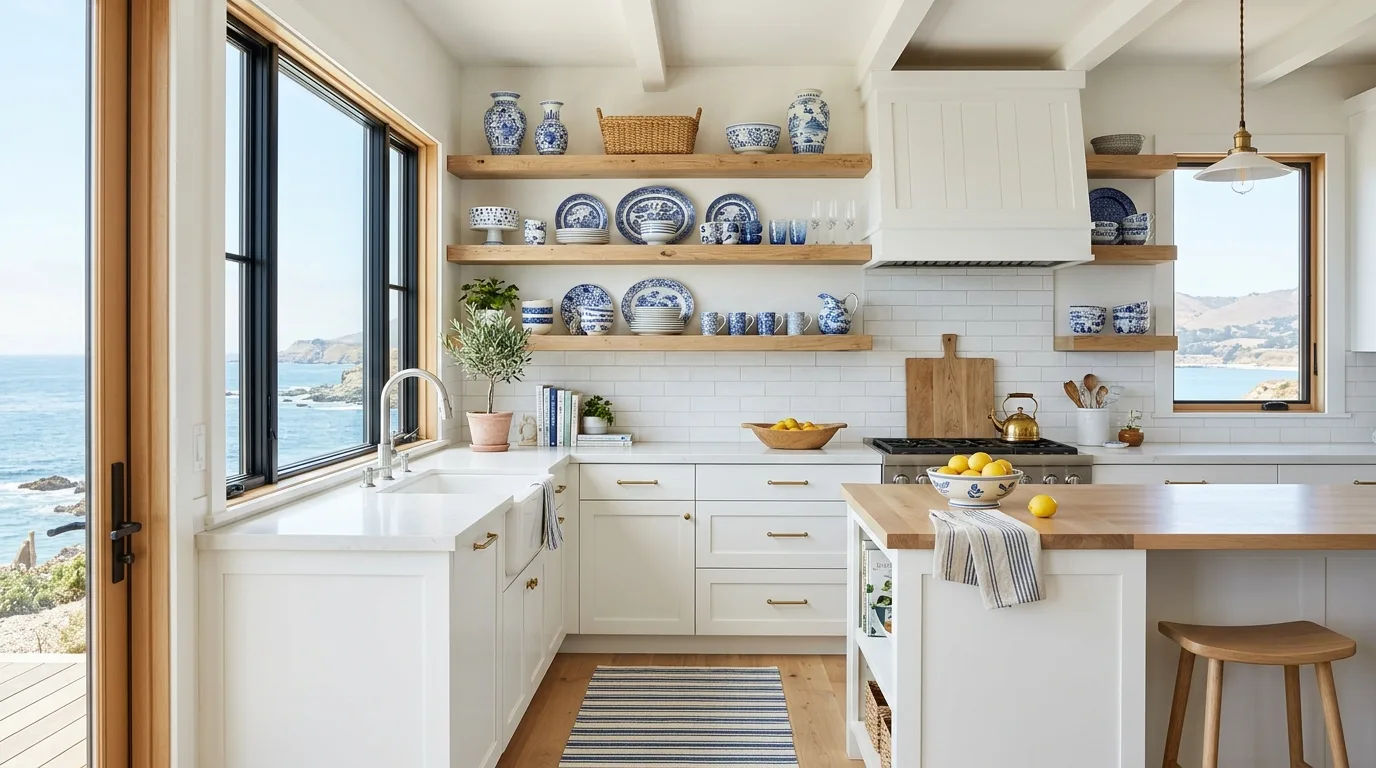
Let the windows preserve the breezy mood
Windows matter a lot in coastal decor because the feeling of openness depends on light being able to move through the room. Sheer drapery, lighter shades, or minimally dressed windows often help preserve that breezy quality much better than heavier, more formal treatments.
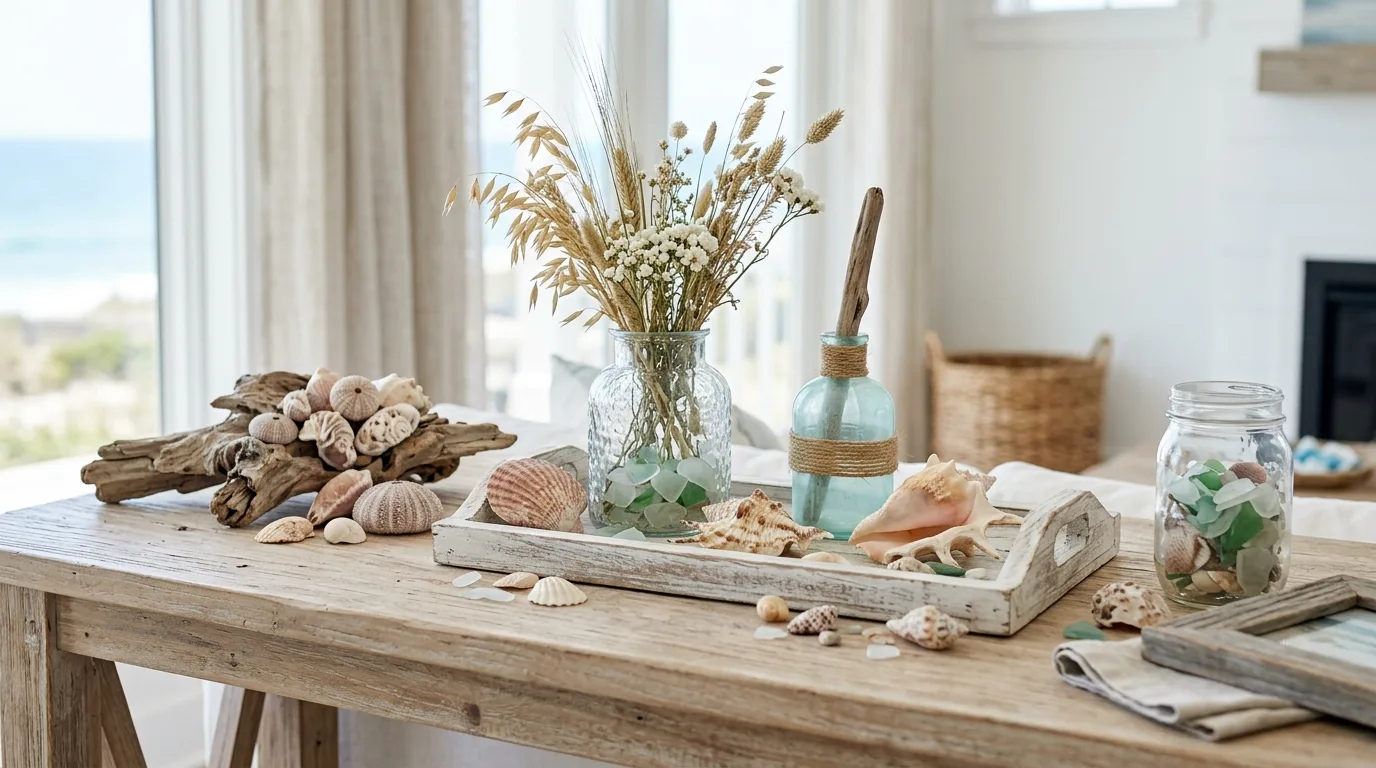
Choose accessories that feel collected, not themed
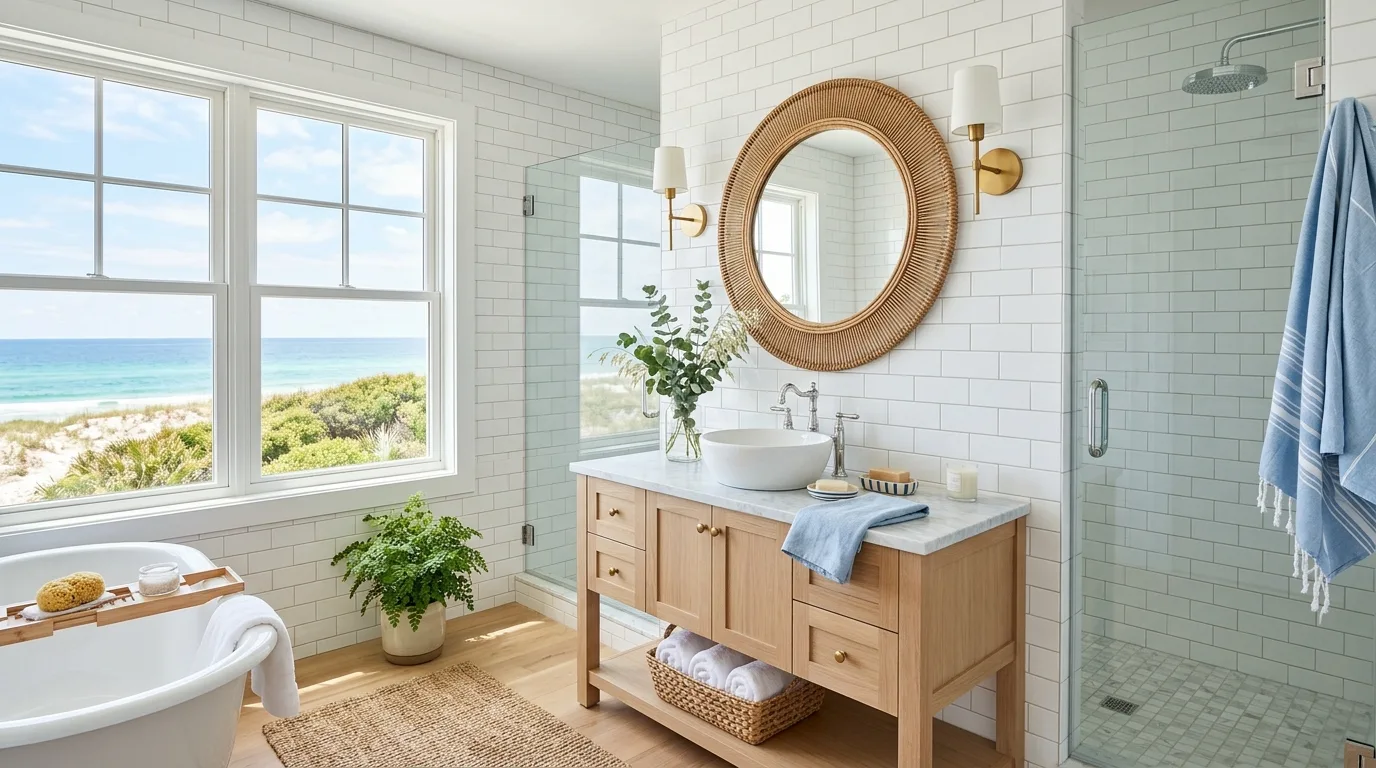
Accessories in a coastal home should feel collected and natural rather than overly literal. Driftwood shapes, ceramics, glass, soft art, and weathered finishes usually create a much more refined beach-house look than obvious shell or rope motifs everywhere.
Bring the coastal look into the kitchen gently
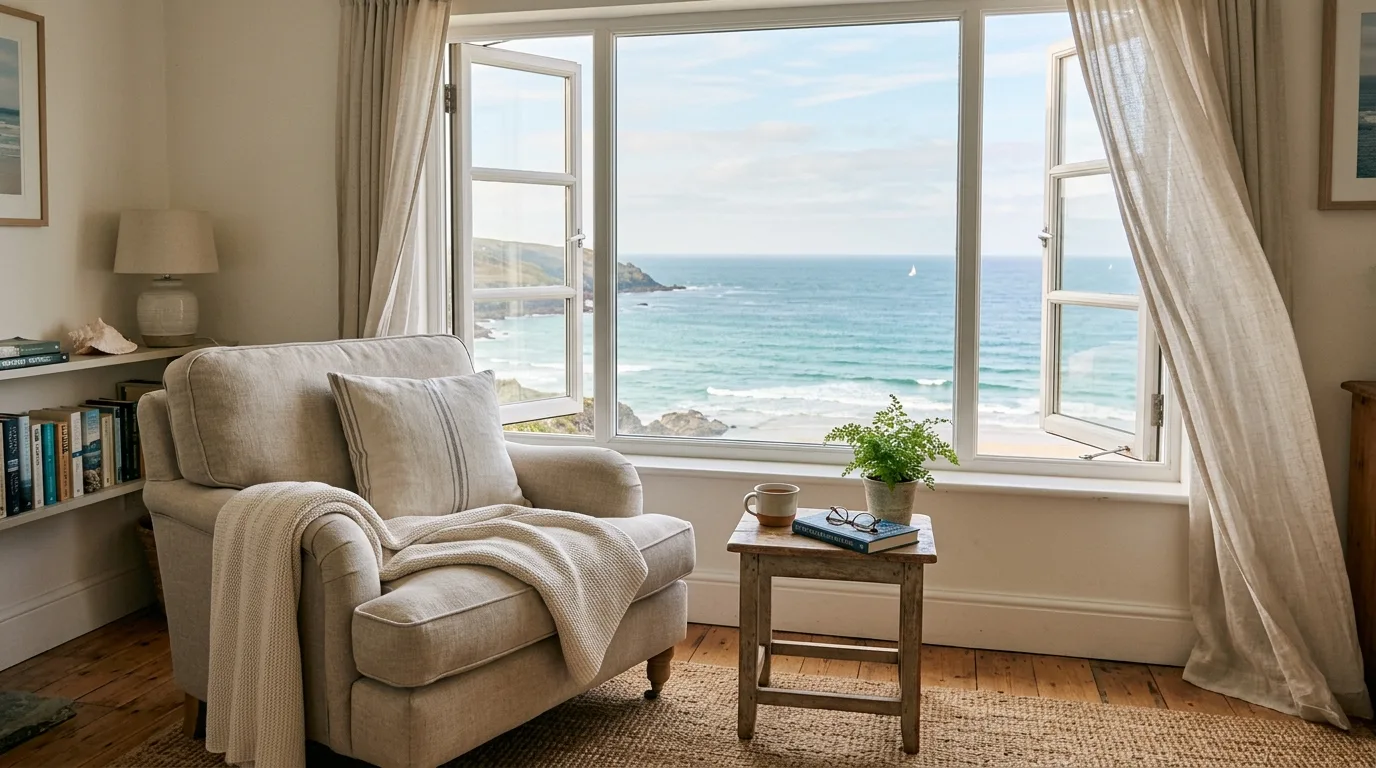
Coastal kitchens feel freshest when they stay bright and practical while still picking up the same relaxed materials used elsewhere in the house. Lighter cabinetry, subtle texture, and a few ocean-toned accents can make the room feel connected without losing its everyday usability.
Use layered neutral rugs to ground the room
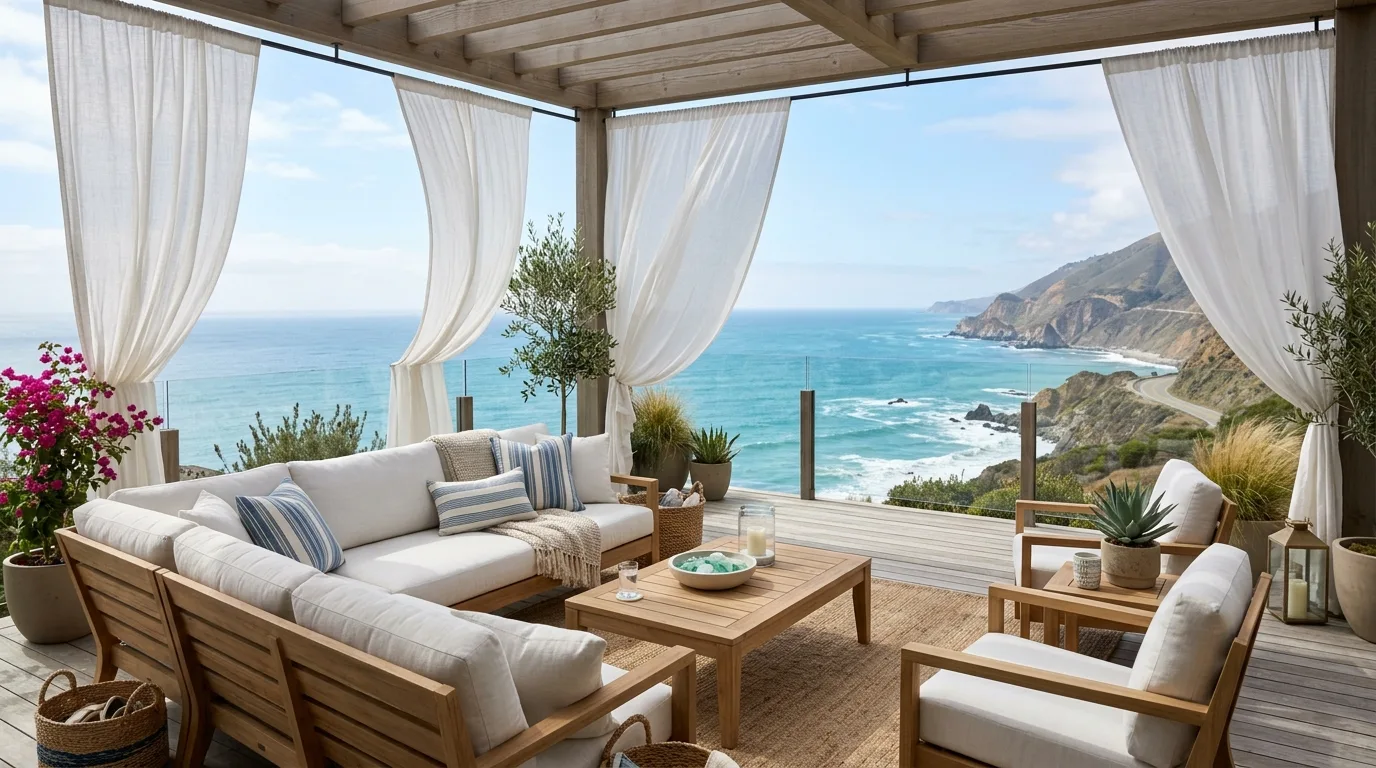
Layered neutral rugs help coastal rooms feel grounded while still keeping the palette soft and quiet. Their texture is often more important than bold pattern, since that quieter approach allows the rest of the room to stay open and easy on the eye.
Carry the mood into transitional spaces
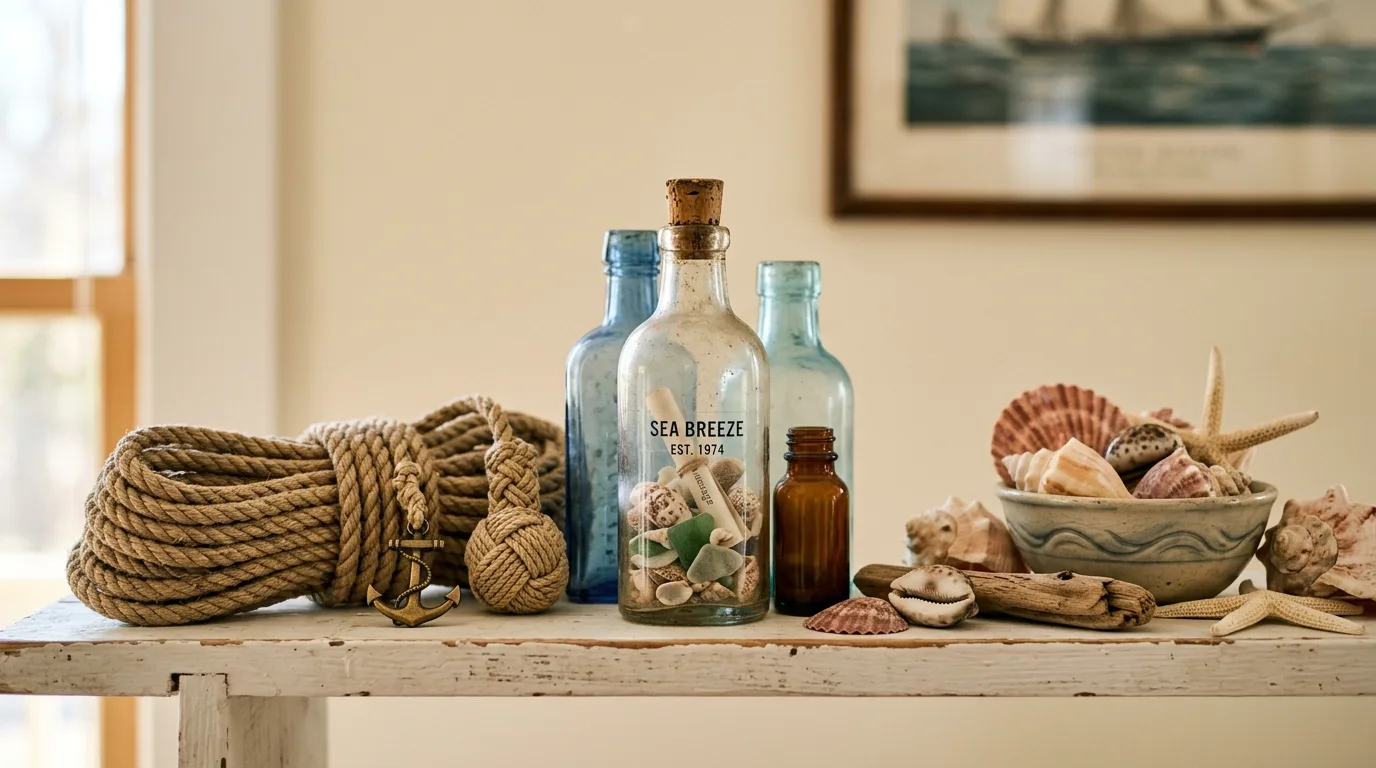
Outdoor-adjacent spaces like sunrooms, breakfast nooks, or entryways are especially good places to reinforce a coastal mood. When those transitional areas carry the same lightness as the main rooms, the house feels more complete and much more naturally tied together.
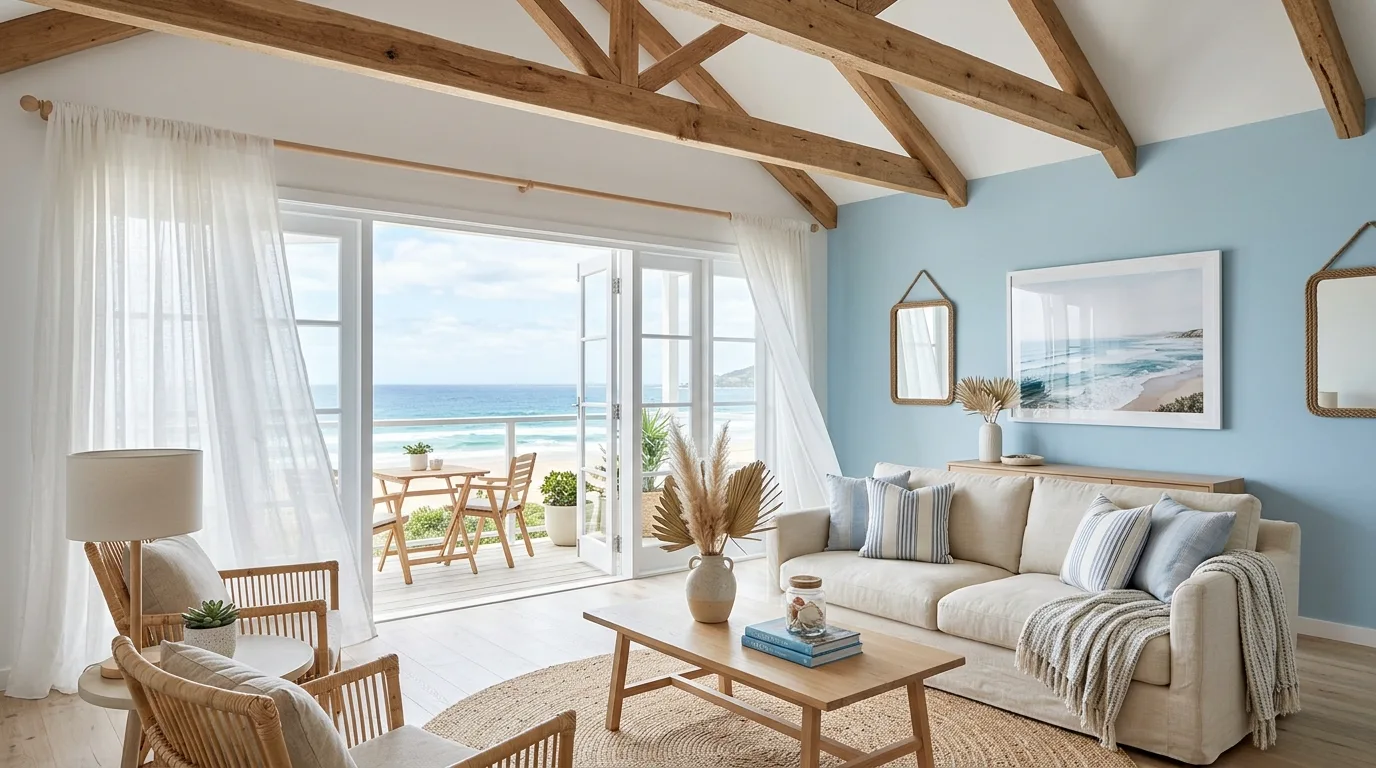
Finish with a home that feels naturally relaxed
The best coastal homes feel like they are shaped by air, light, and ease instead of by themed decoration. Once color, material, furniture, and styling all stay in that softer register, the result feels far more relaxed, believable, and timeless.