A patio feels more useful and more beautiful when it is treated like a real extension of the home. Furniture placement, materials, lighting, and layered texture can all help an outdoor area feel inviting enough to use every day.
The strongest patios are not built from decor alone. They rely on clear zoning, comfortable seating, weather-smart choices, and enough softness to make the space feel relaxed instead of overly exposed.
Start with a seating layout that encourages staying
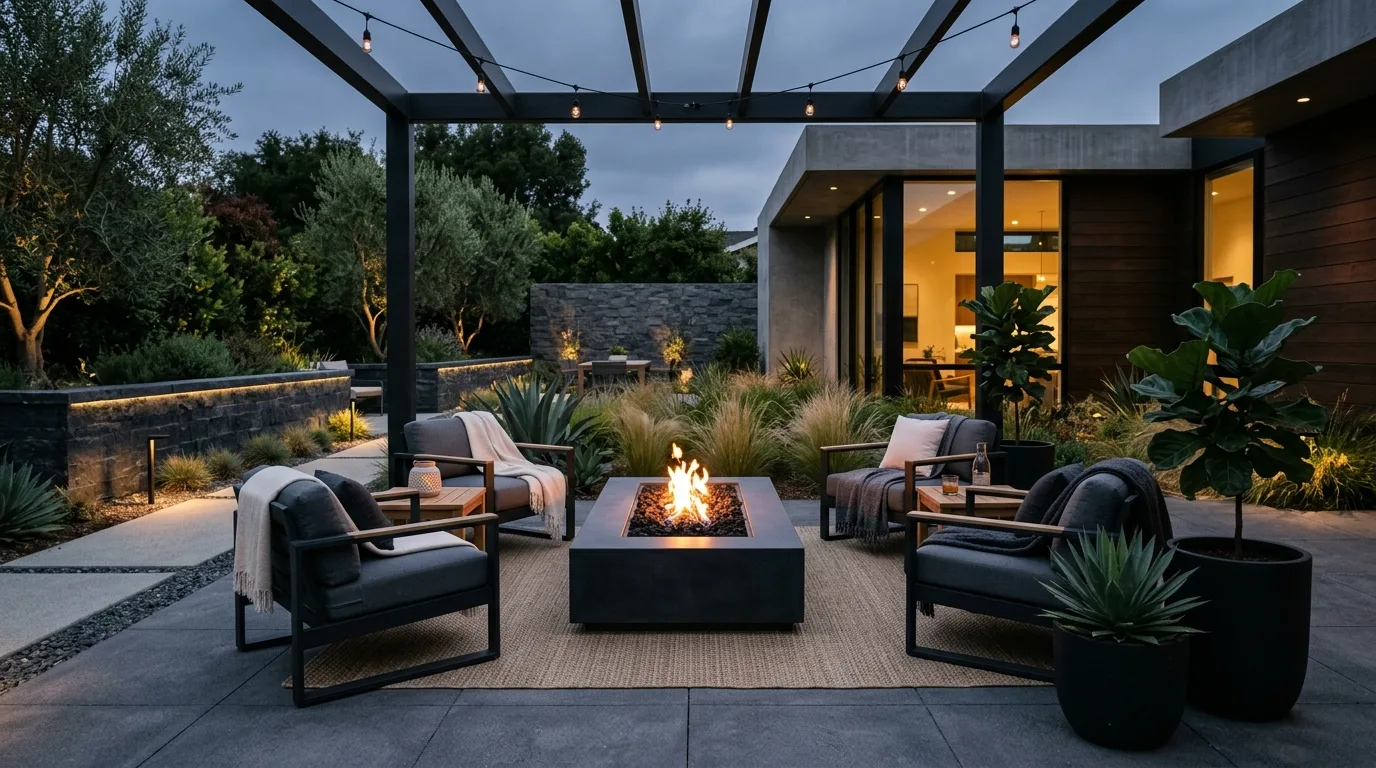
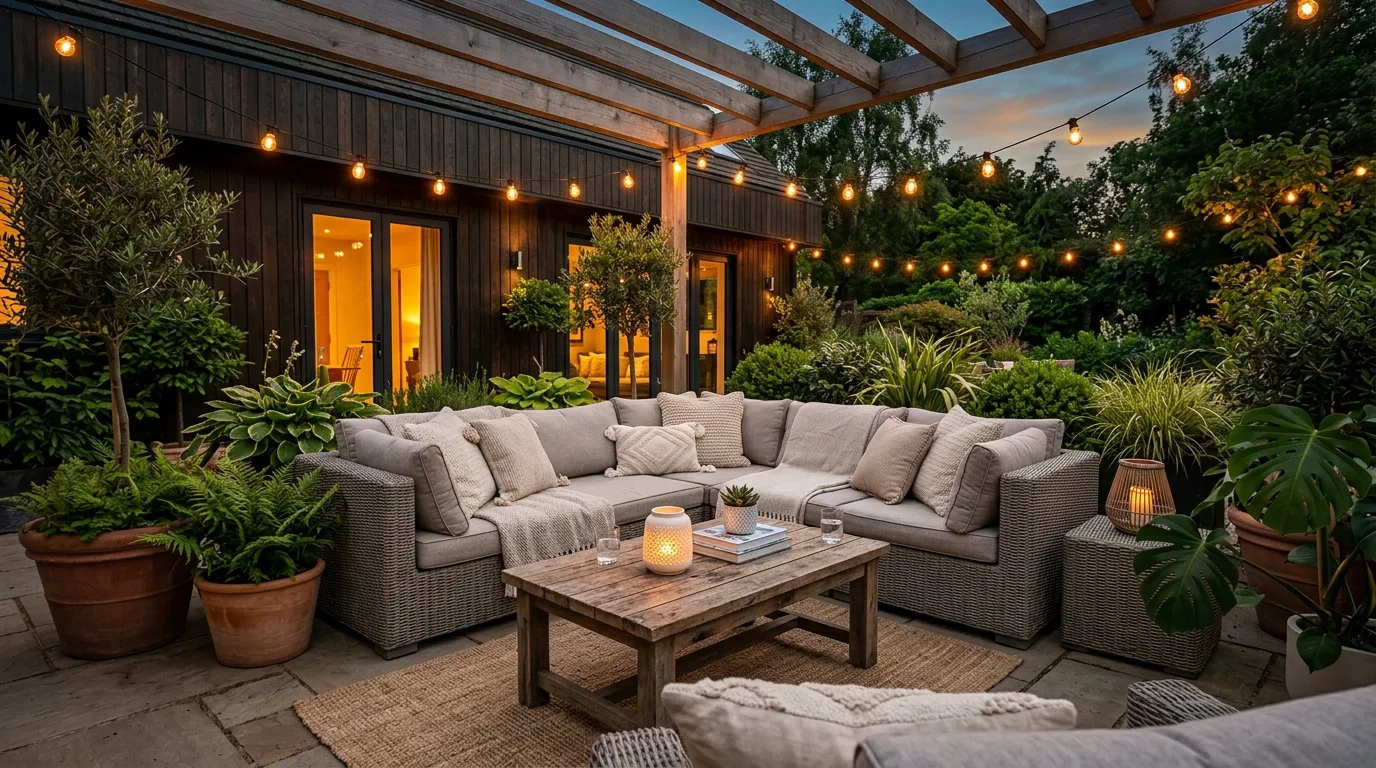
A patio becomes more inviting when the seating layout feels natural for conversation instead of simply filling the available square footage. Once chairs, sofas, and tables are arranged with comfort in mind, the space begins to function more like an outdoor room than a leftover exterior zone.
Use an outdoor rug to define the space
An outdoor rug can completely change a patio because it visually gathers the furniture into one coherent area. It also softens the hard surface underfoot, which helps the space feel more finished and much closer to the comfort level people expect indoors.
Bring in lighting that softens the patio at night
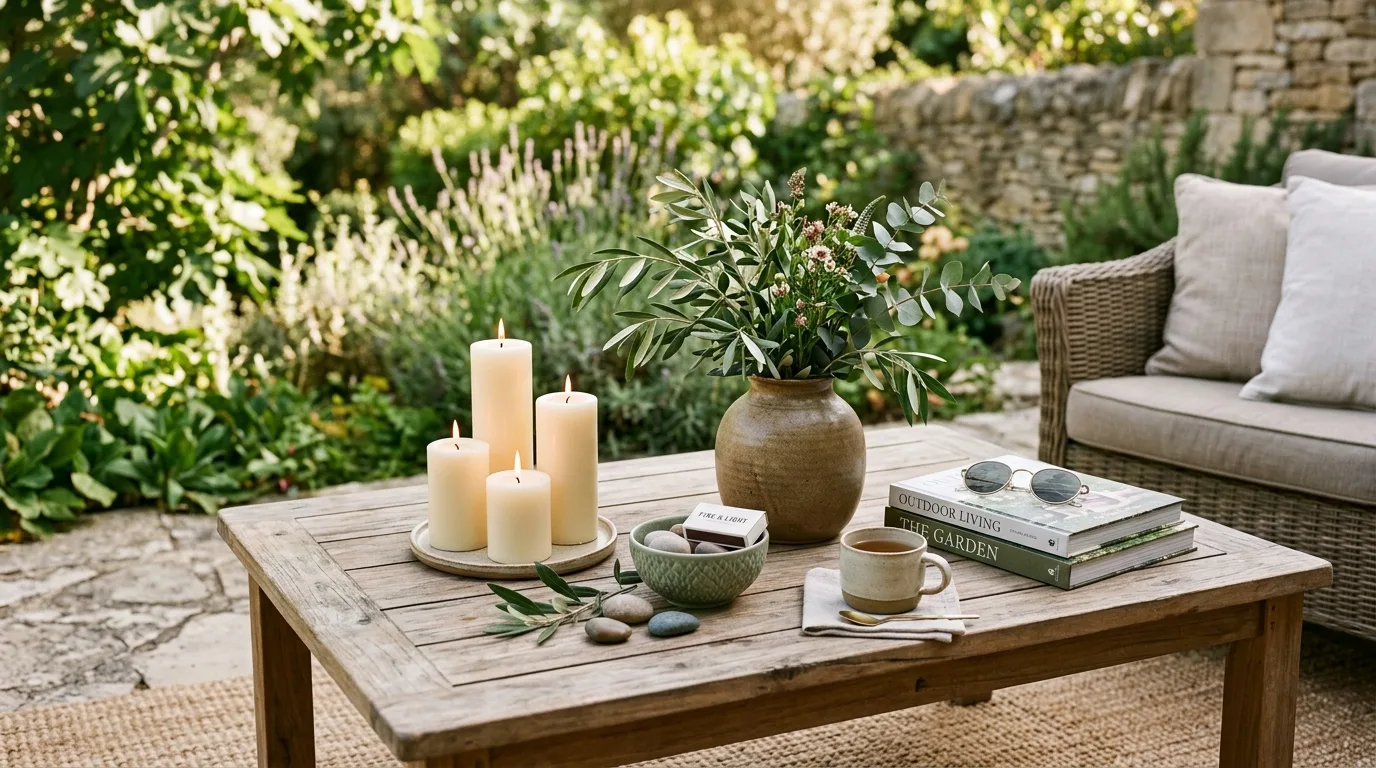
Lighting does more than make a patio usable at night; it shapes the mood of the entire space after sunset. Once lanterns, string lights, sconces, or other soft sources are layered in, the patio feels far more intimate and intentionally designed.
Layer cushions and textiles for comfort
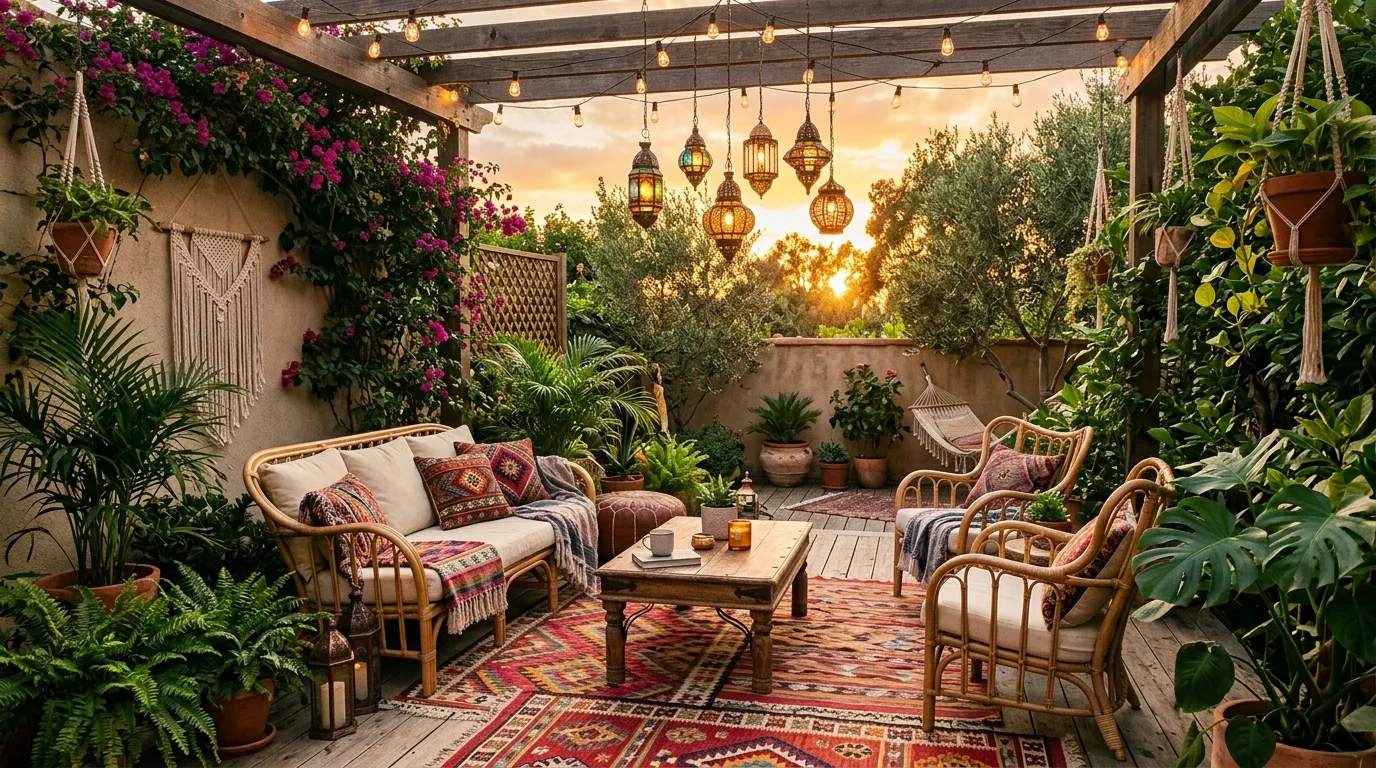
Cushions and outdoor textiles are what often make the difference between a patio that looks decent and one that people genuinely want to stay in. They add comfort first, but they also give the furniture enough softness and color to make the whole space feel more welcoming.
Use planters to create shape and privacy
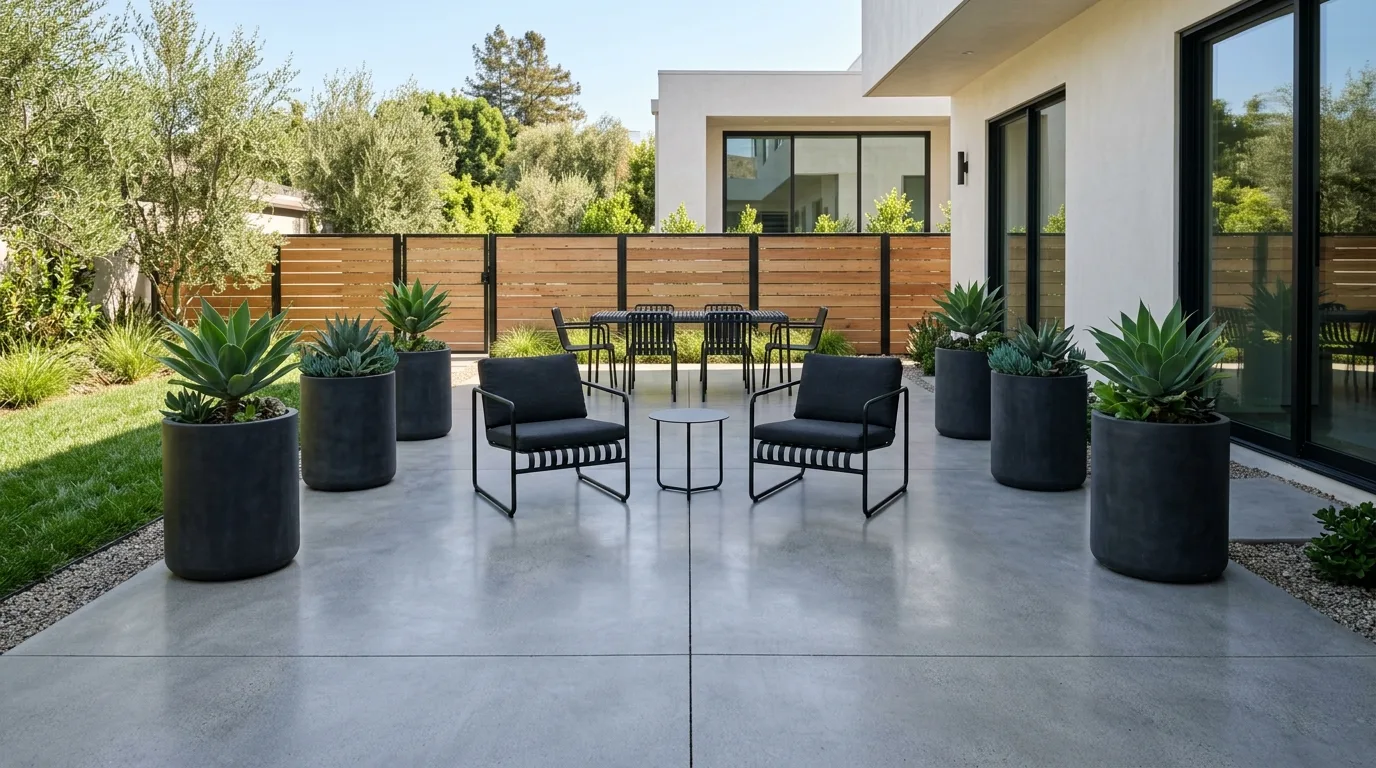
Planters bring shape and life to a patio in a way that hard furniture alone never can. When used thoughtfully, they help define edges, add privacy, and connect the decorated area back to the surrounding landscape so the space feels more integrated overall.
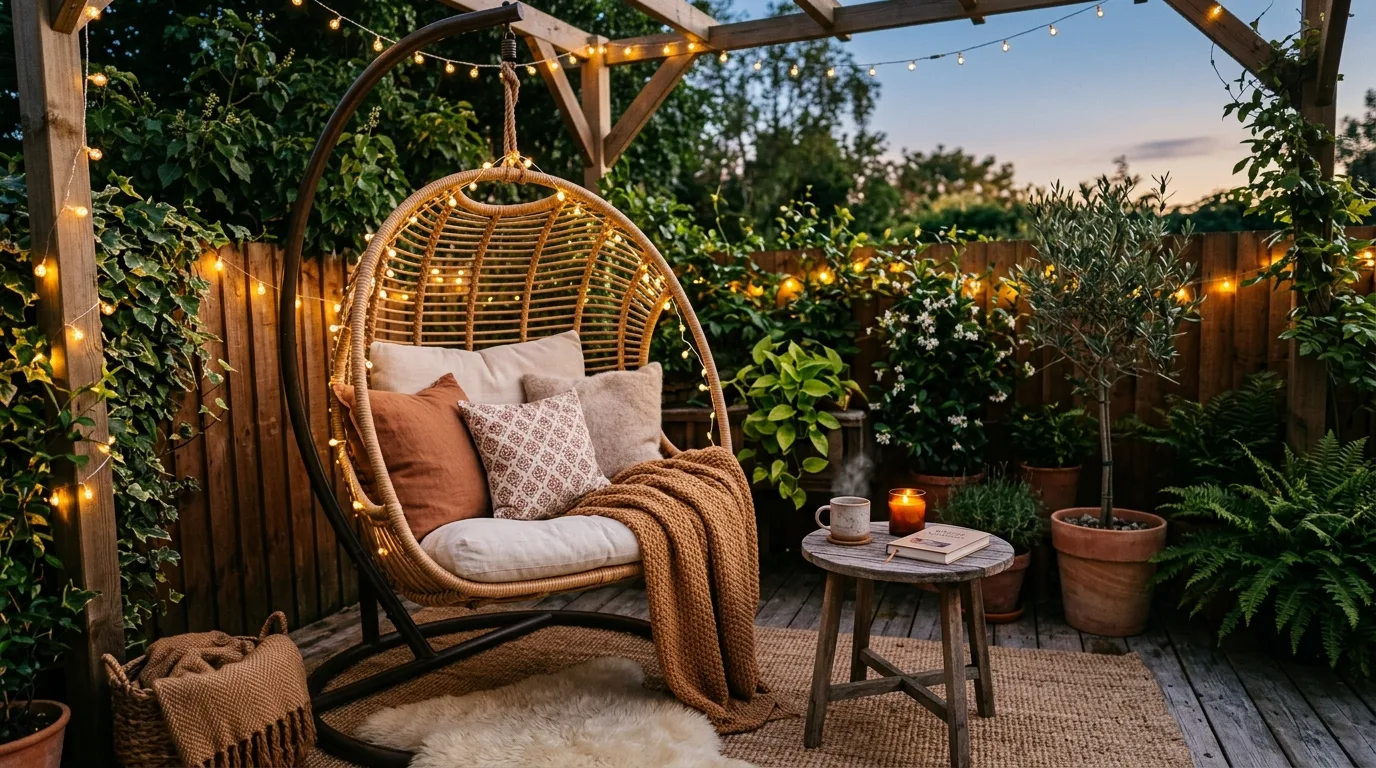
Anchor the center with a coffee or fire table
A central table, whether it is a coffee table or a fire table, helps anchor the patio and gives the seating arrangement a stronger point of focus. That simple move often makes the whole setup feel more deliberate and more useful during actual gatherings.
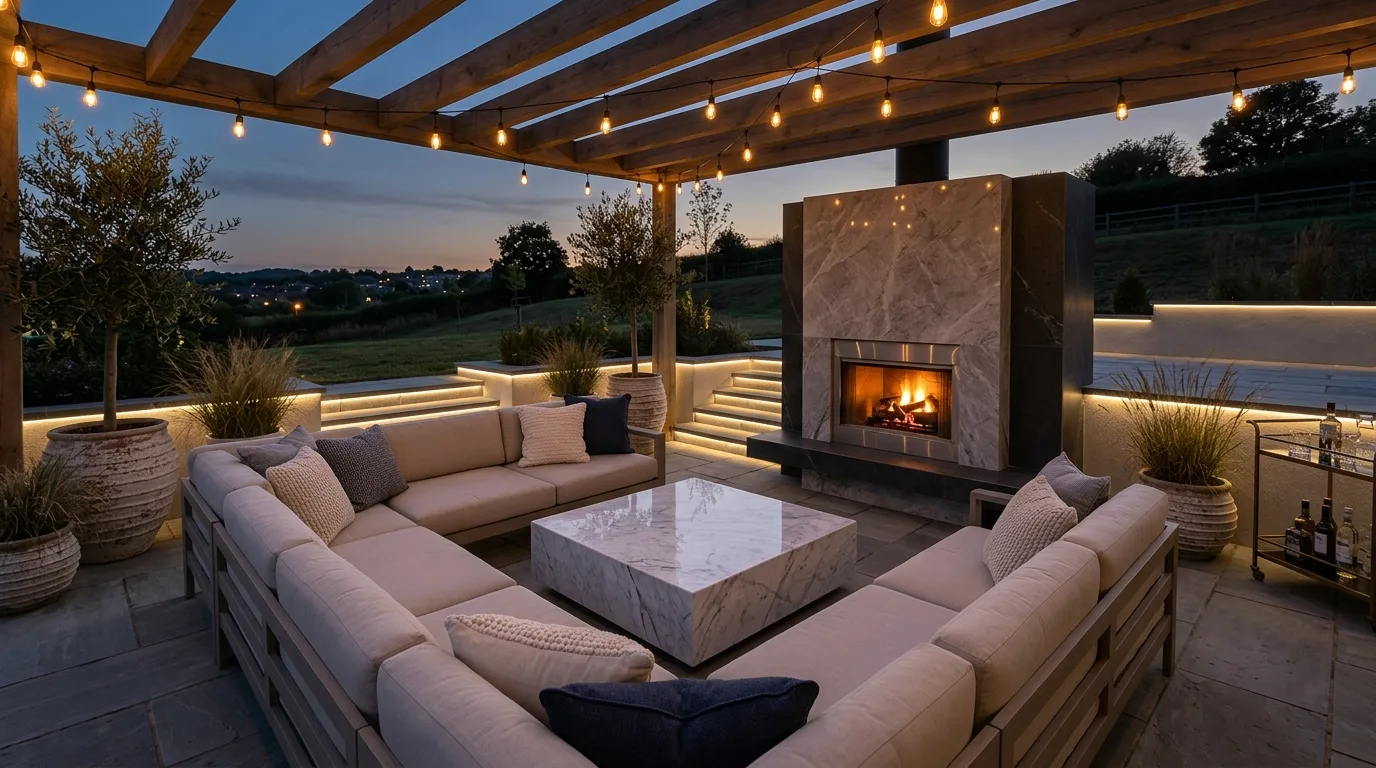
Create a dining corner that feels intentional
A dining corner feels more intentional when it is clearly distinguished from the lounge portion of the patio. Even a small change in furniture type, rug, planter placement, or lighting can help the space read as two useful zones instead of one vague outdoor area.
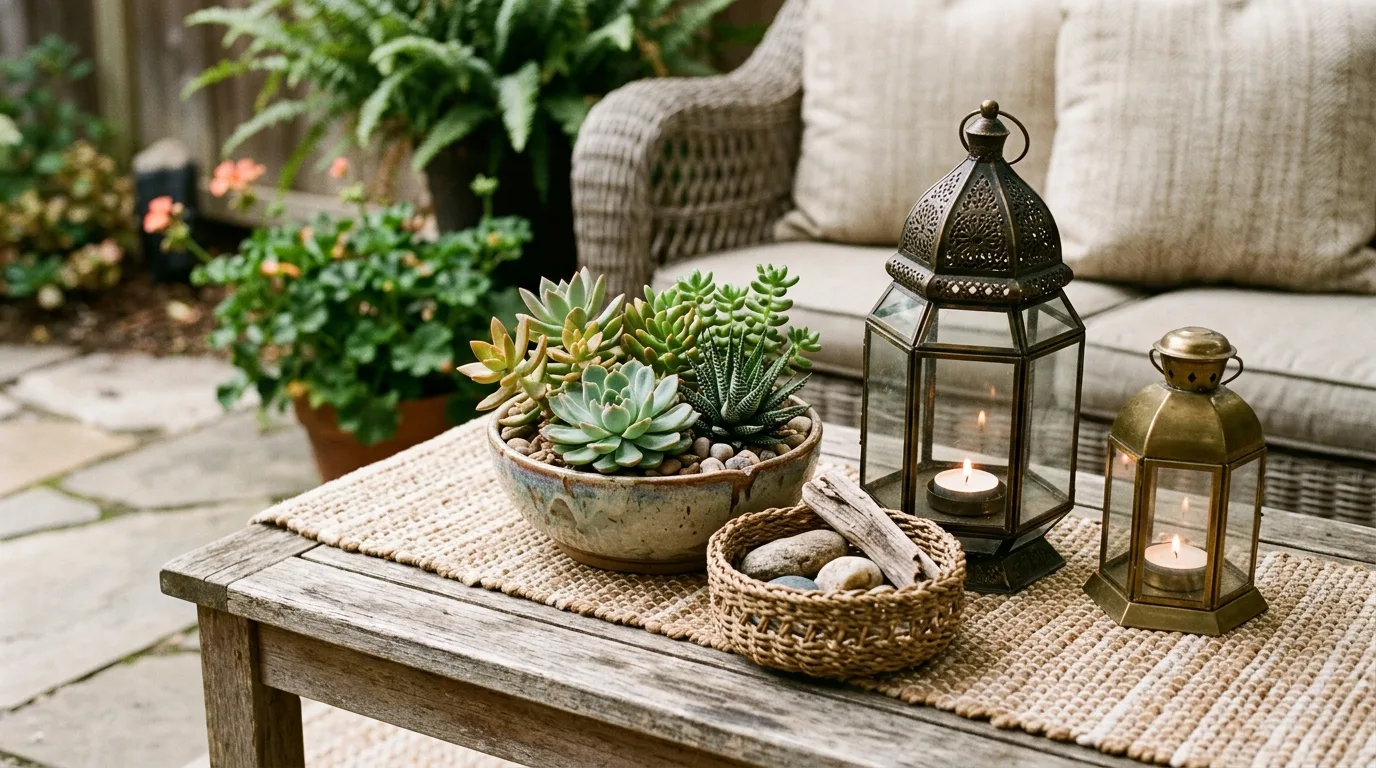
Mix materials so the patio feels more layered
Mixing materials gives a patio more visual depth and keeps the outdoor room from feeling flat or too predictable. Wood, metal, woven texture, stone, and soft fabric can work together beautifully when their tones are balanced and the palette remains controlled.
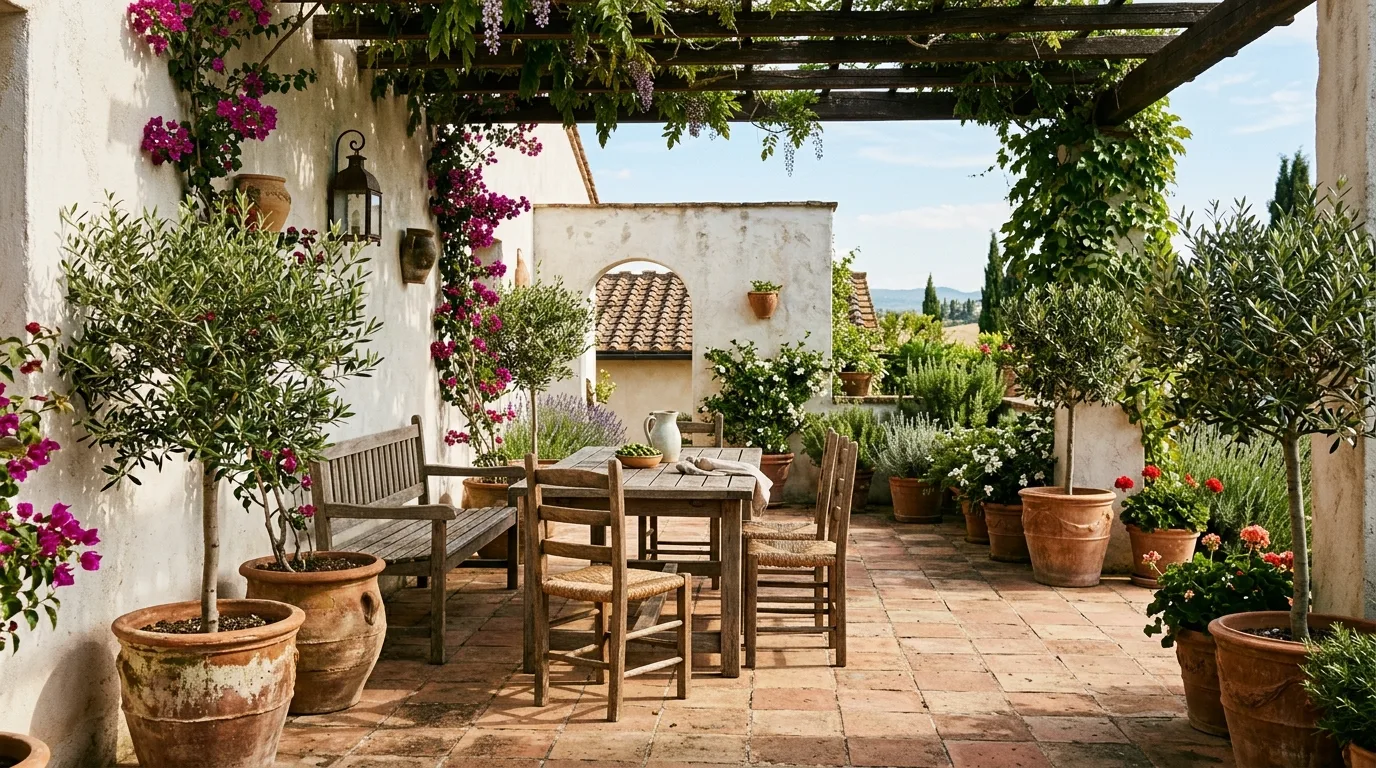
Use color carefully for a stronger outdoor mood
Color works best on a patio when it reinforces the mood rather than competing with the surroundings. A few well-placed tones can make the space feel energetic or calm, but too many shifts can quickly break the sense of cohesion that makes outdoor rooms feel refined.
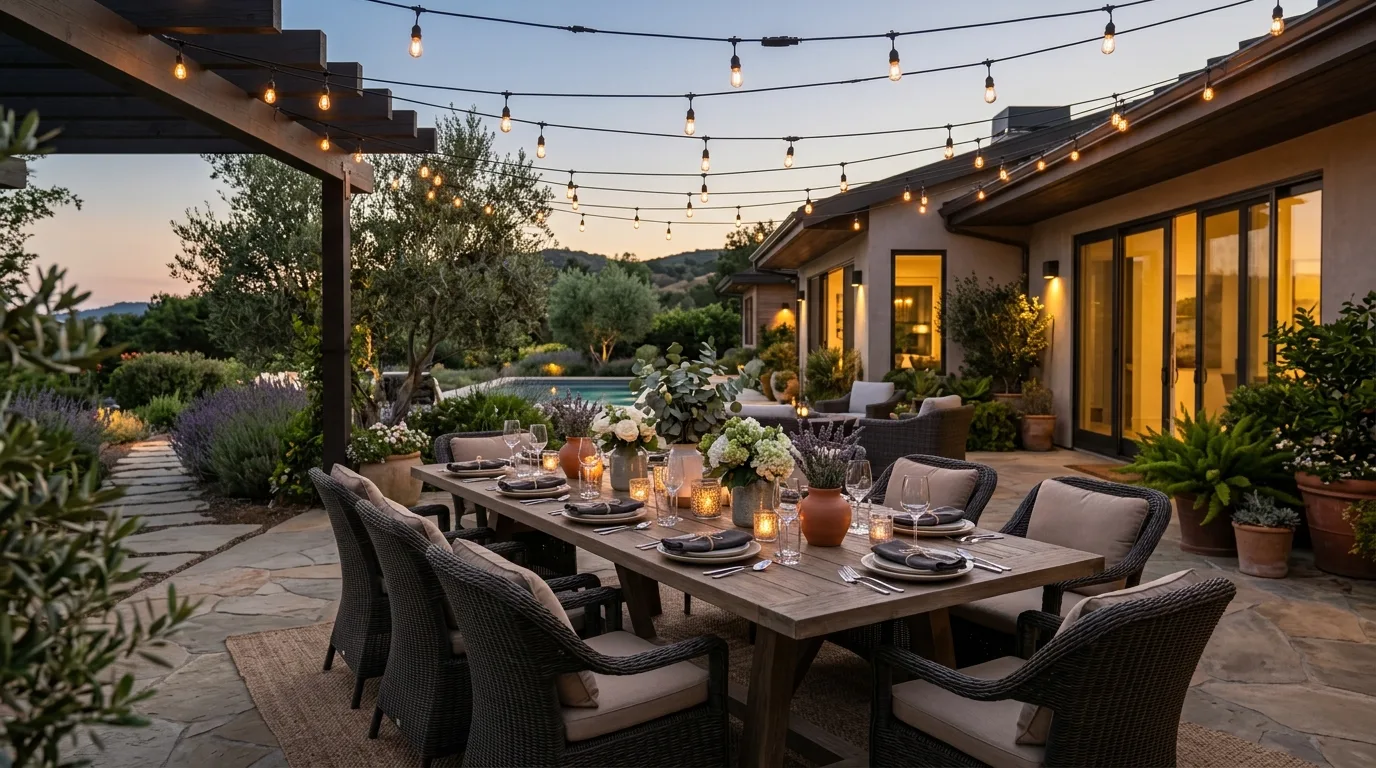
Make small patios feel more generous
Small patios feel more generous when each piece has enough room to breathe and the furniture is scaled correctly. Using fewer, better-sized elements often creates a far stronger result than trying to squeeze in every function at once and losing comfort in the process.
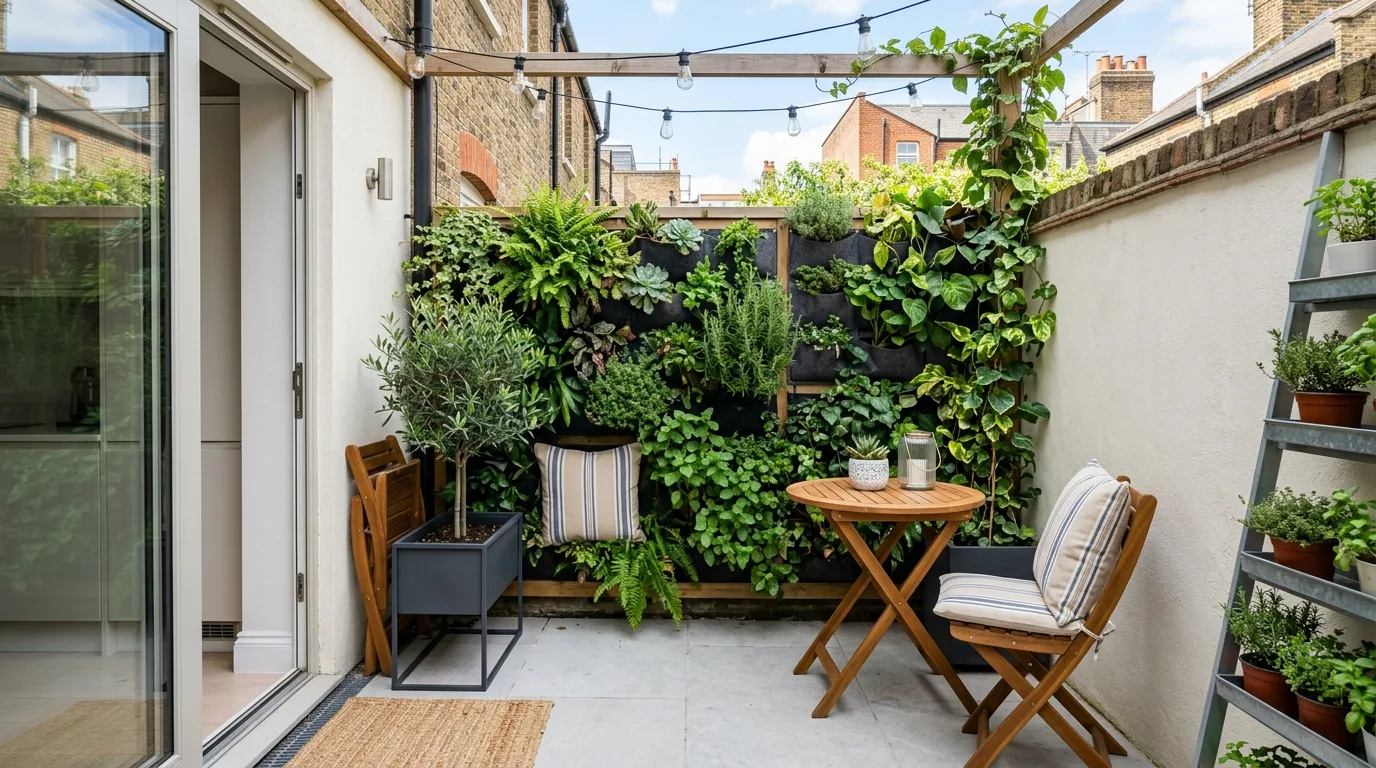
Use vertical elements to add depth
Vertical elements add depth to a patio because they keep the eye moving beyond the floor plane and furniture line. Screens, planters, climbing greenery, shelving, or wall lighting can all help the space feel more layered and more complete.
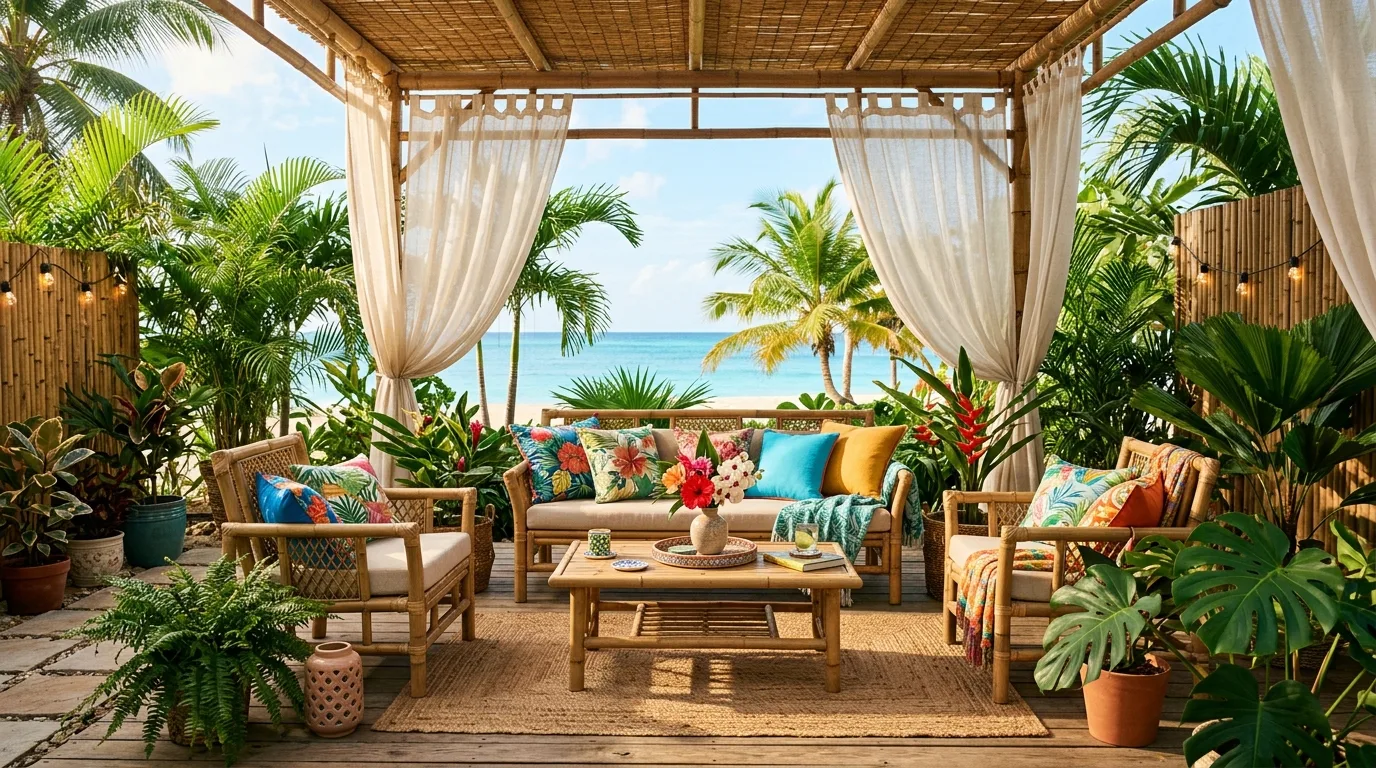
Let the surrounding landscape support the decor
The surrounding landscape should support patio decor rather than feeling like a completely separate zone. When planting, hardscape, and furnishings all speak the same language, the patio starts feeling like an integrated part of the home environment instead of a decorated patch of paving.
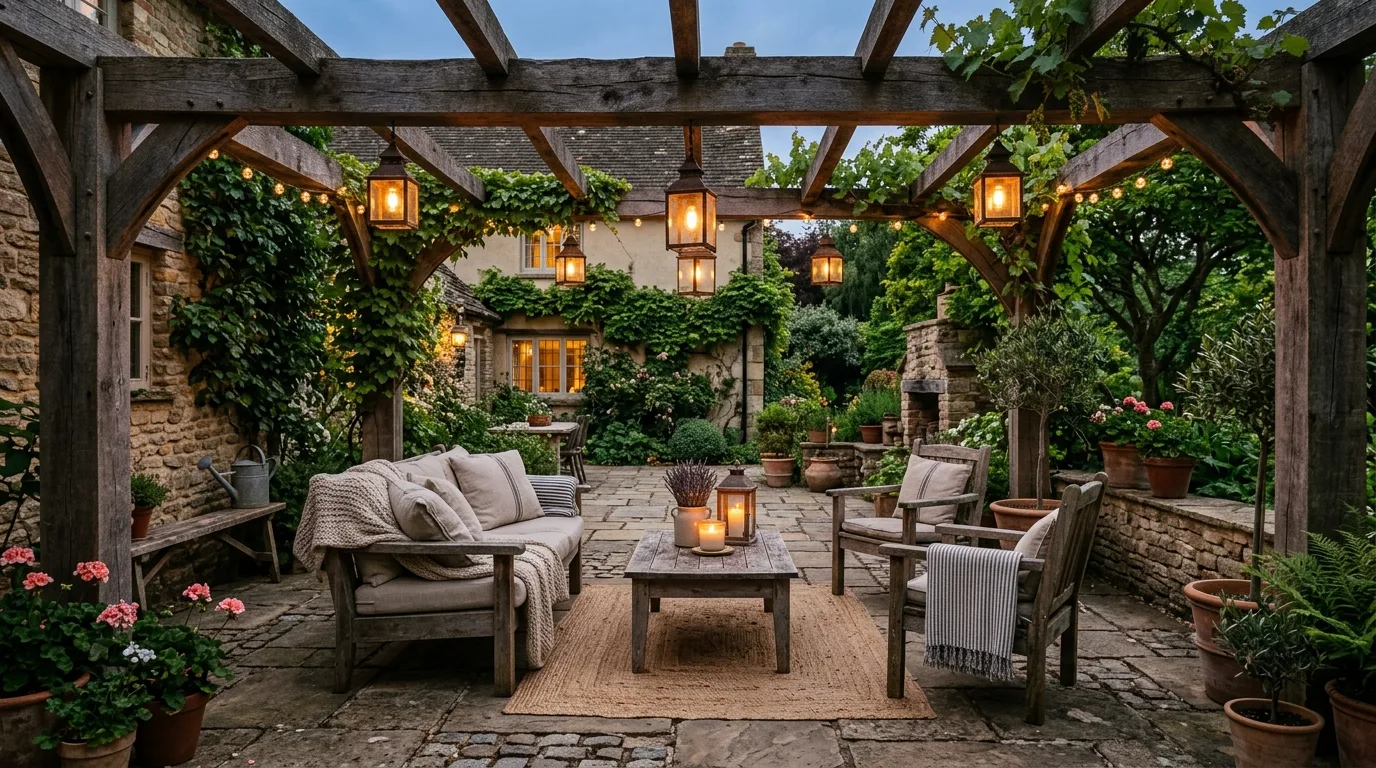
Keep storage hidden but accessible
Hidden but accessible storage makes a patio much easier to live with, especially when cushions, serving pieces, or smaller accessories need to disappear quickly. The more seamlessly those practical items can be managed, the more polished the patio will feel day to day.
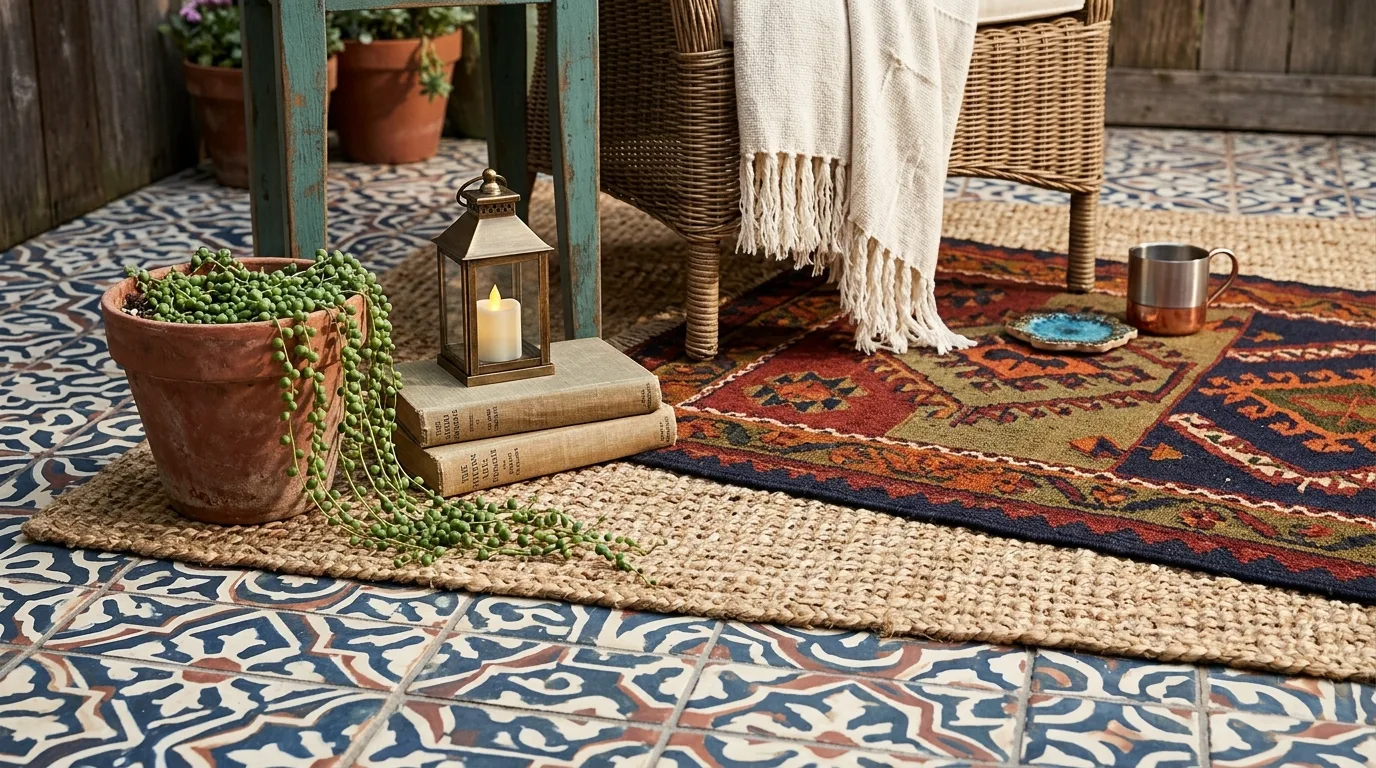
Use repetition to make the design feel cohesive
Repetition is what makes patio decor feel cohesive instead of random. When colors, materials, or shapes appear again in a controlled way across the furniture, lighting, and accessories, the space gains the kind of rhythm that makes outdoor styling feel much more resolved.
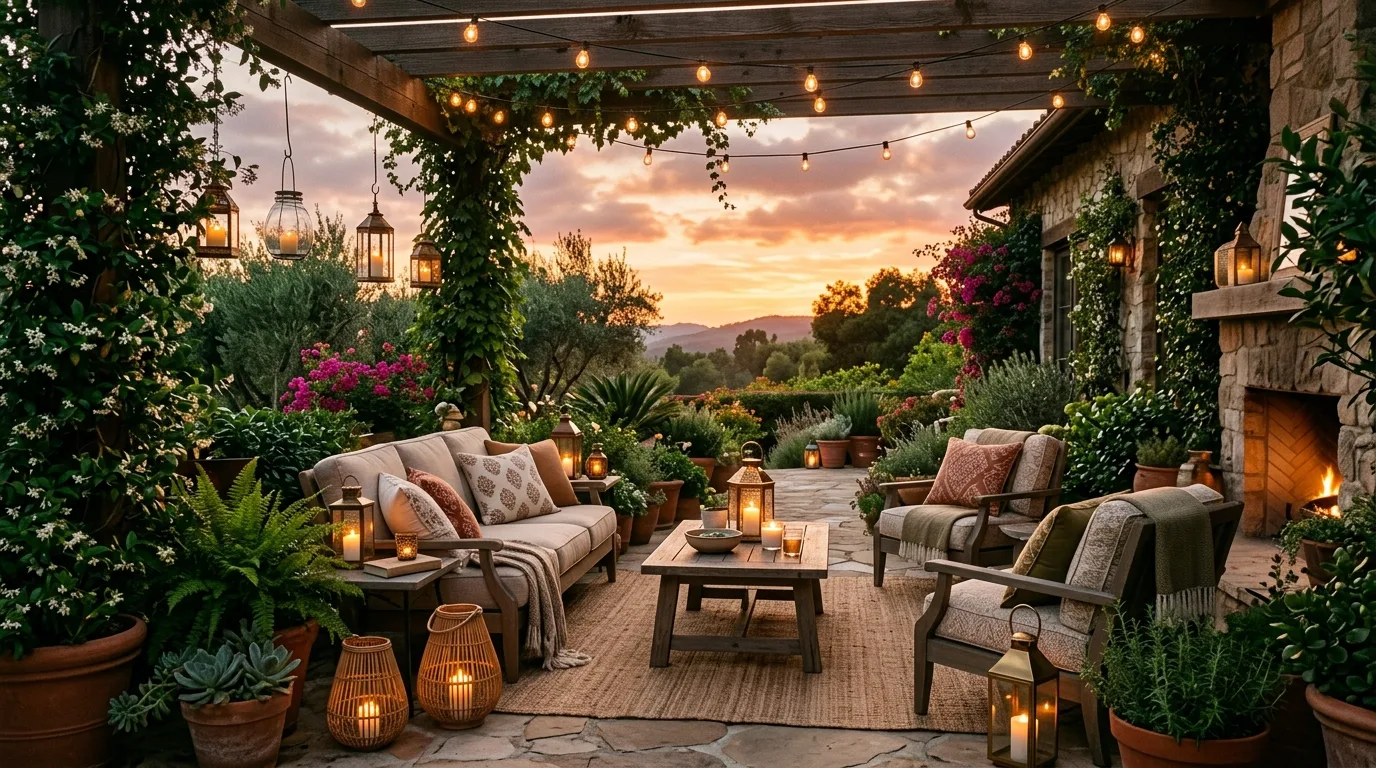
Finish with a patio that feels like a destination
A patio becomes a destination when comfort, structure, and atmosphere all work together instead of existing as separate ideas. Once the seating, planting, lighting, and decorative layers feel aligned, the space naturally starts pulling people outside and keeping them there longer.