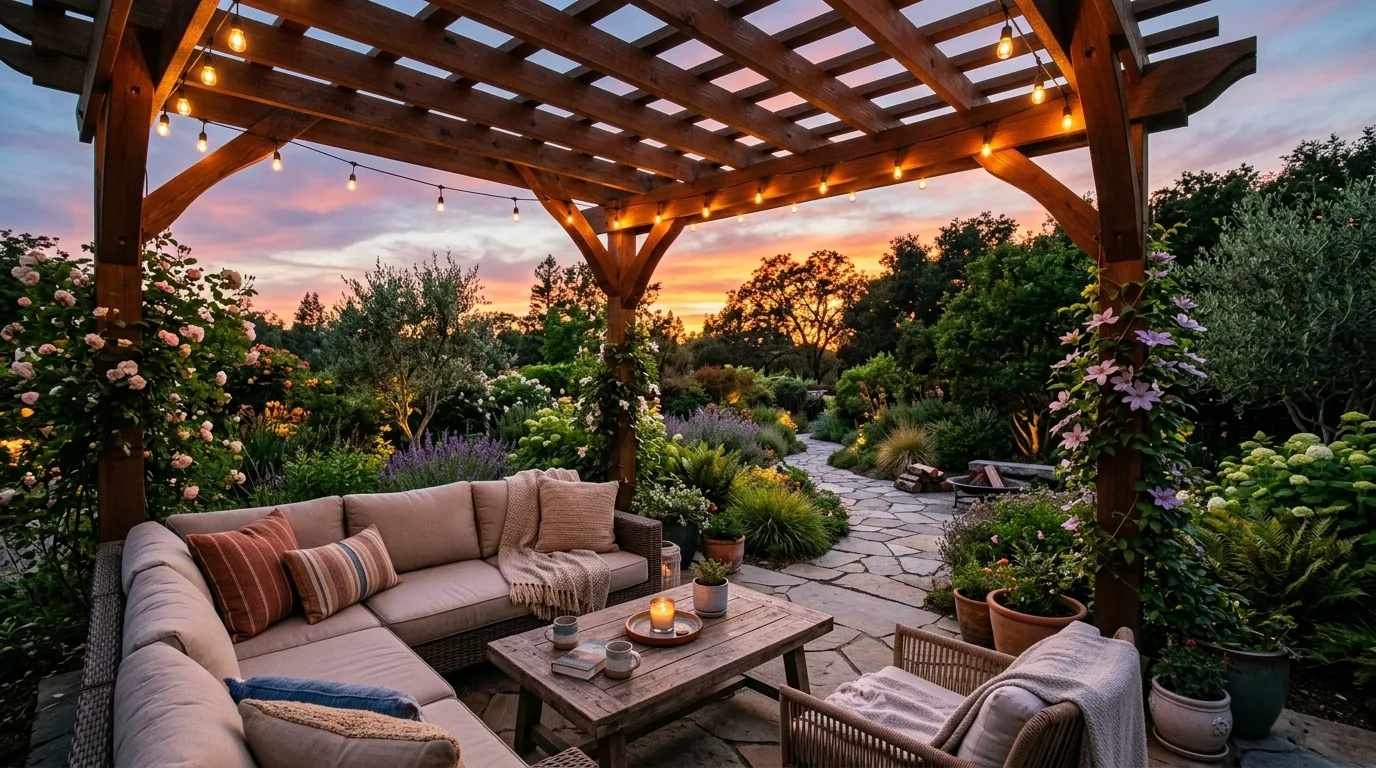
A pergola can change a backyard by giving it structure, shade, and a stronger sense of destination. Even a simple version makes an outdoor area feel more intentional and more like a real room instead of leftover open space.
The best pergolas are designed with both comfort and proportion in mind. Their materials, scale, and relationship to seating or dining zones all influence whether the backyard feels elegant, casual, modern, or rustic.
Use a pergola to define the outdoor room
A pergola defines an outdoor room by giving open space a stronger frame and a clearer purpose. Once it establishes that boundary, the backyard starts feeling more usable and more intentional, even before furniture and planting are fully layered around it.
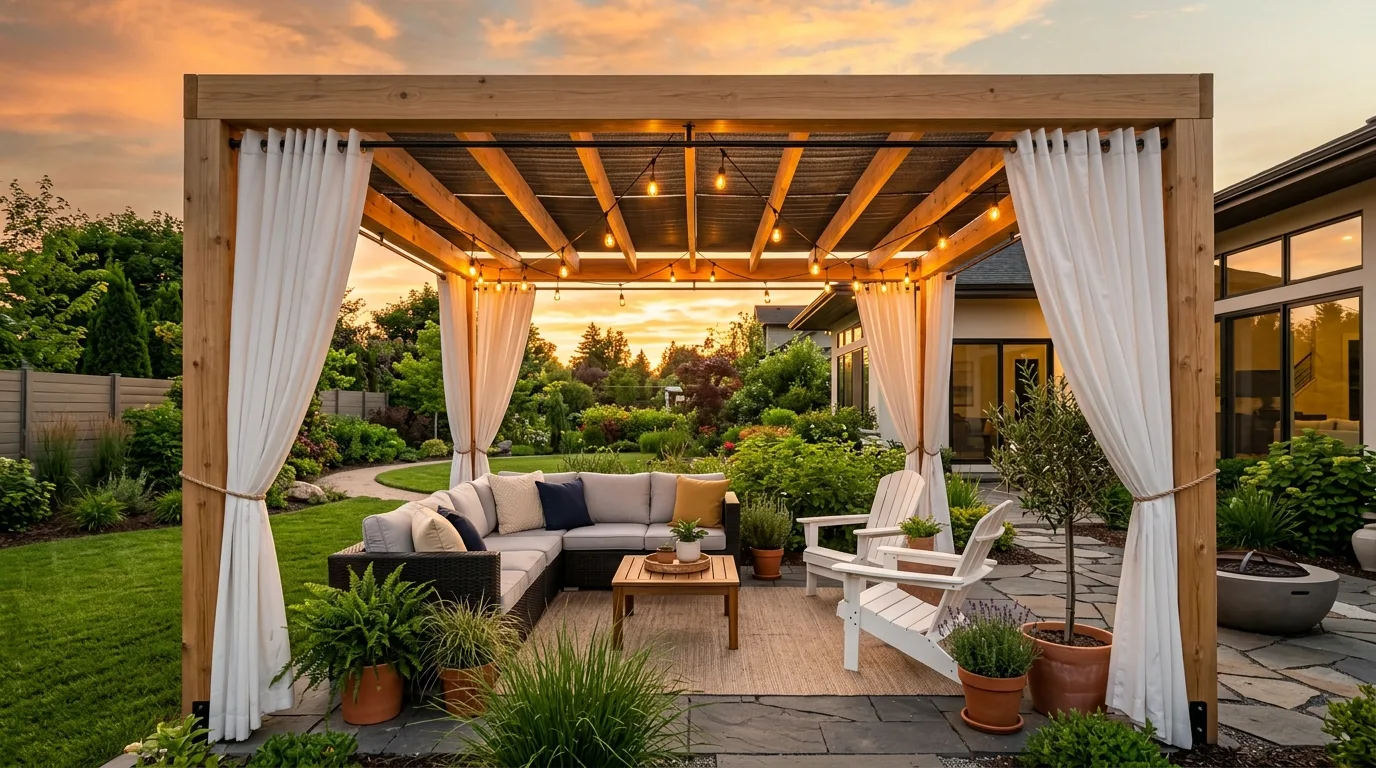
Choose wood for a warmer natural look
Wood brings a natural warmth to a pergola that works especially well in gardens and relaxed backyard settings. Its texture helps the structure feel connected to the landscape, and it usually softens the transition between architecture, planting, and outdoor furniture.
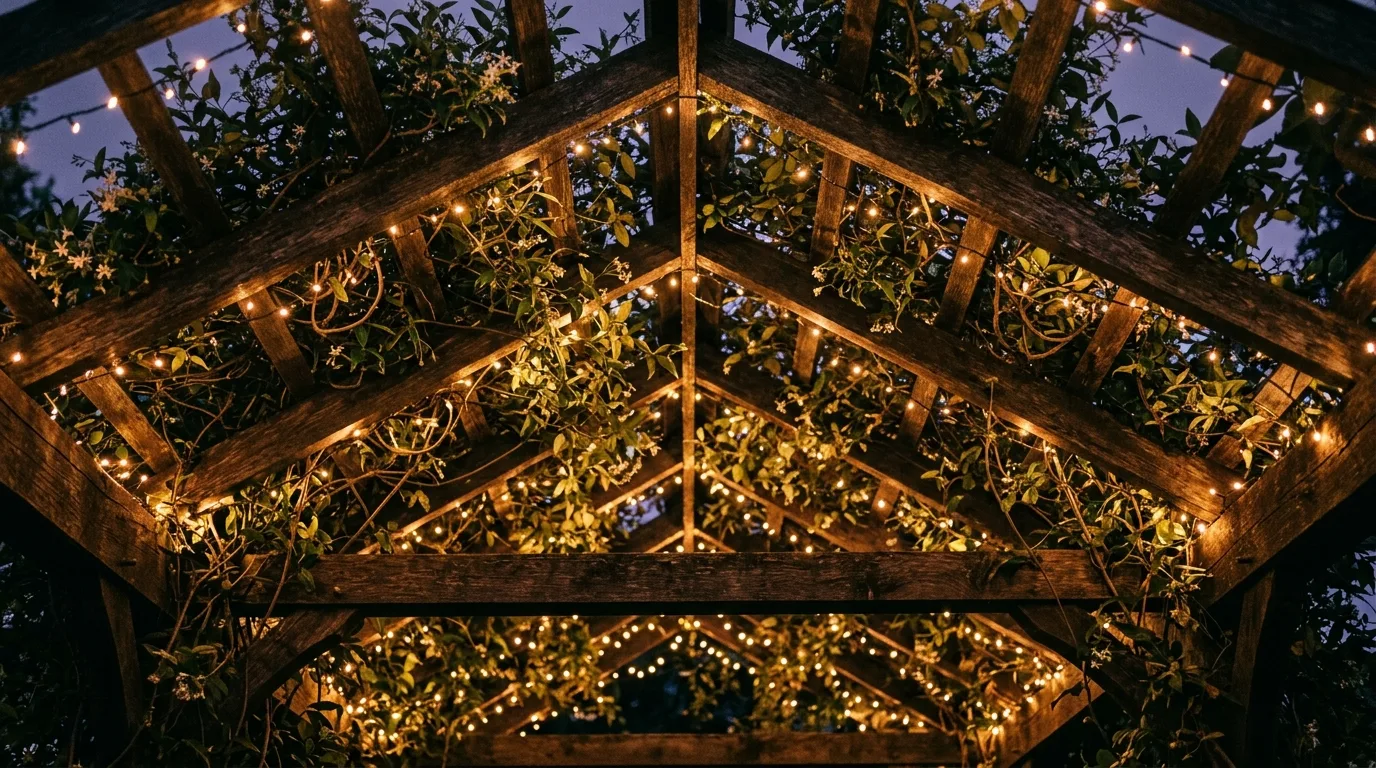
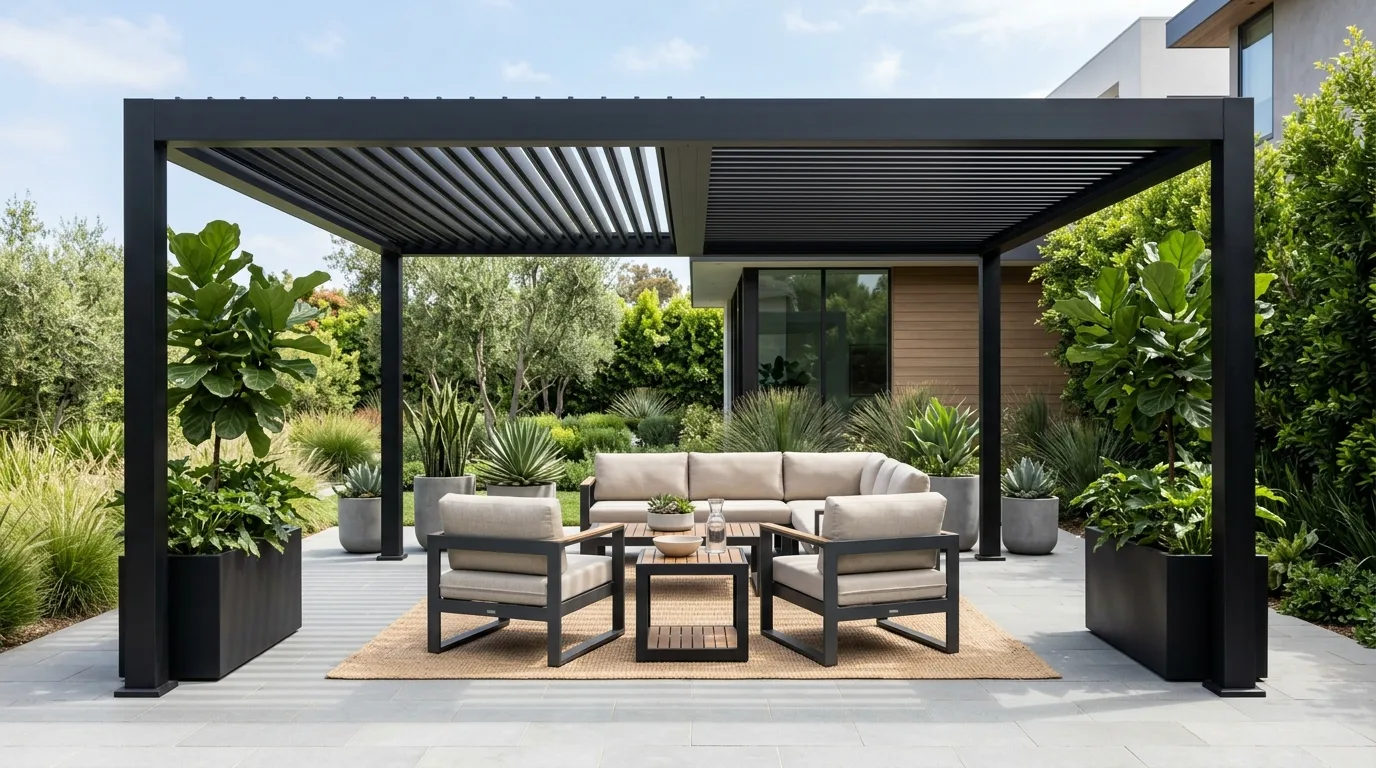
Try a modern dark pergola for stronger contrast
A dark pergola creates stronger contrast and can make a backyard feel more architectural with very little extra effort. It works particularly well when the surrounding palette is lighter, because the structure reads as a clear design element instead of disappearing into the background.
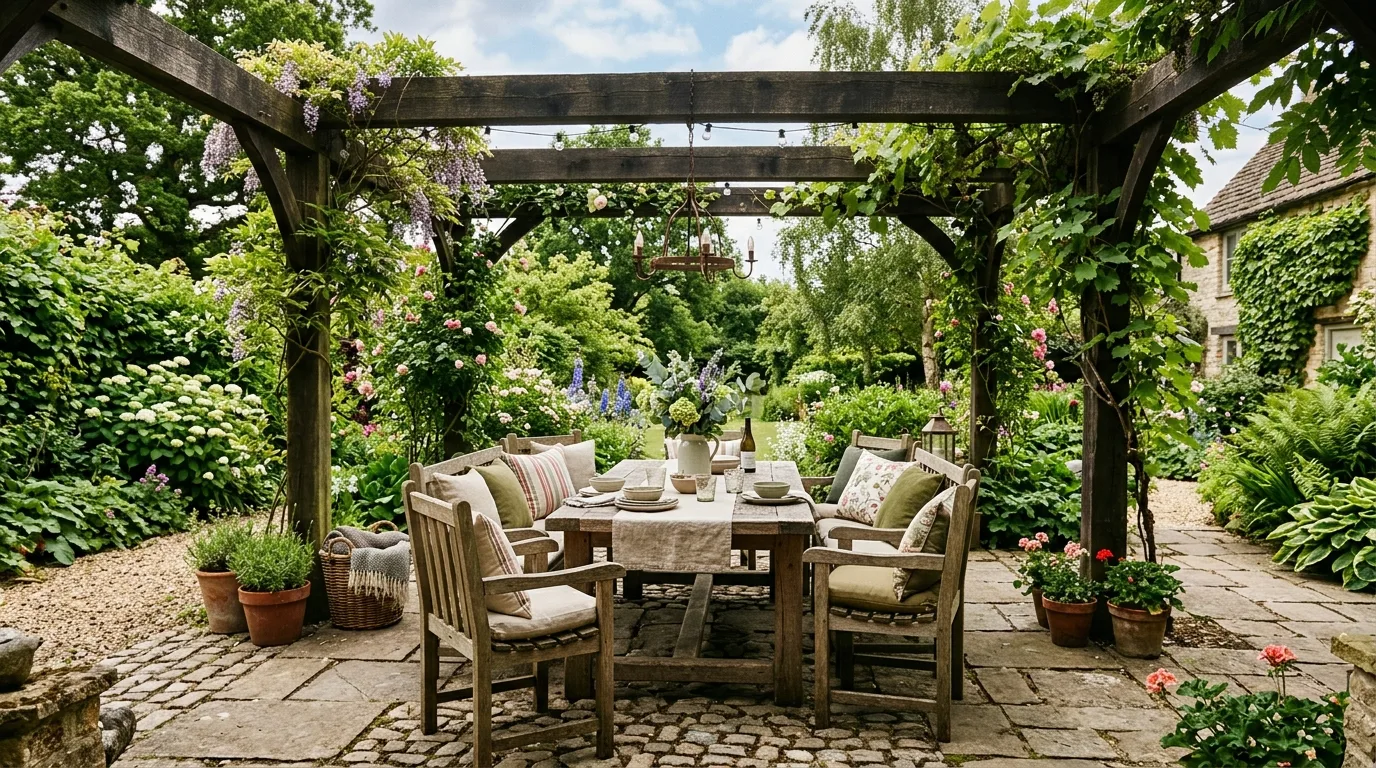
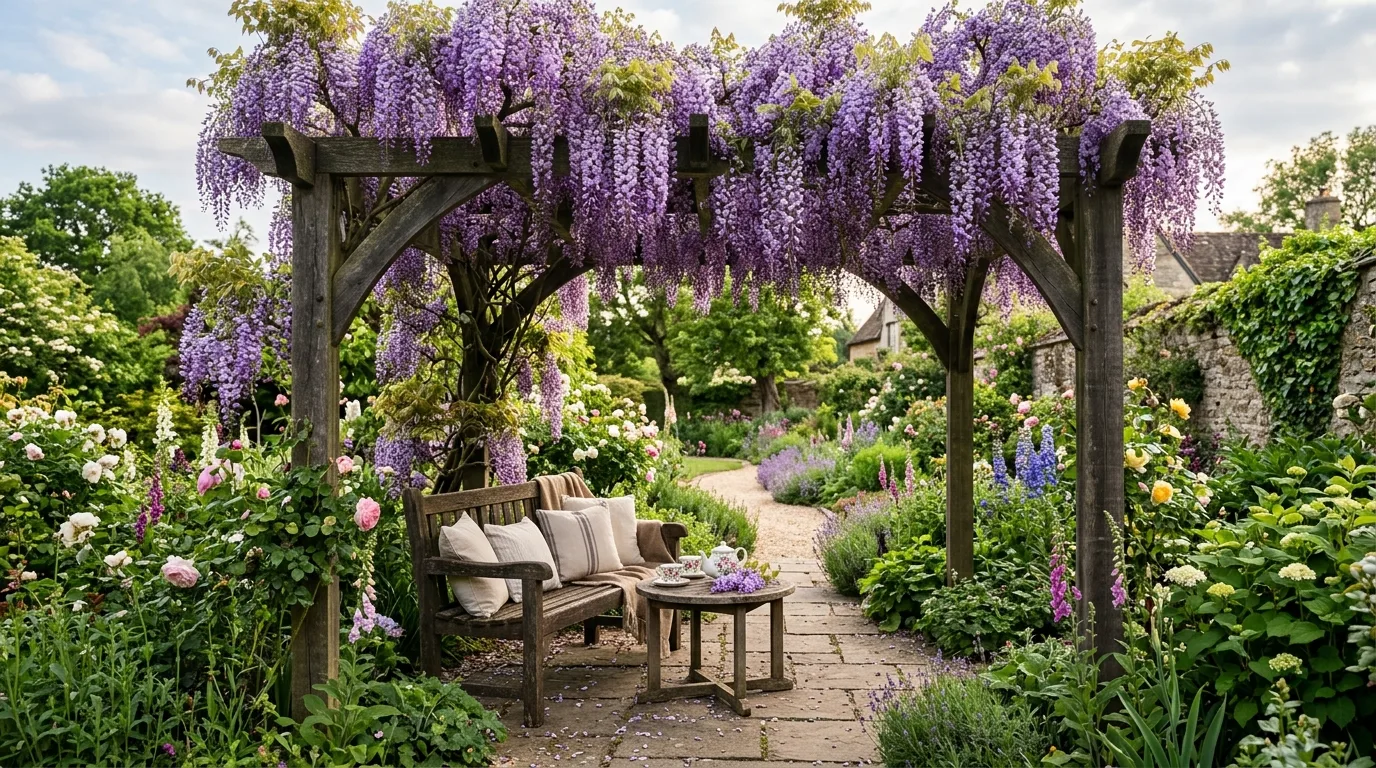
Layer fabric or vines for softer shade
Fabric panels or climbing vines soften a pergola visually and also improve the quality of the shade it creates. That added softness makes the structure feel less rigid, and it often gives the outdoor room a more inviting and settled atmosphere overall.
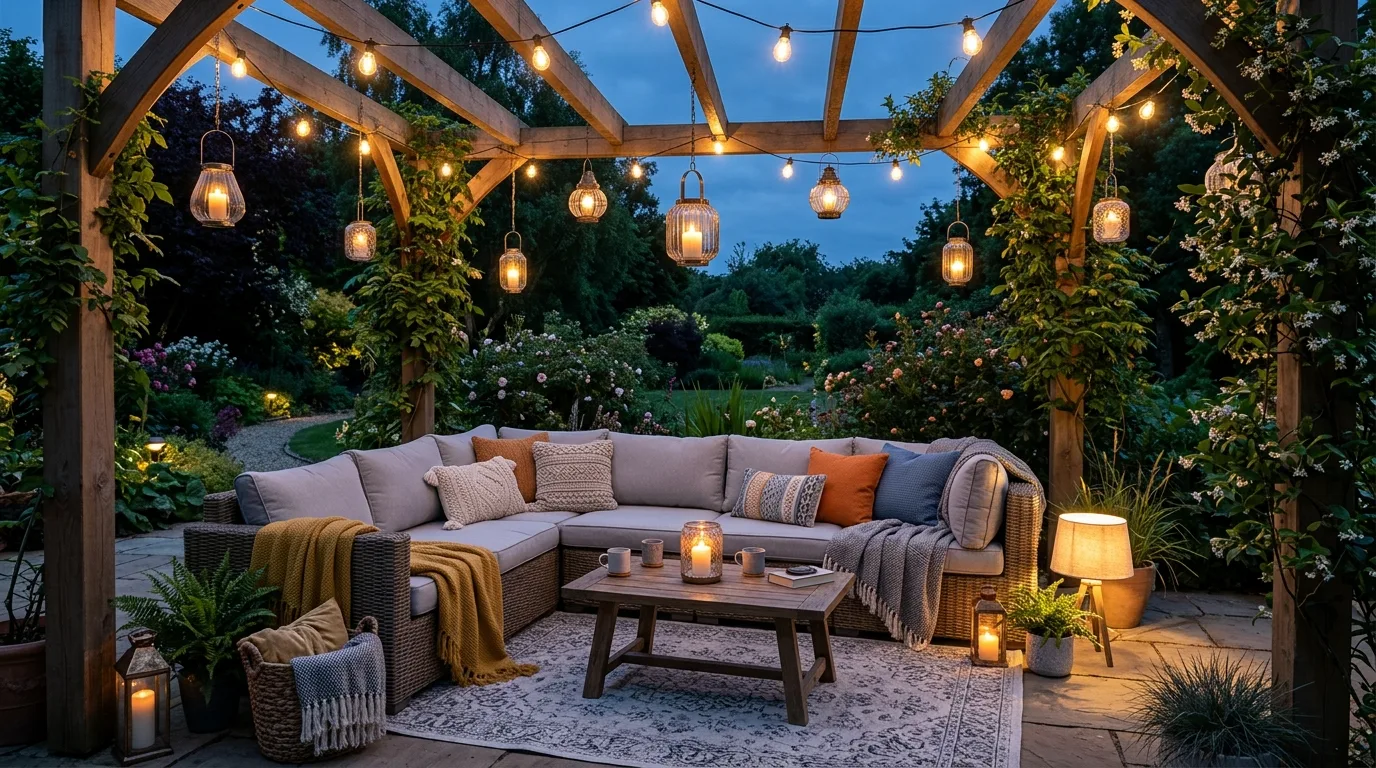
Use lighting to extend the space into evening
Lighting extends the usefulness of a pergola long after daylight fades, which is one of the easiest ways to make it feel like a real destination. String lights, sconces, pendants, or lanterns can all deepen the mood and make the structure more compelling at night.
Anchor the pergola with a dining setup
A dining setup under a pergola gives the structure a strong purpose and usually makes the backyard feel more complete. Once the table zone is framed overhead, meals outside become easier to imagine and much more likely to happen regularly.
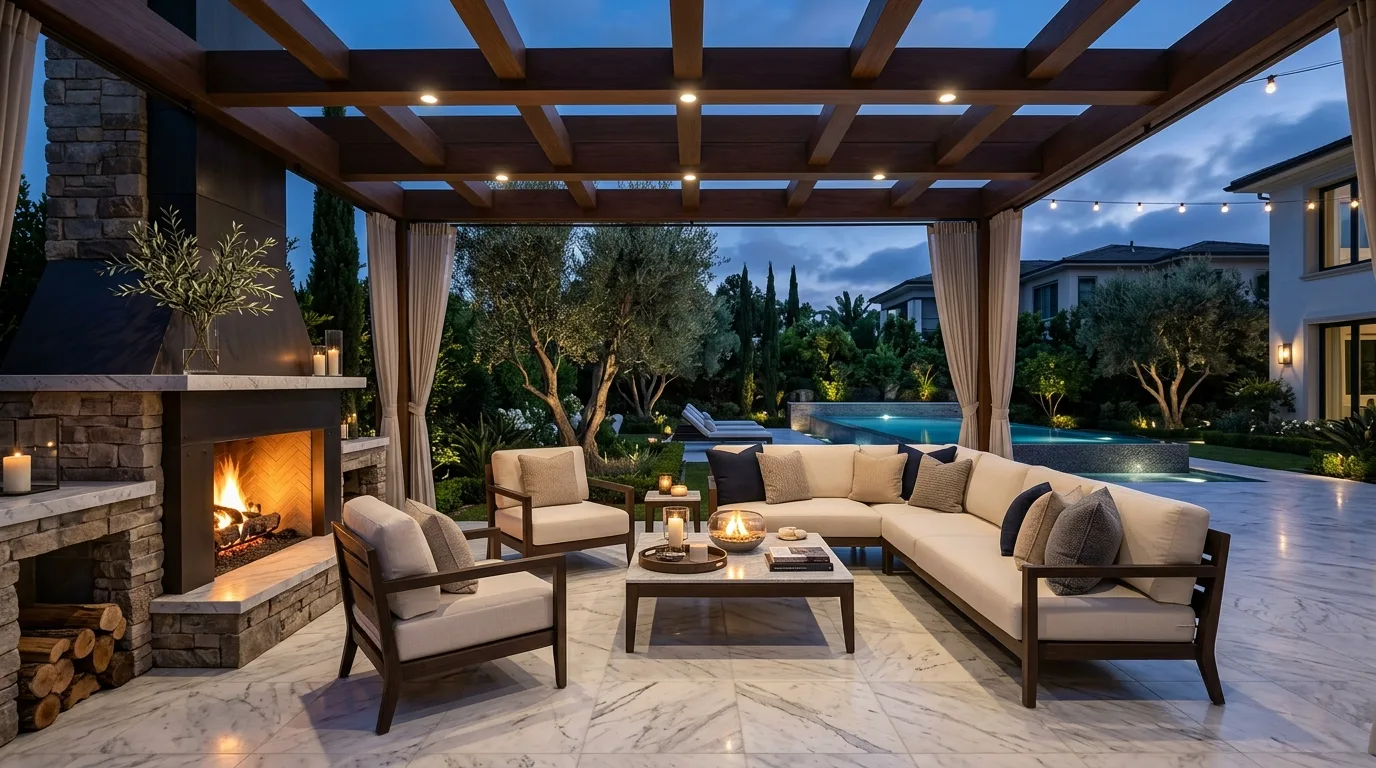
Create a lounge zone that feels intentional
A pergola lounge area works best when the seating arrangement feels deliberate and comfortable rather than loosely pushed underneath for shade. Once the proportions are right, the structure begins to feel like an outdoor living room instead of just a backyard accessory.
Balance the pergola scale with the yard size
Scale matters with pergolas because the structure has to relate both to the yard and to the furniture beneath it. If it is too small it feels incidental, and if it is too large it can overwhelm the space, so proportion is what keeps the design convincing.
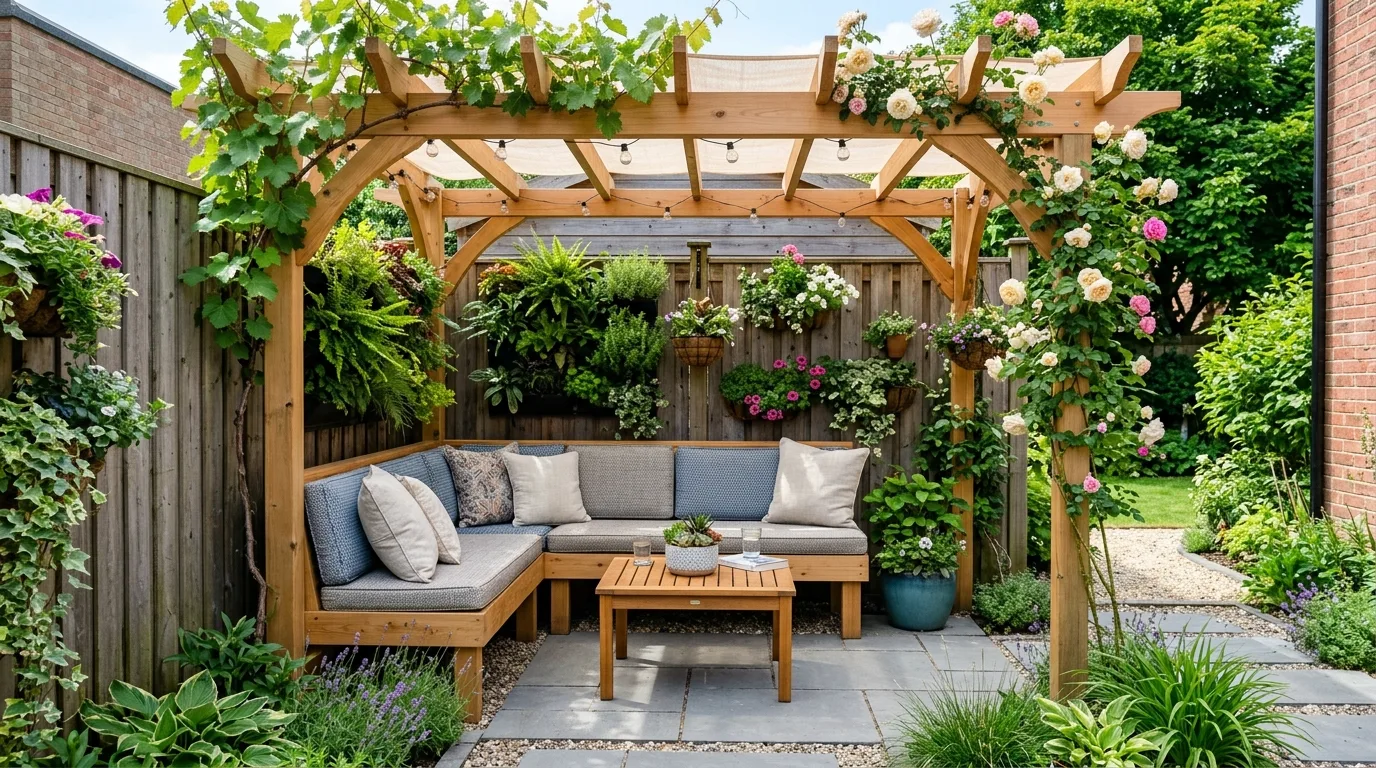
Use planting to connect structure and landscape
Planting around a pergola helps tie it into the landscape so it feels rooted rather than dropped into place. Borders, vines, containers, or nearby beds can soften the edges and make the whole structure feel more connected to the backyard around it.
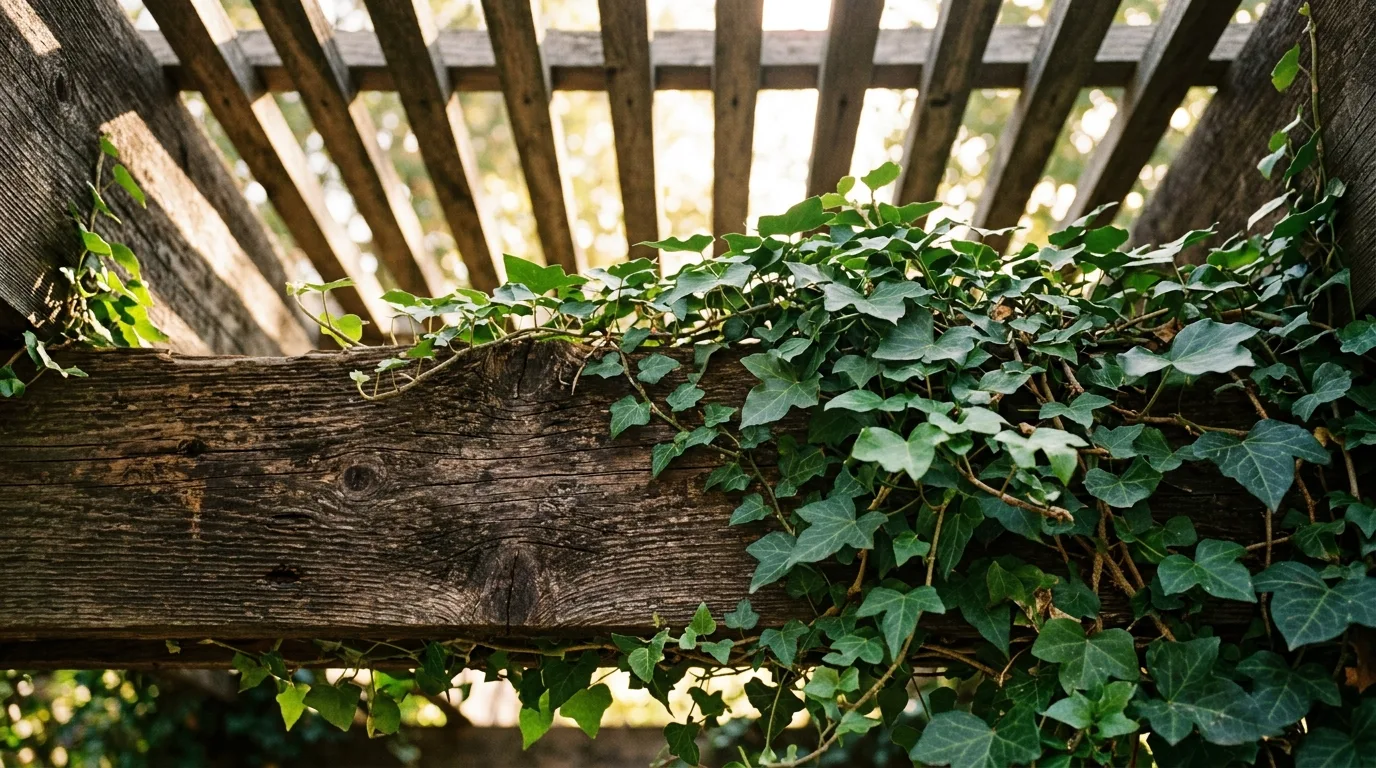
Add privacy where the backyard needs it
Privacy becomes more valuable in a pergola zone when the space is meant for long meals or lingering conversation. Screens, planting, or fabric elements can make the area feel more sheltered and comfortable without closing it off too heavily from the yard.
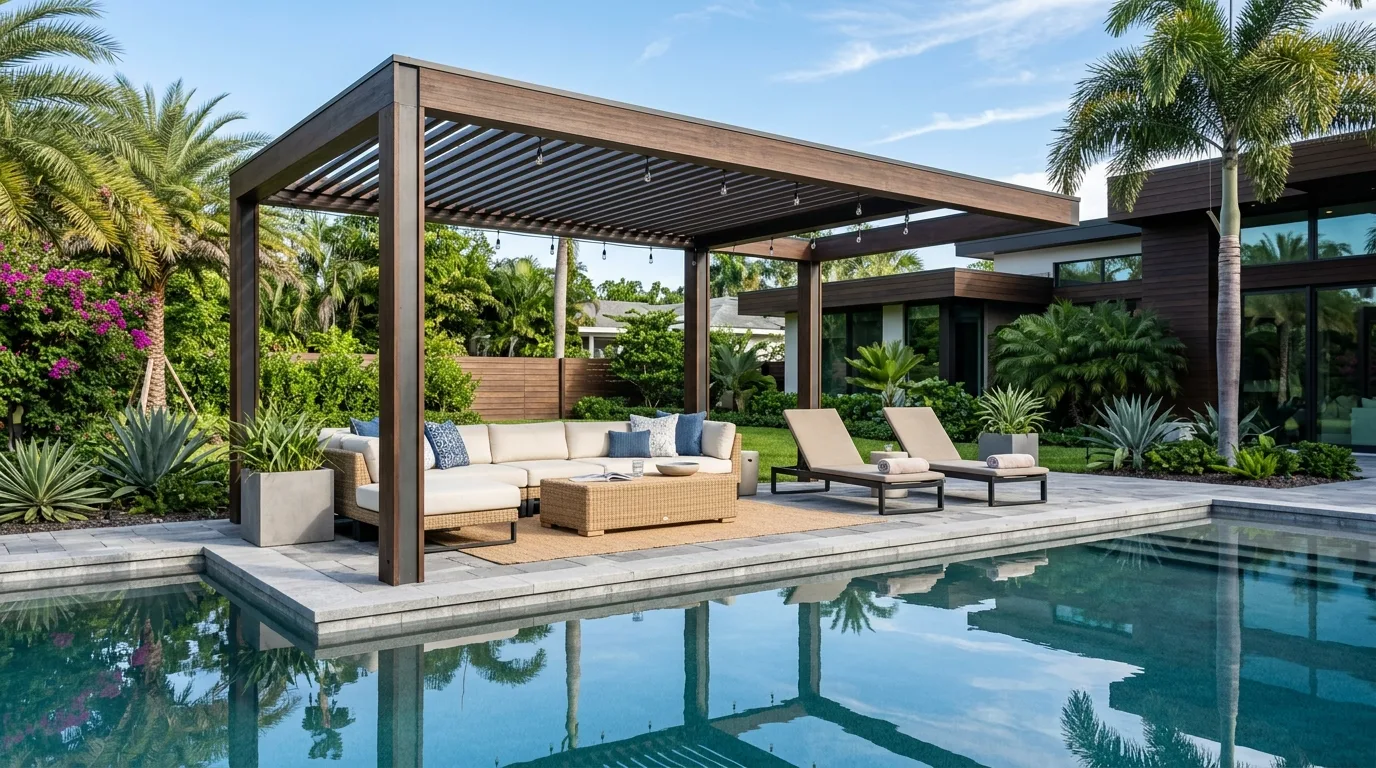
Let the pergola frame a view or focal point
A pergola can do more than create shade when it is positioned to frame a view or highlight a focal point in the garden. That alignment gives the structure a compositional role and helps the backyard feel more intentionally designed as a whole.
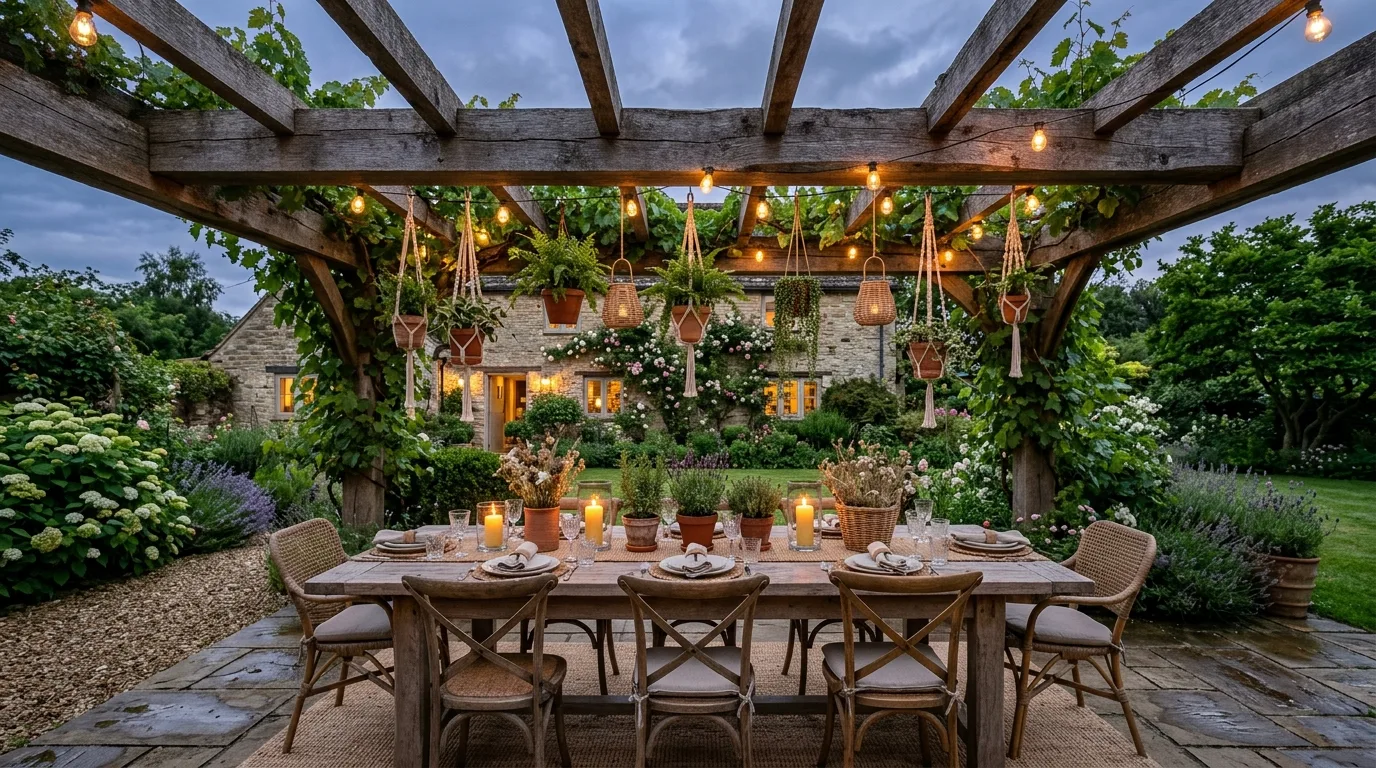
Use hardscape underfoot to finish the zone
Hardscape under a pergola gives the space a finished base and helps the structure feel like part of a complete outdoor room. Stone, pavers, gravel, or decking can all work, but the surface should reinforce how the space is meant to be used.
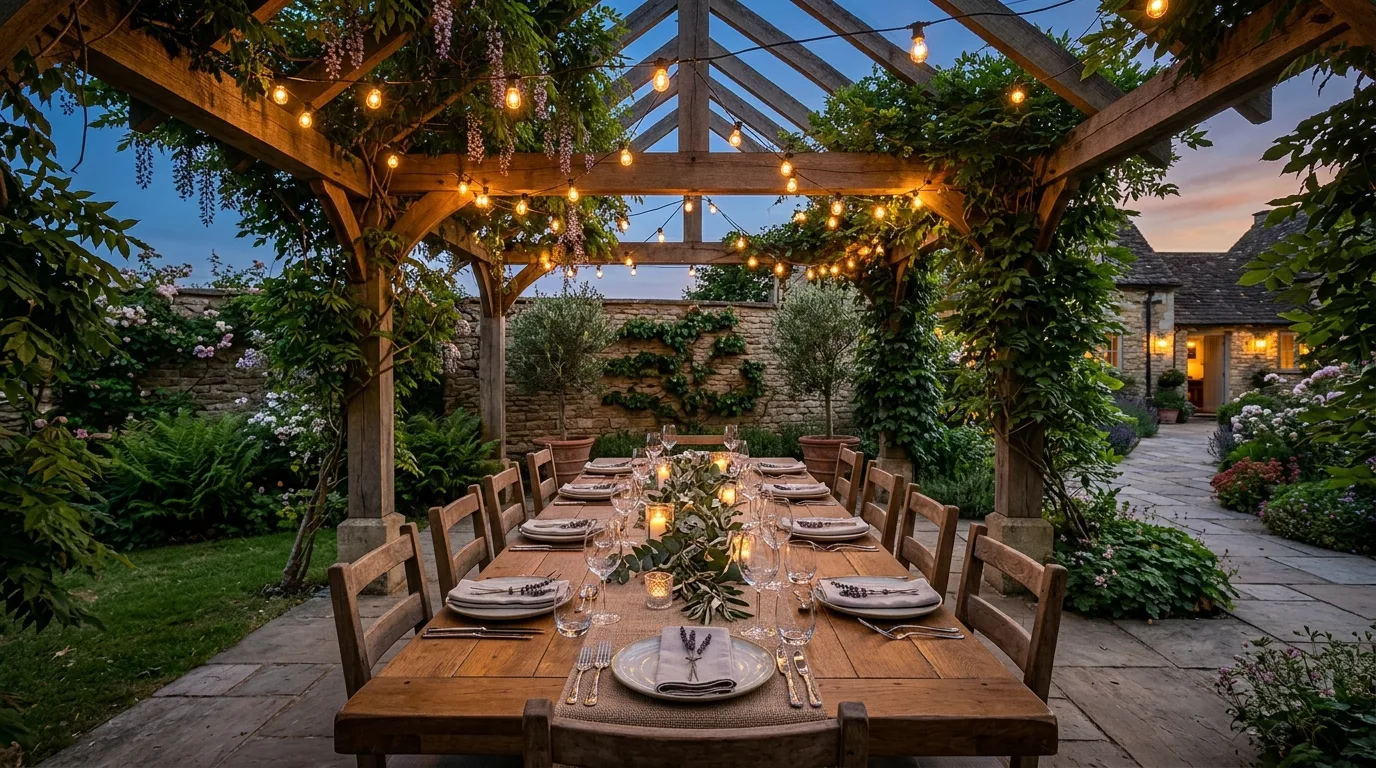
Keep styling durable but still inviting
Outdoor styling around a pergola should feel durable enough for the weather while still adding comfort and atmosphere. Cushions, planters, lanterns, and tables work best when they support real use instead of making the space feel too delicate to enjoy.
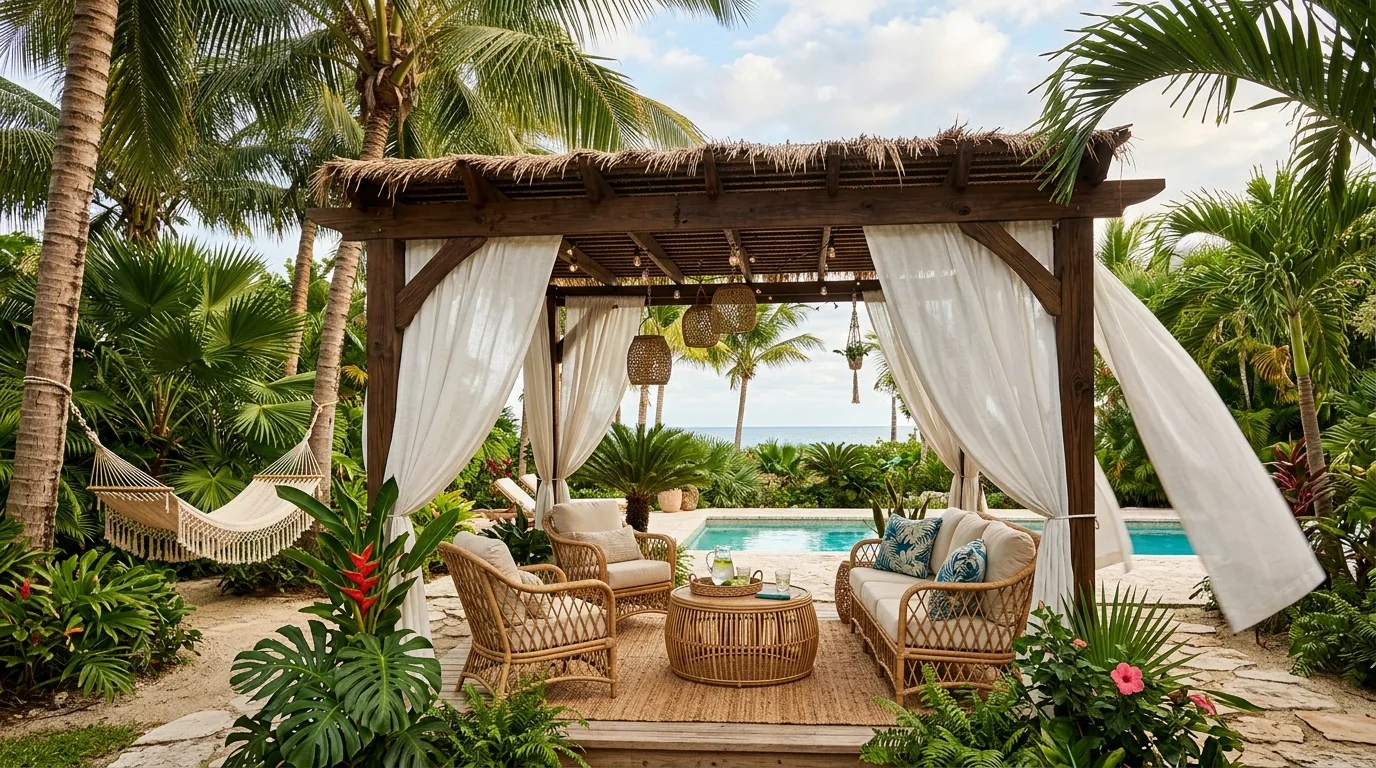
Finish with a backyard space people want to use
A pergola becomes inviting when it supports actual life in the backyard, not just the idea of it. Once shade, seating, lighting, and planting are all working together, the structure starts feeling like one of the most naturally used spaces in the entire yard.