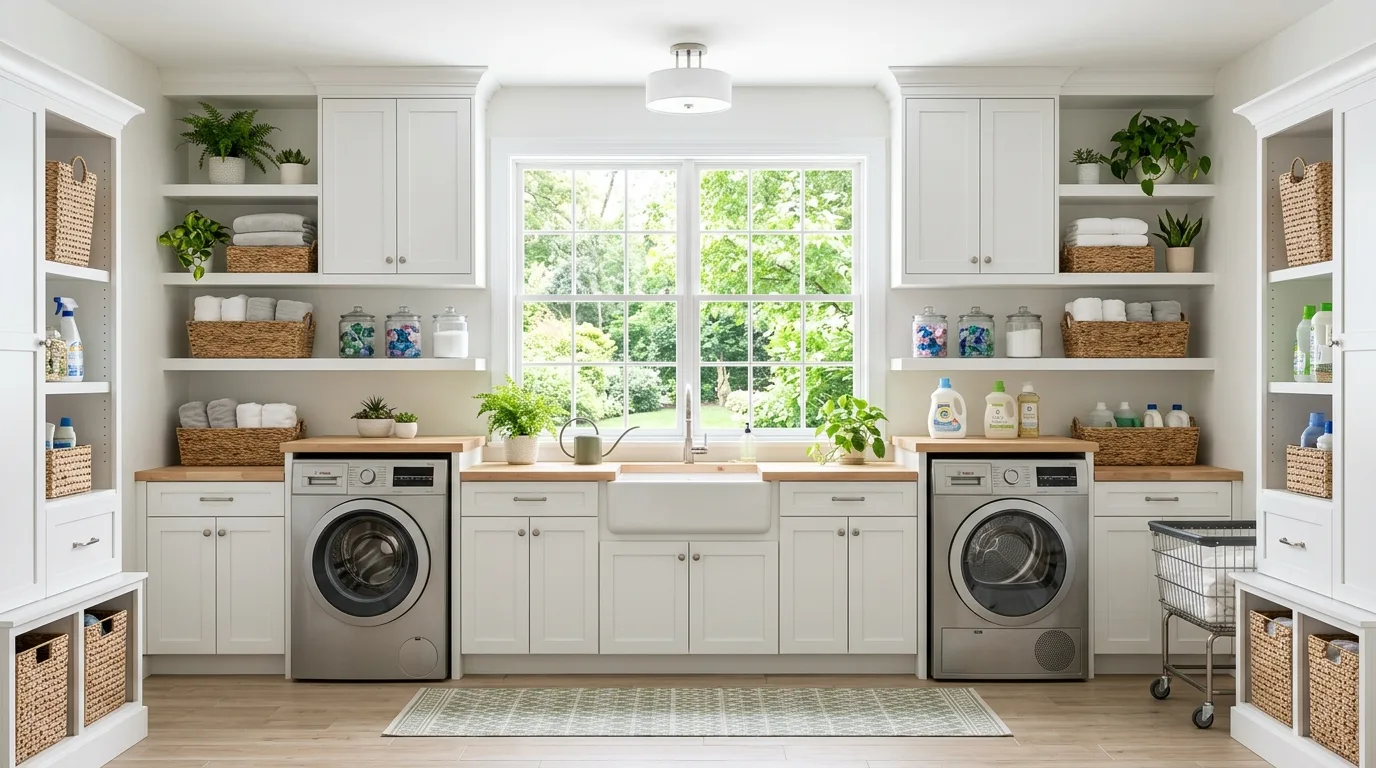
A good laundry room can save time, cut visual mess, and make one of the most repetitive household jobs feel smoother. Even small improvements to layout and storage can change how the room works every single day.
The best laundry rooms feel deliberate instead of leftover. With the right cabinetry, surfaces, and utility features, the room can be both highly functional and visually connected to the rest of the home.
Build around clear sorting and folding zones
A laundry room works harder when sorting and folding are planned from the start instead of squeezed into leftover space. Clear zones make every step easier, and they help the room feel more efficient because you are not constantly moving piles around just to make the next task possible.
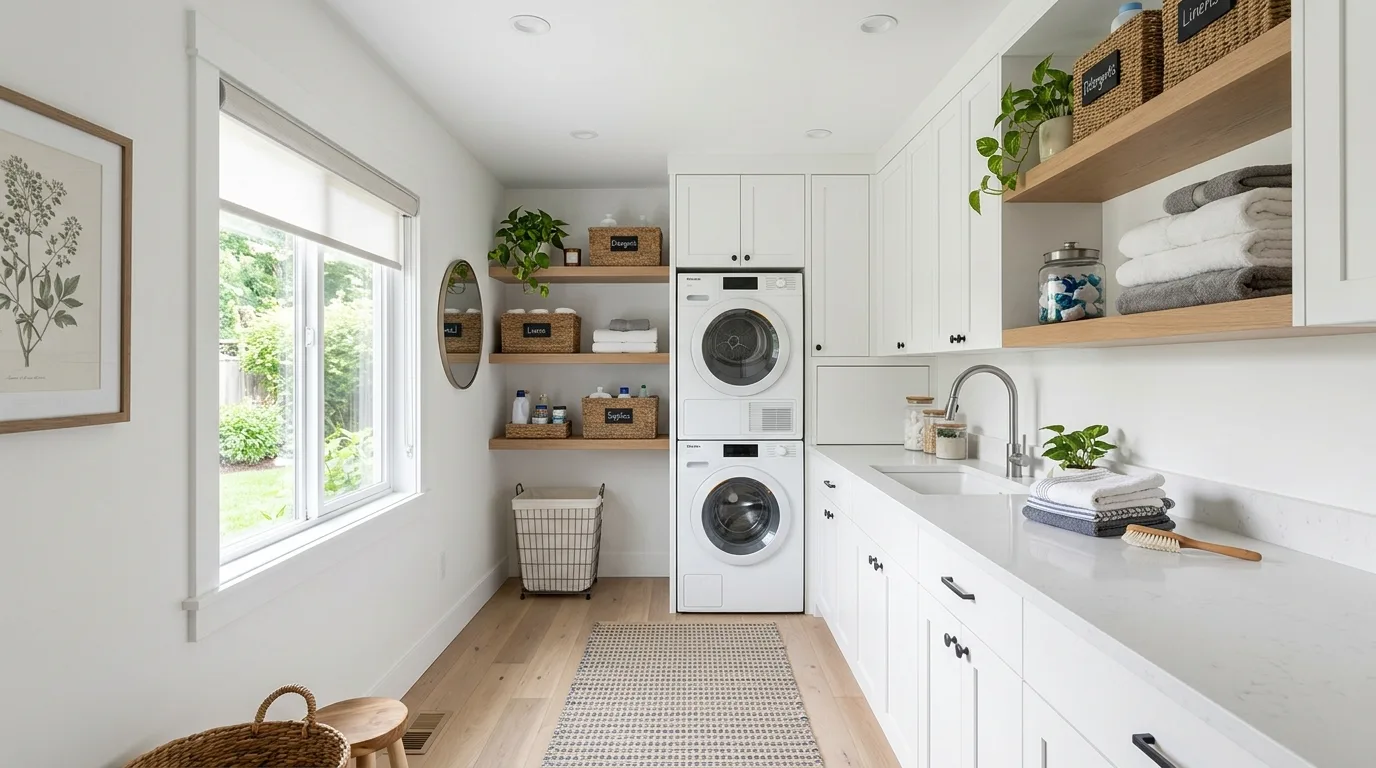
Use cabinetry to hide everyday supplies
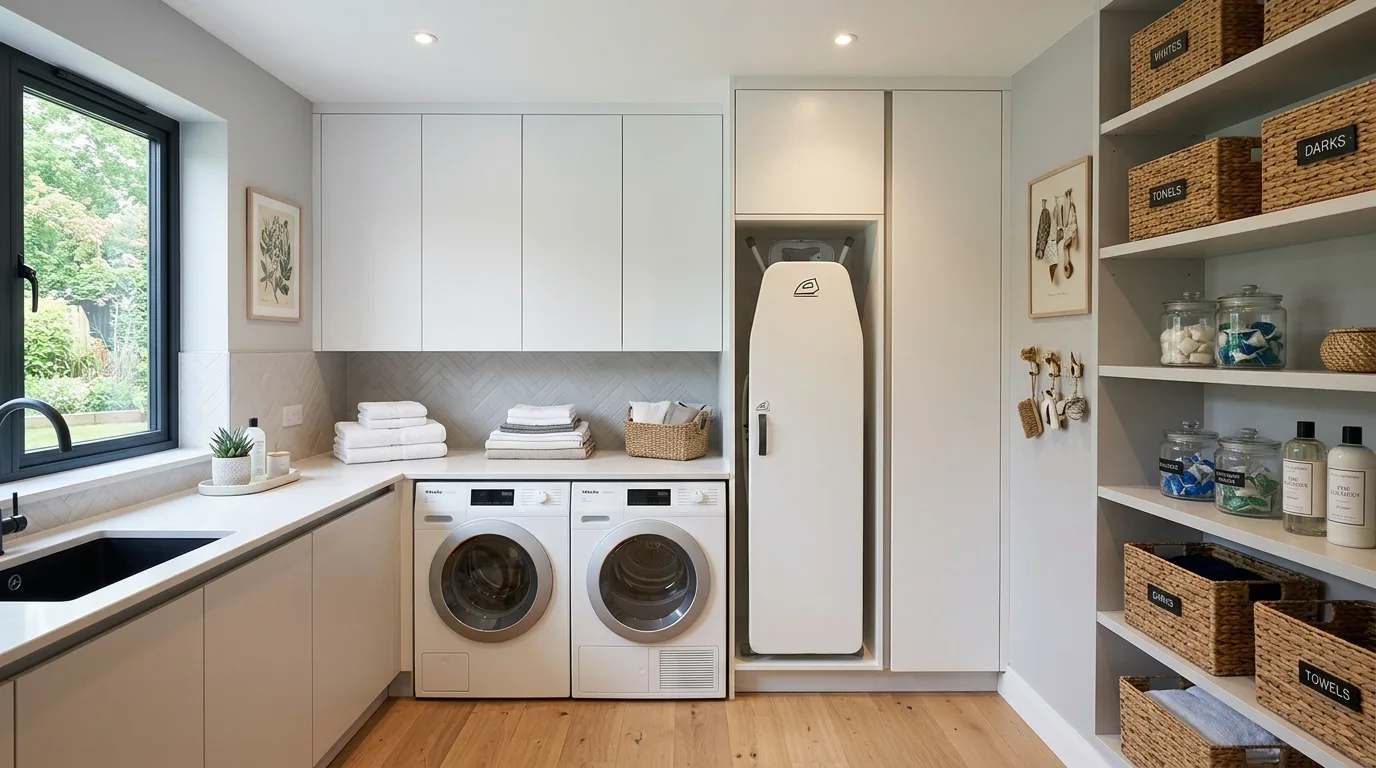
Cabinetry makes a big difference in a laundry room because it hides the visual mess that supplies naturally create. Detergent, stain removers, extra paper goods, and tools all look more controlled when they have a closed place to live, which makes the room feel calmer even when it is busy.
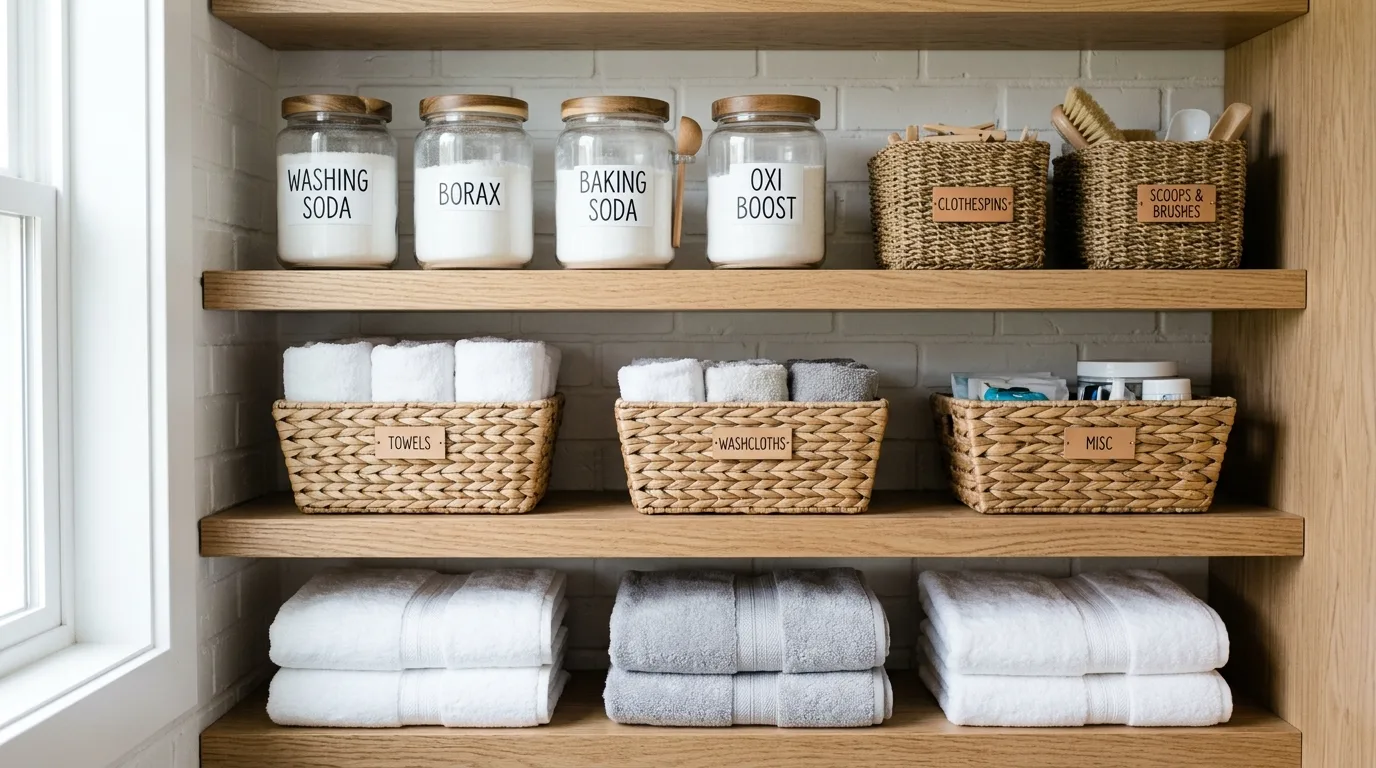
Keep the sink area practical and polished
A sink zone becomes much more useful when it is designed as part of the room instead of treated like an afterthought. Good counter space, easy-to-clean materials, and nearby storage can turn that area into a real work station for hand-washing, soaking, and dealing with messier tasks.
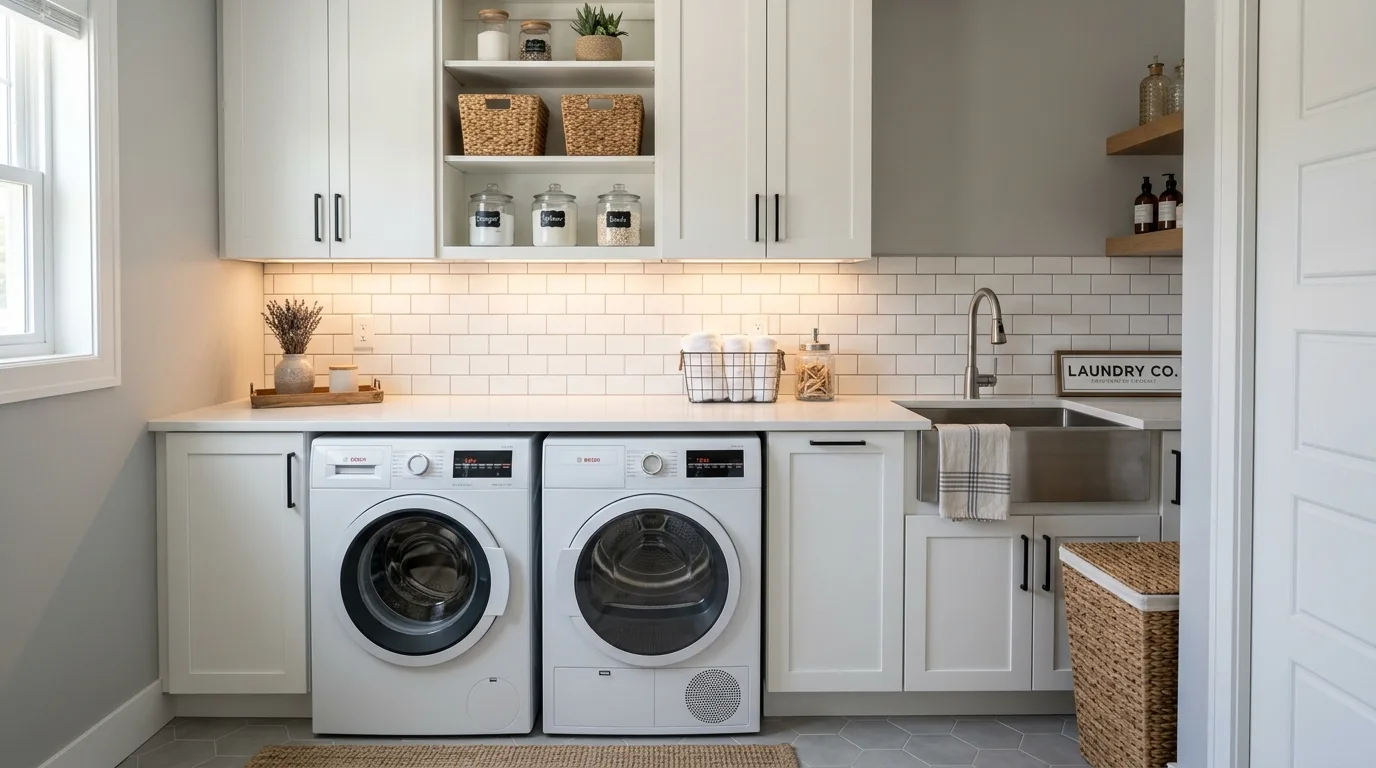
Let open shelves support daily routines
Open shelves help most when they hold things you reach for often and can keep neatly grouped. Towels, baskets, jars, and a few labeled containers can make the room feel easy to use, but the shelving needs enough discipline that it supports function instead of becoming open clutter.
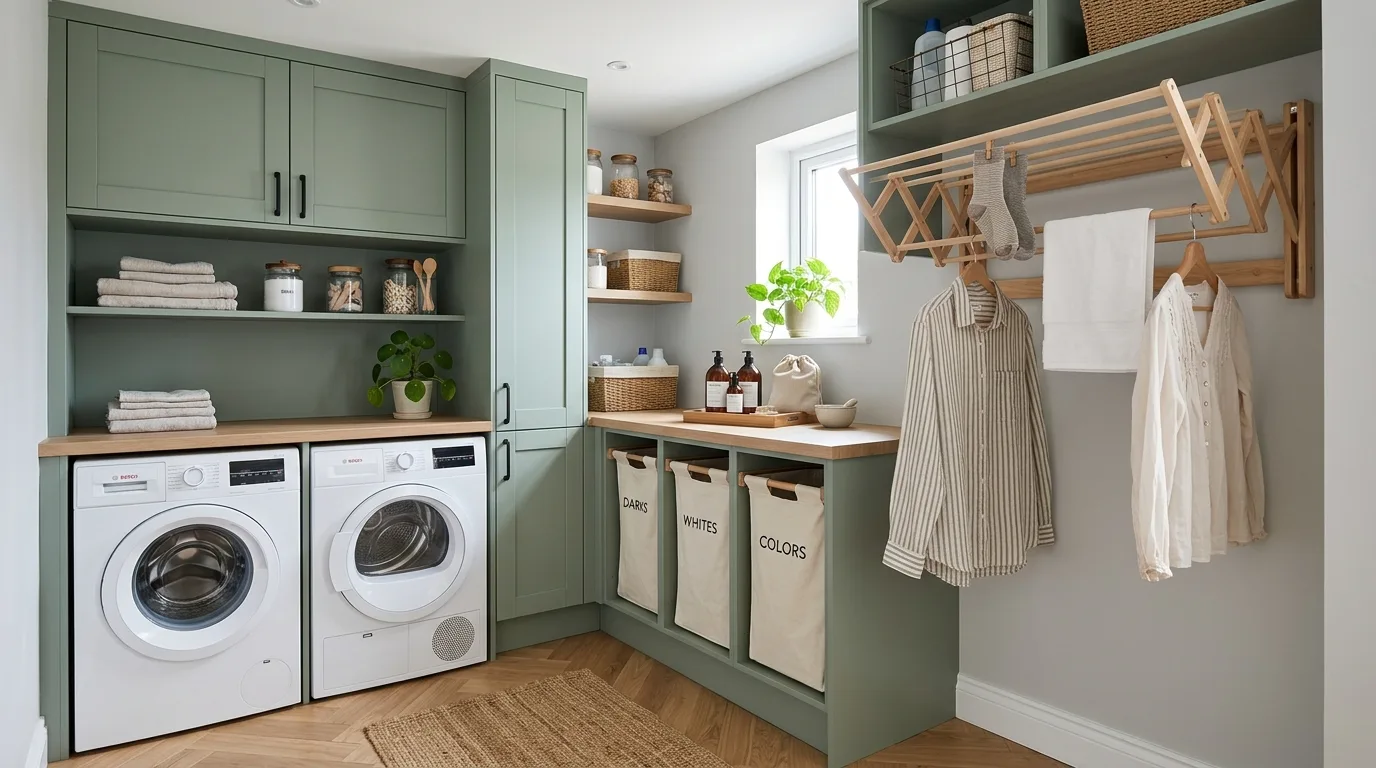
Use wall storage to free the counters
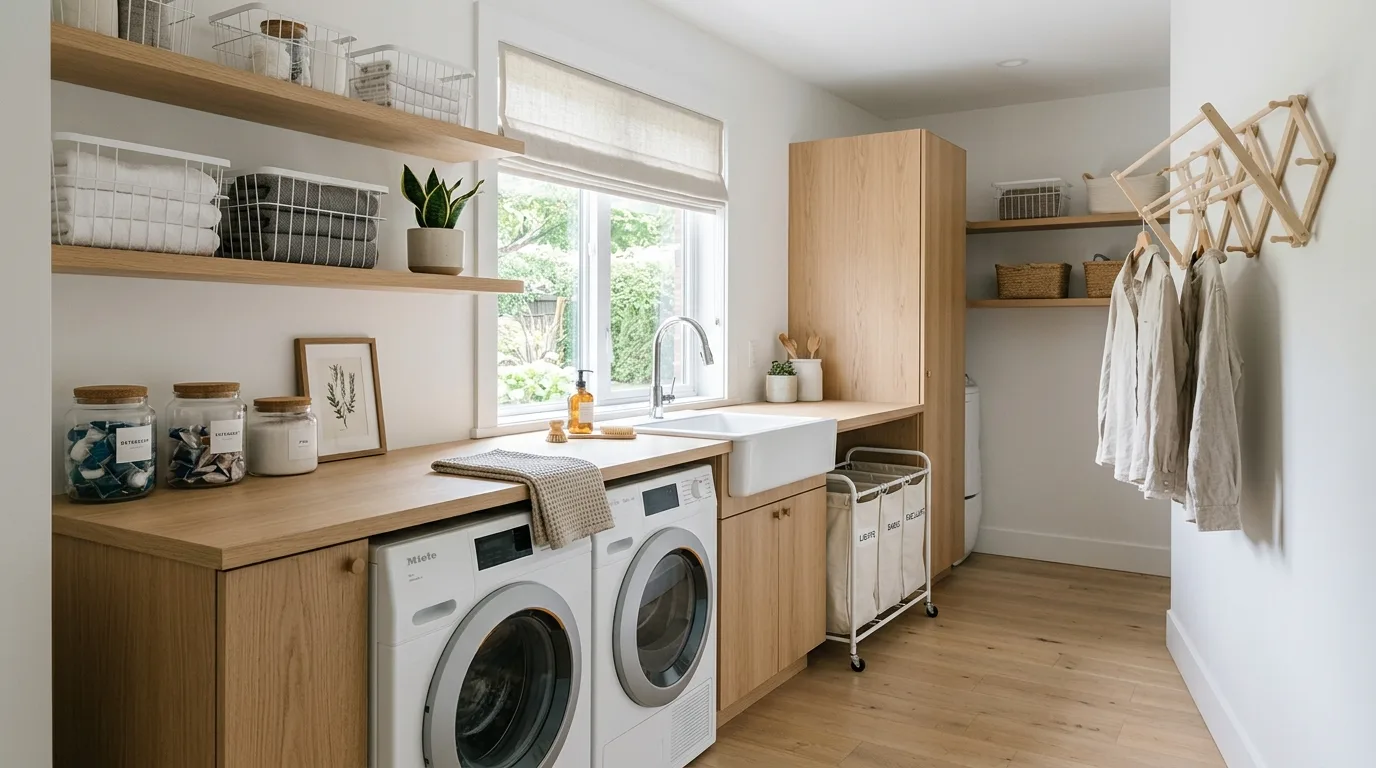
Wall storage is one of the fastest ways to improve a laundry room because it frees the limited horizontal surfaces that are usually needed for real work. Hooks, rails, and compact organizers keep essentials accessible without letting them spread across the counters and machines.
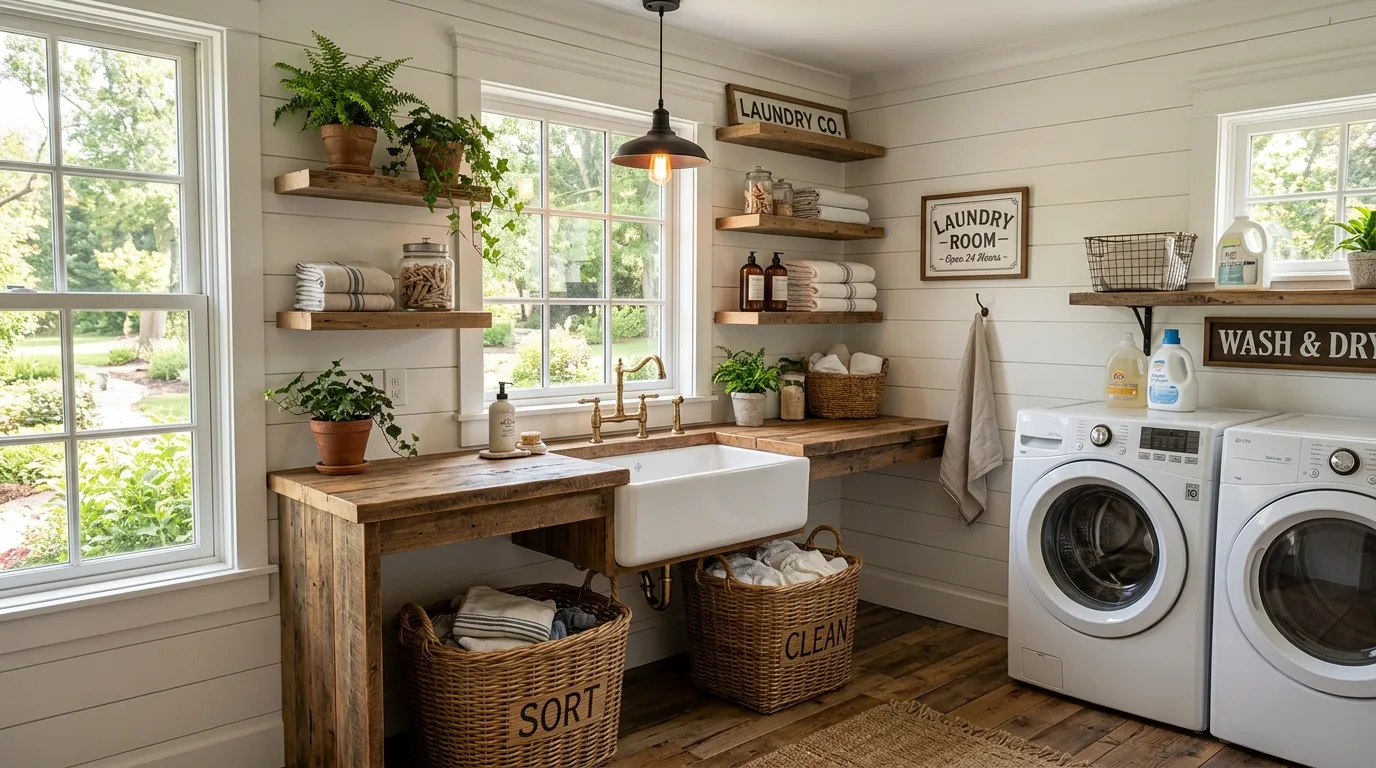
Choose flooring that works hard and looks good
Flooring in a laundry room has to handle spills, movement, and constant use, but it should still support the look of the space. Tile, durable vinyl, or sealed stone can all work beautifully when the pattern and tone tie back into the rest of the room instead of feeling purely utilitarian.
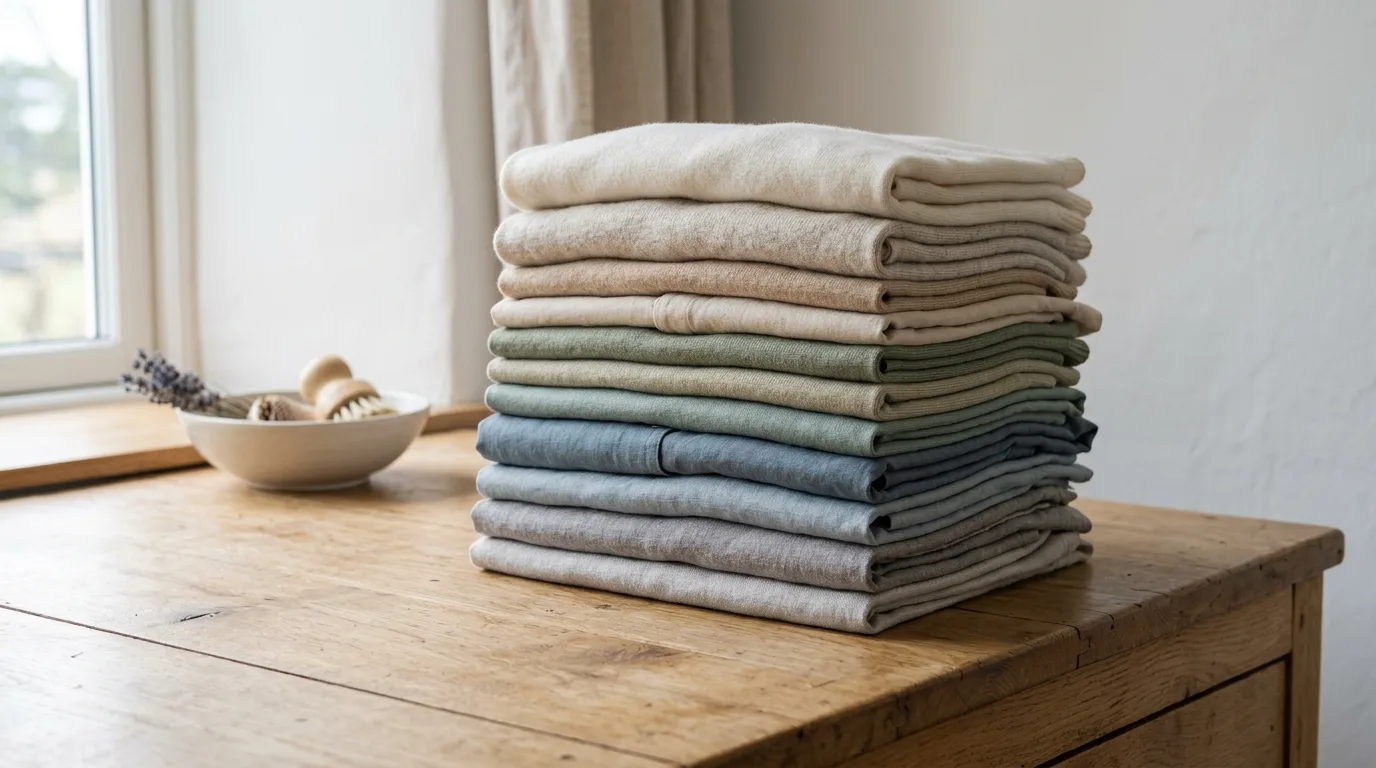
Add hanging space that actually helps
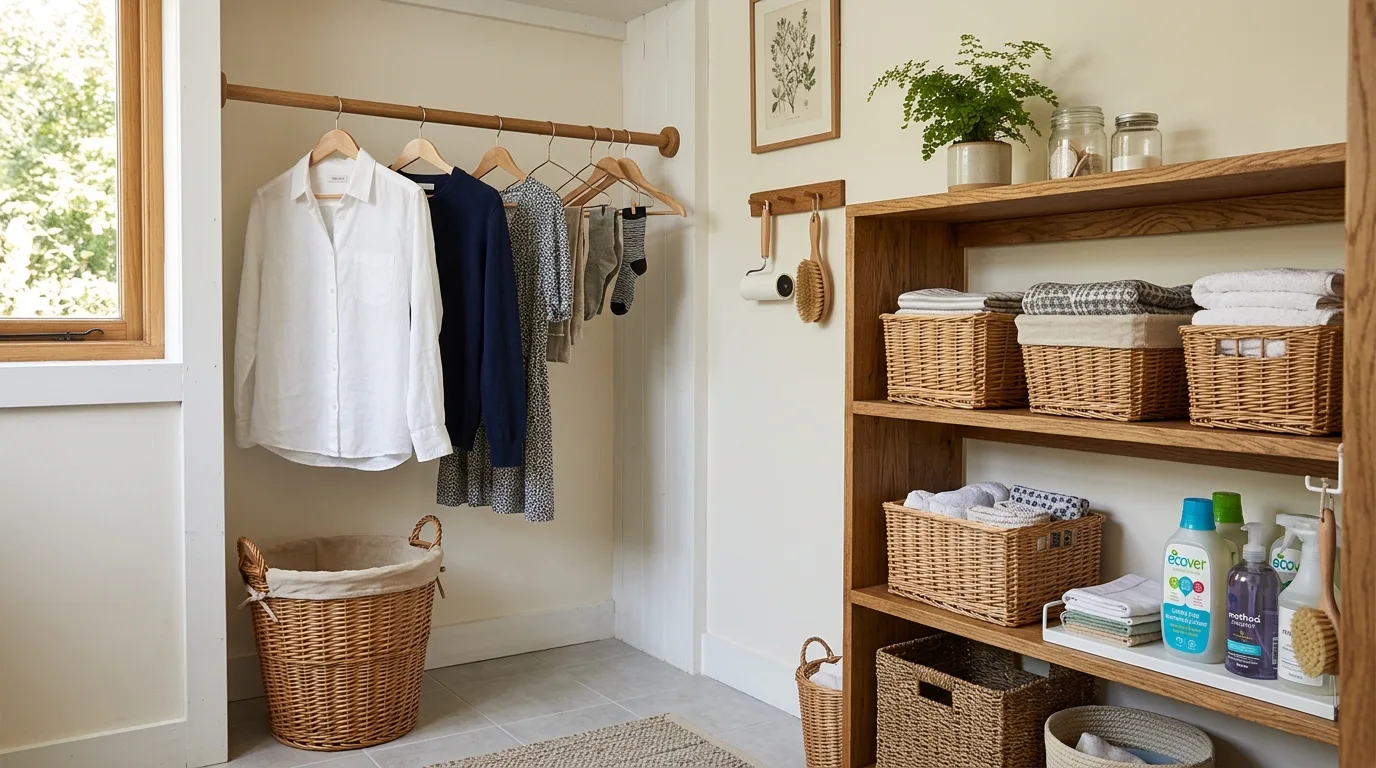
Hanging space is often overlooked until the moment it is needed, which is why adding it intentionally makes such a difference. A simple rod or rack near the machines turns the room into a more complete work zone and keeps clothes from ending up draped over random doors or chairs.
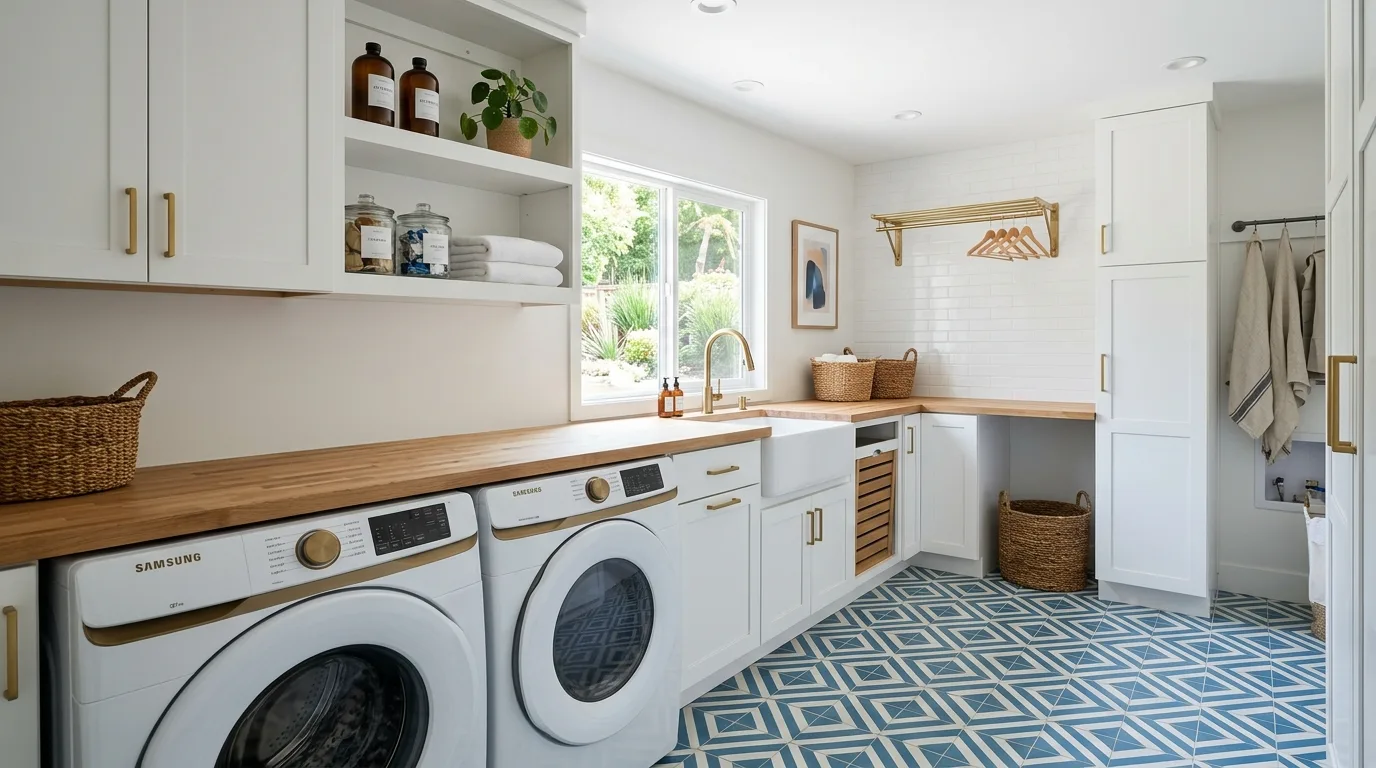
Use baskets and bins that stay easy to access
Baskets and bins feel most helpful when they are easy to pull out, easy to return, and clearly assigned to specific jobs. That kind of straightforward system helps the room stay organized between loads instead of relying on a full reset every time laundry starts to pile up.
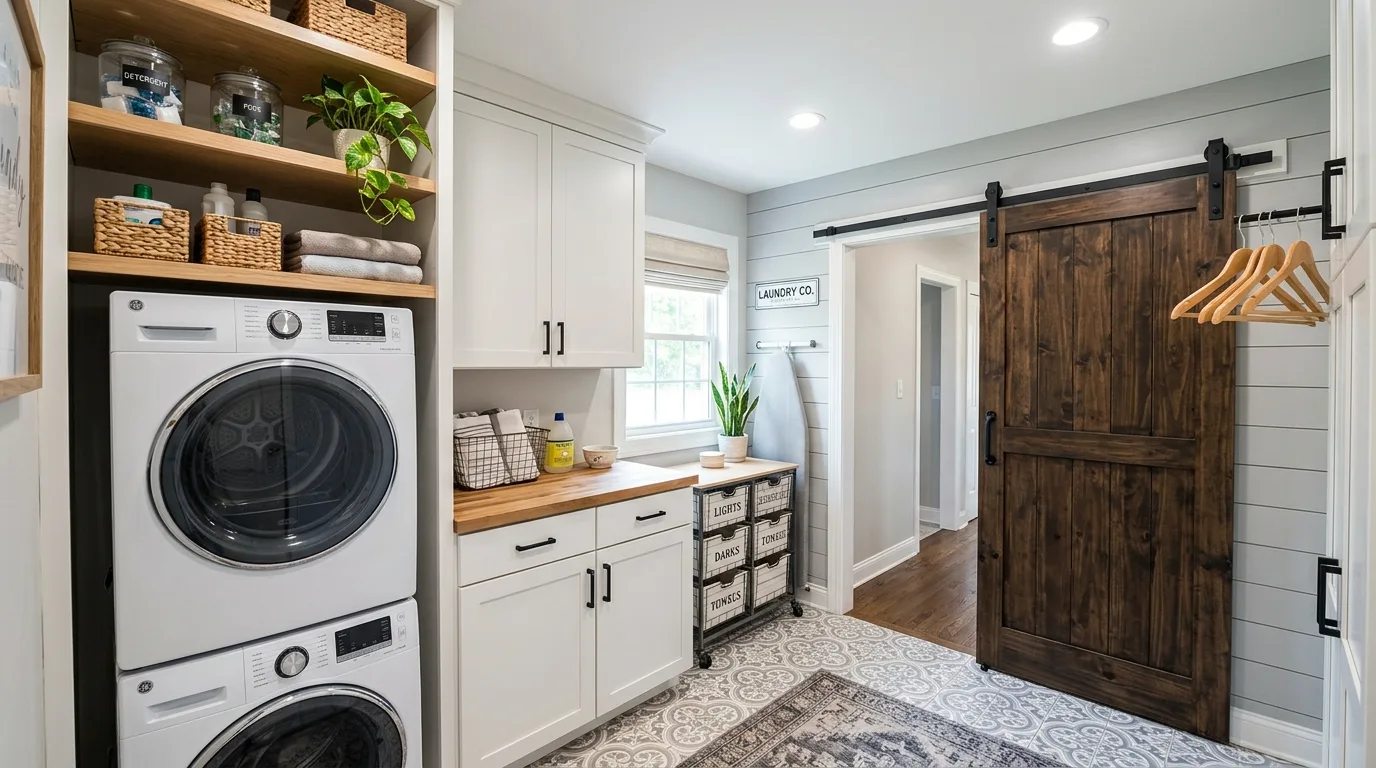
Bring in light colors to open the room
Light colors help a laundry room feel more open, especially when the room is narrow or tucked into a darker area of the house. White, pale gray, soft green, or warm cream can brighten the surfaces enough to make the room feel cleaner and less enclosed during everyday use.
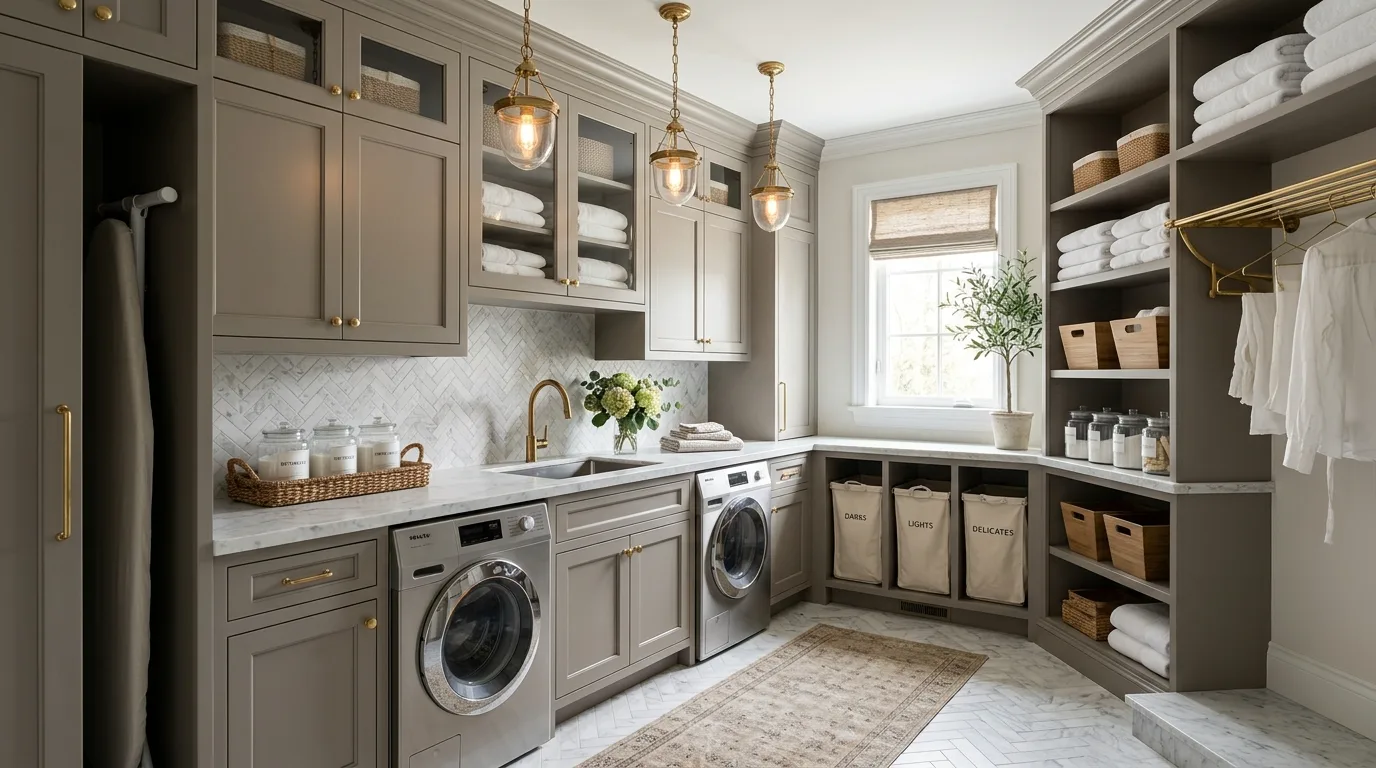
Use vertical space before adding bulk
Vertical storage often does more for a laundry room than adding extra furniture ever could. Using upper cabinets, stacked shelving, or wall-mounted elements keeps the footprint cleaner and lets the room work harder without making it feel blocked or crowded.
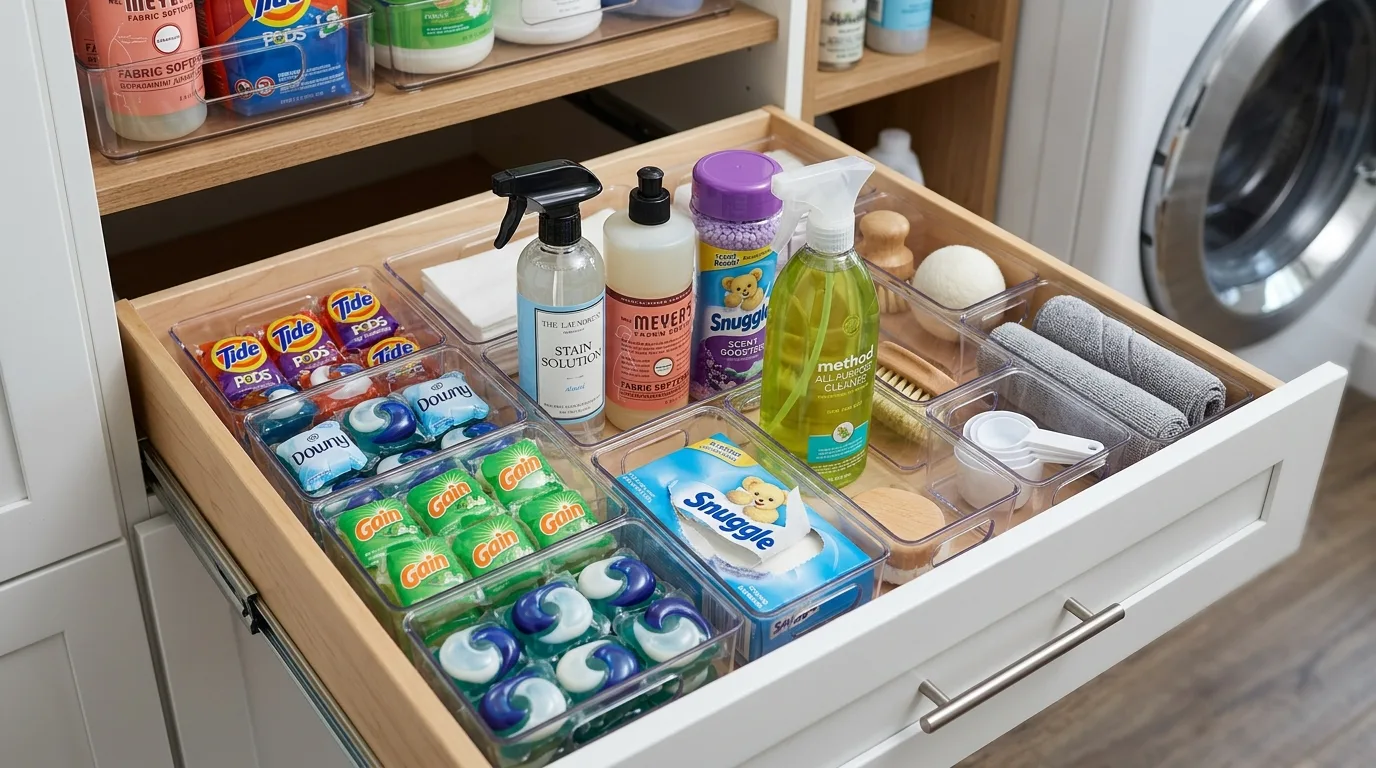
Let the washer wall feel integrated
The washer wall feels more integrated when the machines are framed by cabinetry, shelving, or a countertop that gives them context. That approach helps the room look designed rather than pieced together, and it also makes the work area around the machines much easier to use.
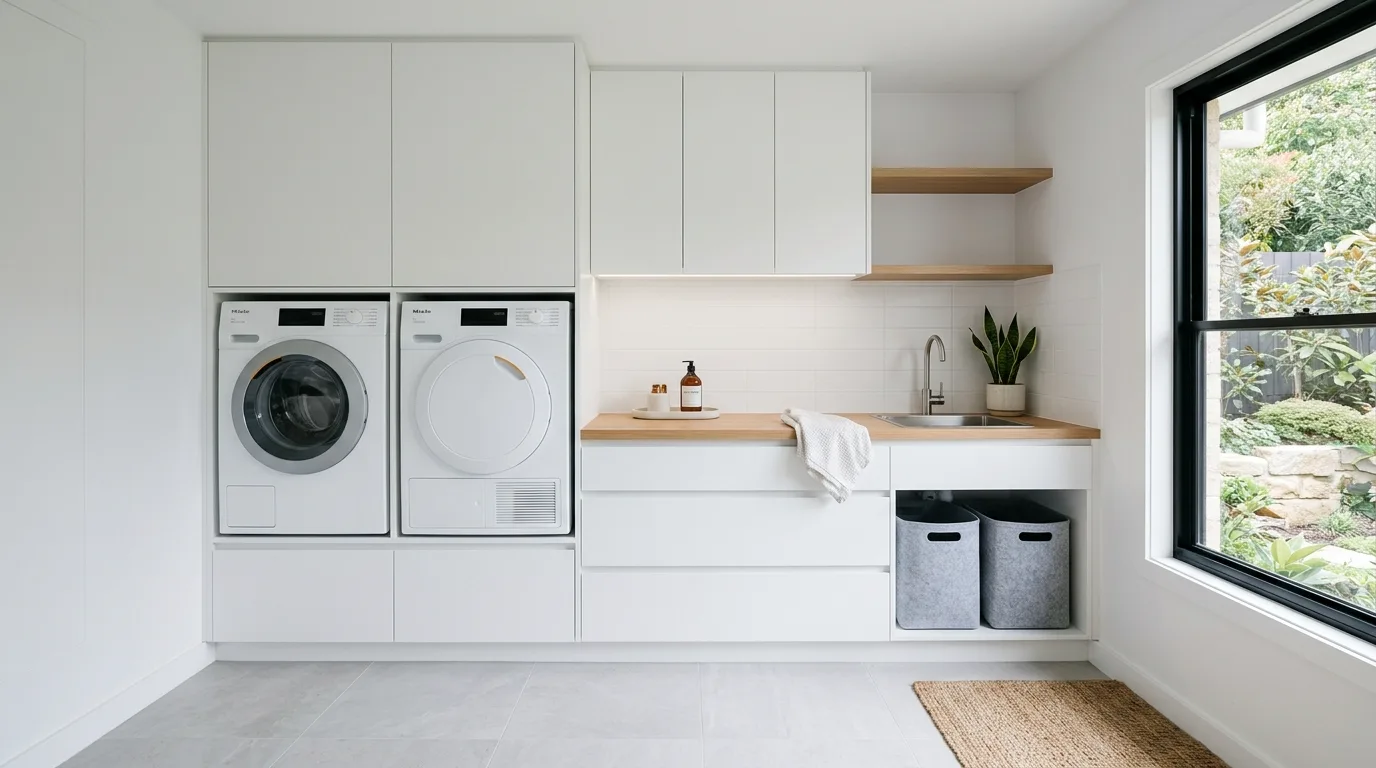
Keep the styling simple and calm
Laundry room styling should stay simple enough that it does not fight the function of the space. A plant, a framed print, or a few warmer materials can soften the room beautifully, but they should never make the surfaces harder to clean or the storage harder to maintain.
Use labels where they genuinely save time
Labels make sense in a laundry room when they reduce hesitation and save time instead of just looking organized. They are especially helpful for shared spaces, since they make it much easier for everyone in the house to understand where categories belong and how the room is meant to work.
Add warmth through wood or woven texture
Wood and woven texture bring warmth to a laundry room in a way that feels especially effective against the harder surfaces of machines, tile, and cabinetry. Even a small amount of natural material can make the room feel less mechanical and more connected to the rest of the home.
Finish with a room that supports real habits
A laundry room becomes truly inspiring when it supports real routines instead of just looking polished in photos. Once the layout, storage, and surfaces are all working together, the room feels easier to use every week and much less likely to slip back into disorder.