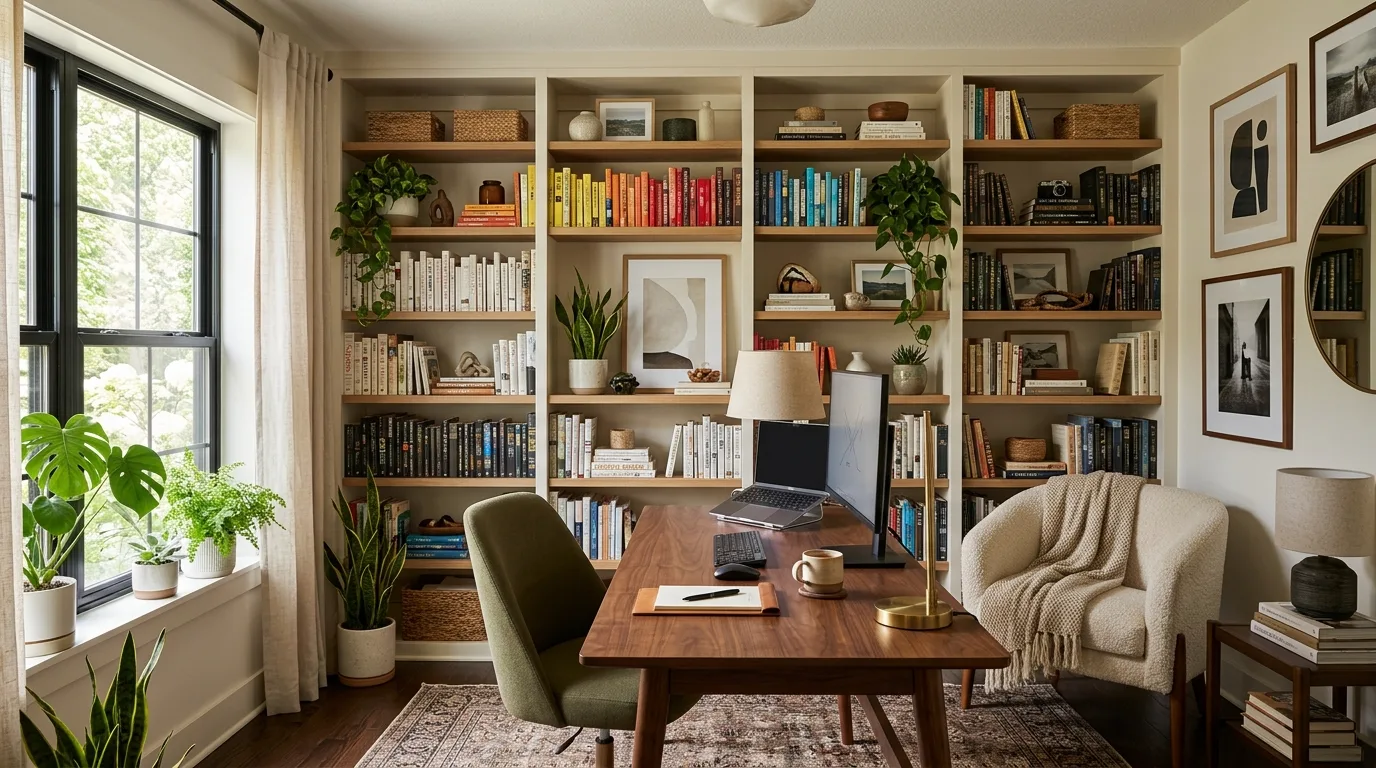
A home office should support concentration without feeling sterile. The strongest rooms balance utility and comfort so they can handle long work sessions while still feeling like a considered part of the home.
Furniture scale, surface area, natural light, and storage all matter more than decoration alone. Once those basics are working, the room becomes easier to maintain and much more effective for real focus.
Start with a desk that fits the work you do
The desk sets the tone for the whole office, so it has to match the kind of work you actually do rather than just filling the wall. A desk with the right depth, surface area, and proportions immediately makes the room feel more useful and supports better concentration throughout the day.
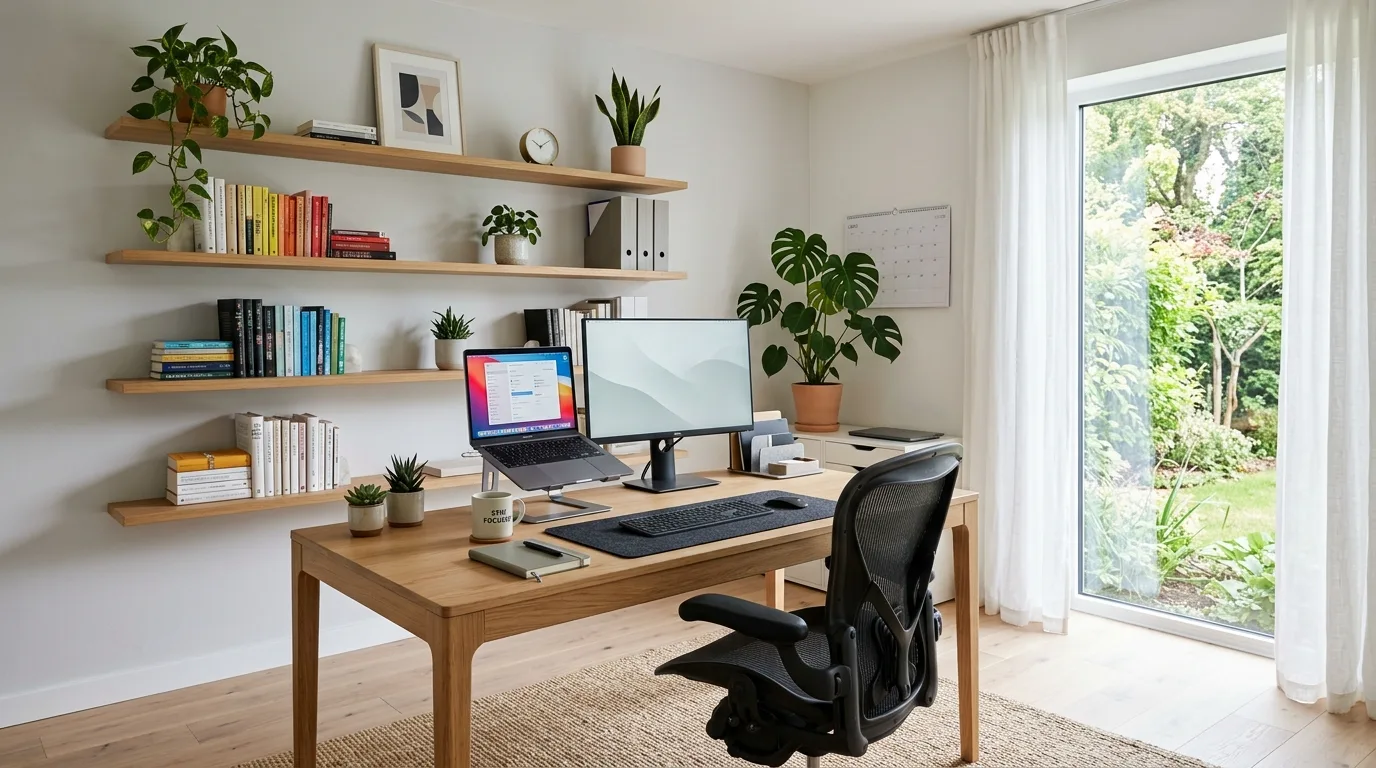
Use natural light to support long focus sessions
Natural light changes the experience of working from home because it reduces the closed-in feeling that many offices can develop. Positioning the desk to make the most of daylight helps the room feel more open, and it also makes long stretches of focused work noticeably easier to handle.
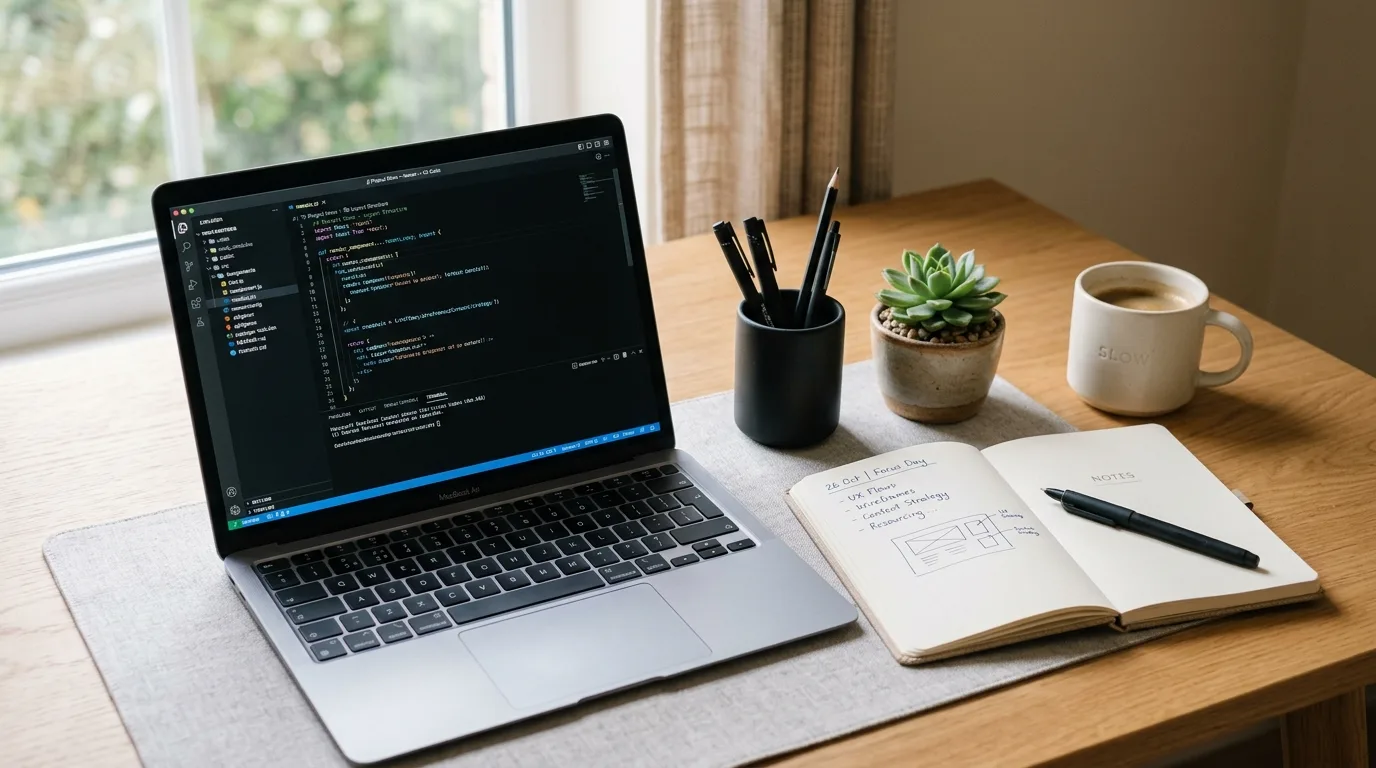
Bring in closed storage to reduce distraction
Closed storage is one of the best ways to make a home office feel more professional and less visually noisy. When paper, cords, supplies, and overflow are hidden properly, the room becomes easier to focus in and much faster to reset at the end of a work session.
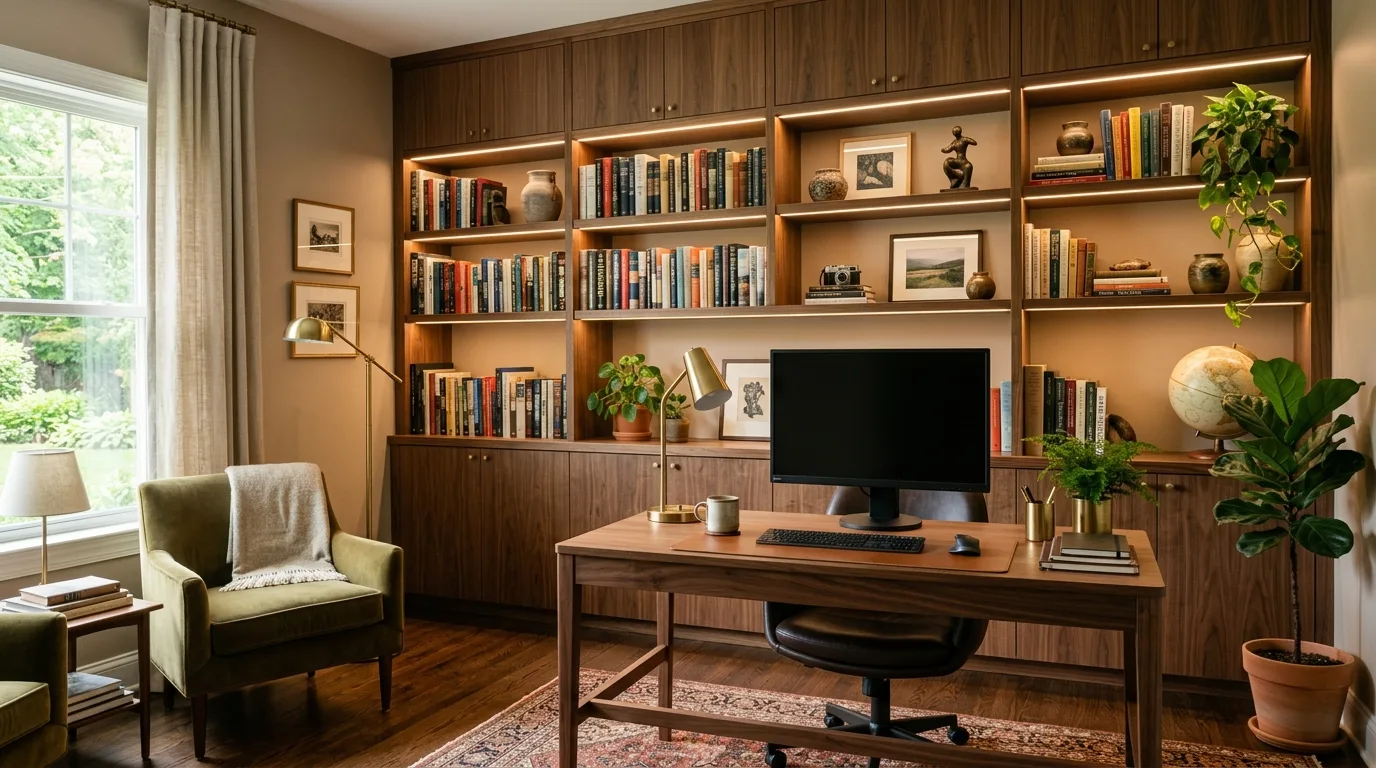
Choose a chair that supports real comfort
A good office chair does more than fill the space around the desk; it directly affects how long the room remains comfortable and productive. Choosing one that supports posture and movement makes the office feel more serious and far more workable for daily use.
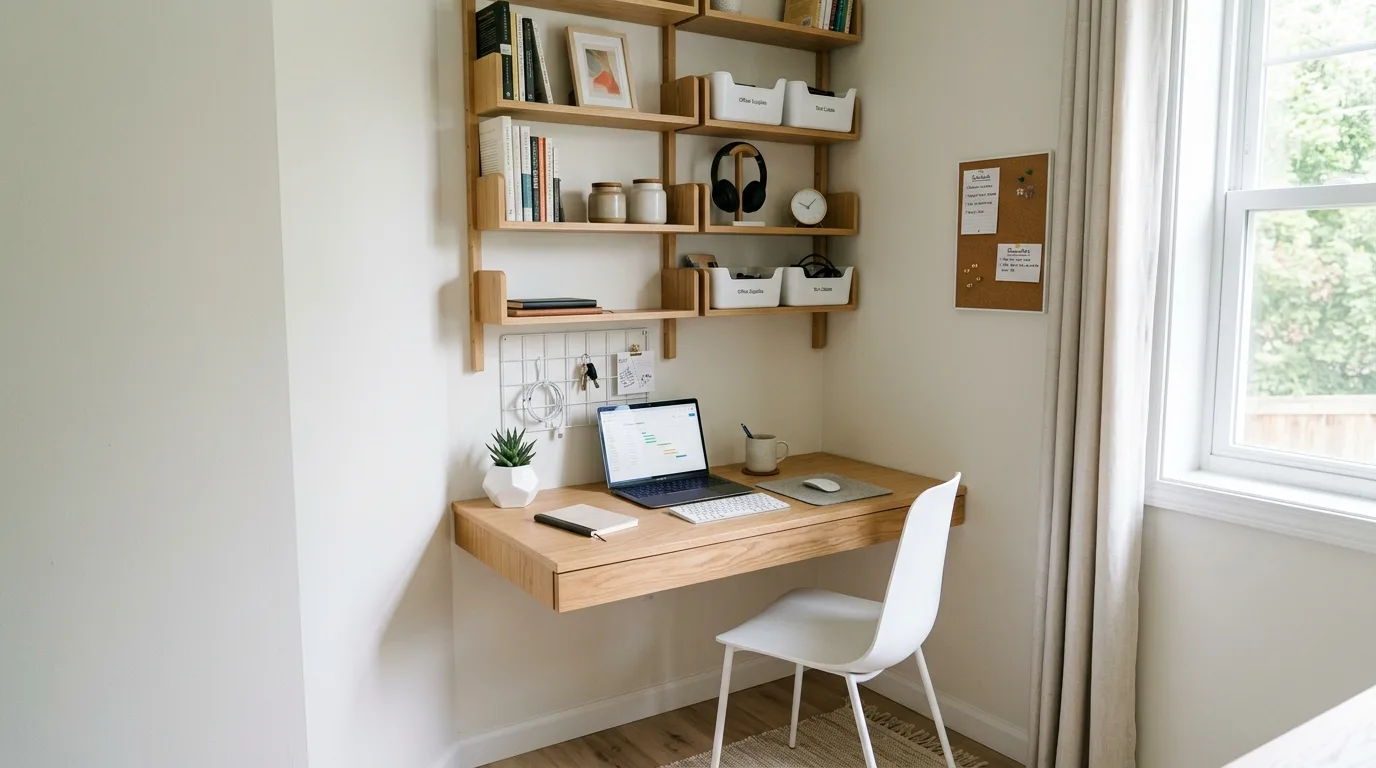
Keep the wall styling intentional and light
Wall styling in a home office should support attention rather than constantly pull it away. A few thoughtful pieces, whether art, shelving, or framed notes, can give the room personality while still keeping the overall environment clear enough for real focus.
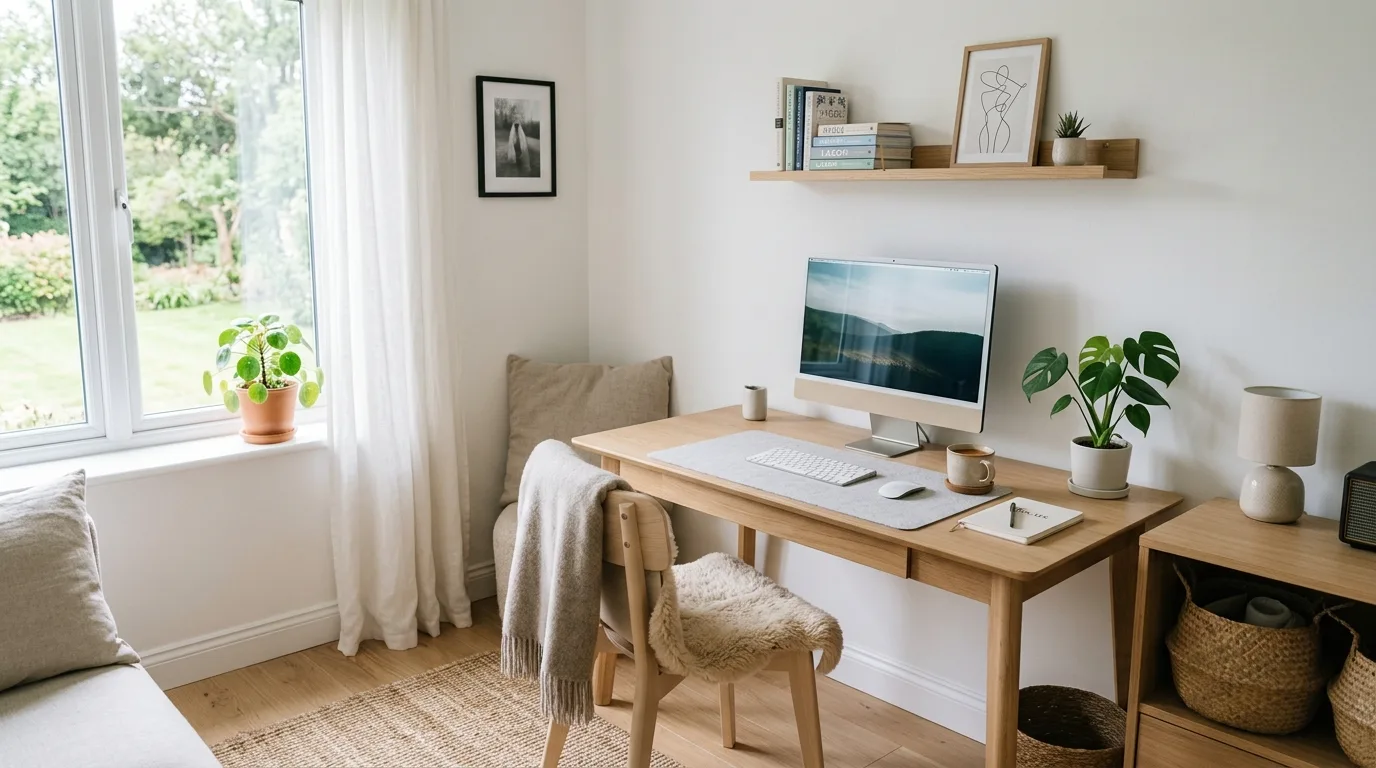
Create a backdrop that feels professional and warm
A polished background matters in a home office because it influences how the room feels both in person and on calls. Shelving, artwork, paint color, or cabinetry behind the desk can all help create a backdrop that looks intentional without turning the room into a stage set.
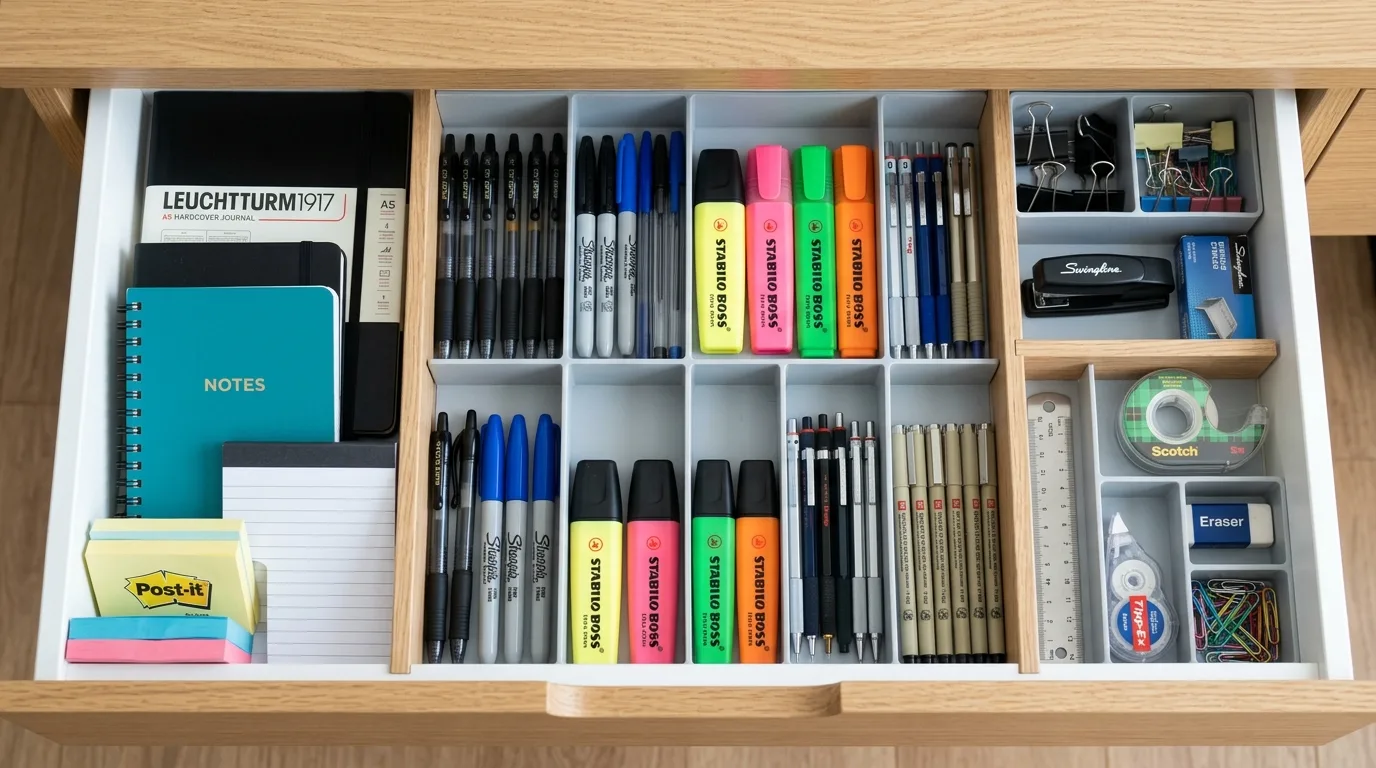
Use task lighting that reduces strain
Task lighting matters most in the hours when daylight drops and the office still needs to function. A desk lamp or directional wall light helps reduce strain and also gives the room a more layered, deliberate feeling than overhead light alone can provide.
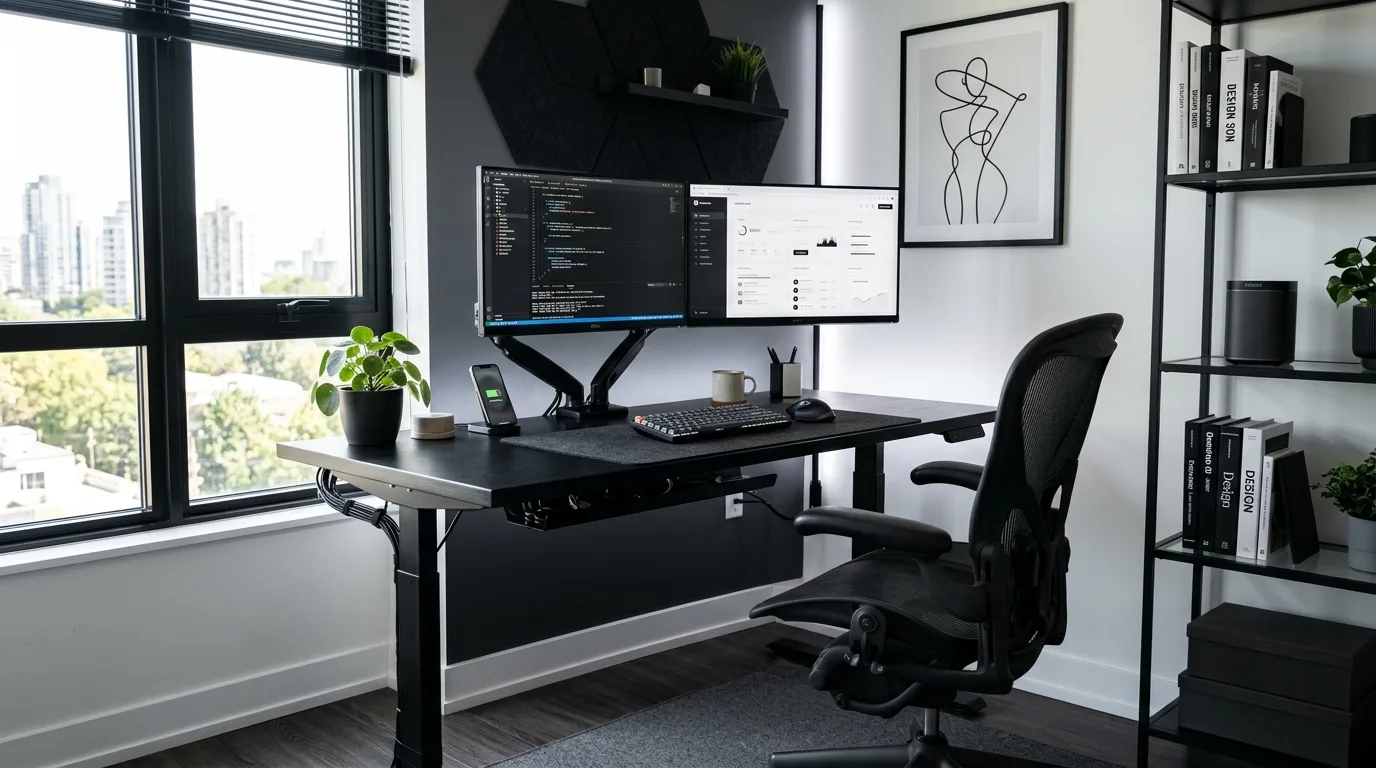
Add shelves that organize instead of crowd
Shelves work best in a home office when they organize what you need regularly without turning into display clutter. Books, supplies, and reference materials should feel easy to reach, but the arrangement still needs enough editing that the room does not lose its sense of focus.
Keep cables controlled and out of sight
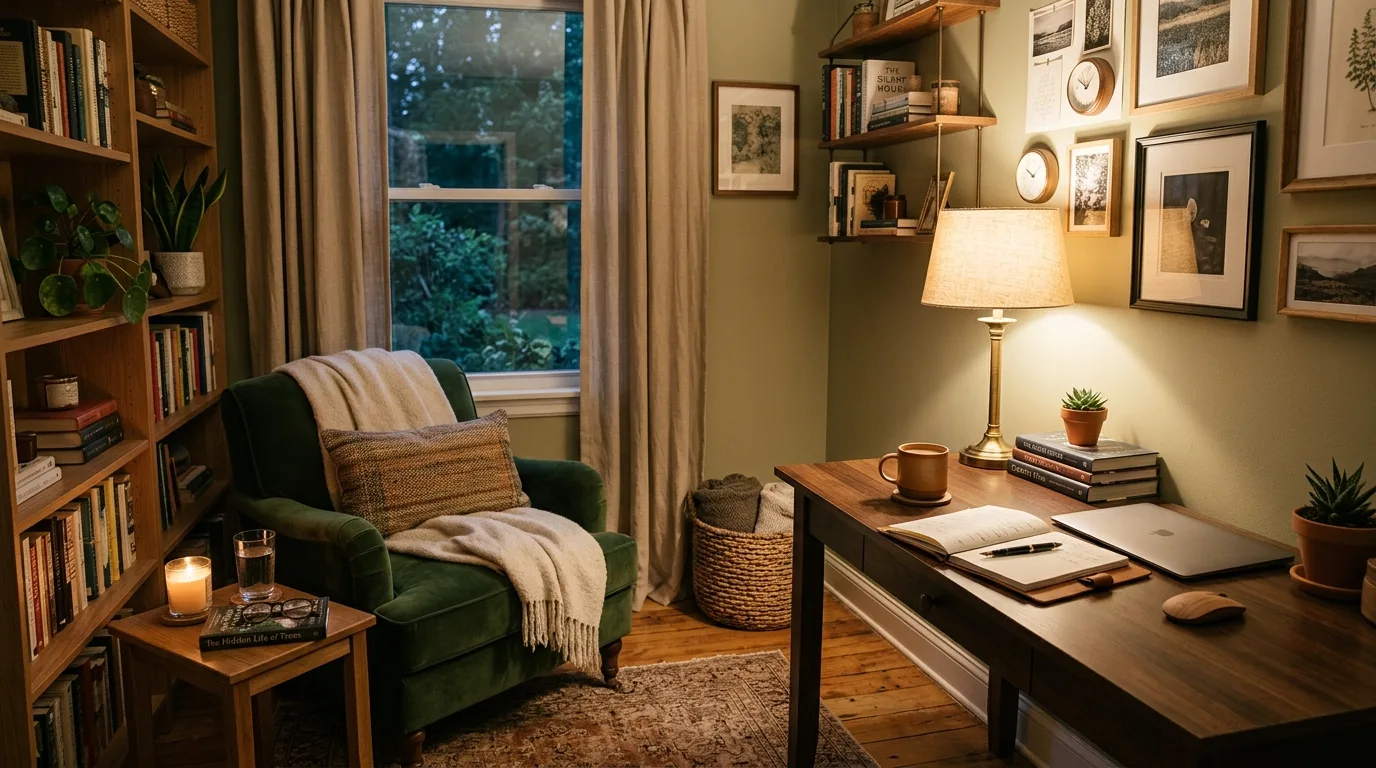
Cable control has a bigger effect on office calm than most people expect. Once cords are contained and routing is planned properly, the room feels more orderly immediately, and the desk area starts looking like a workspace instead of a temporary setup.
Use color to shape the work mood
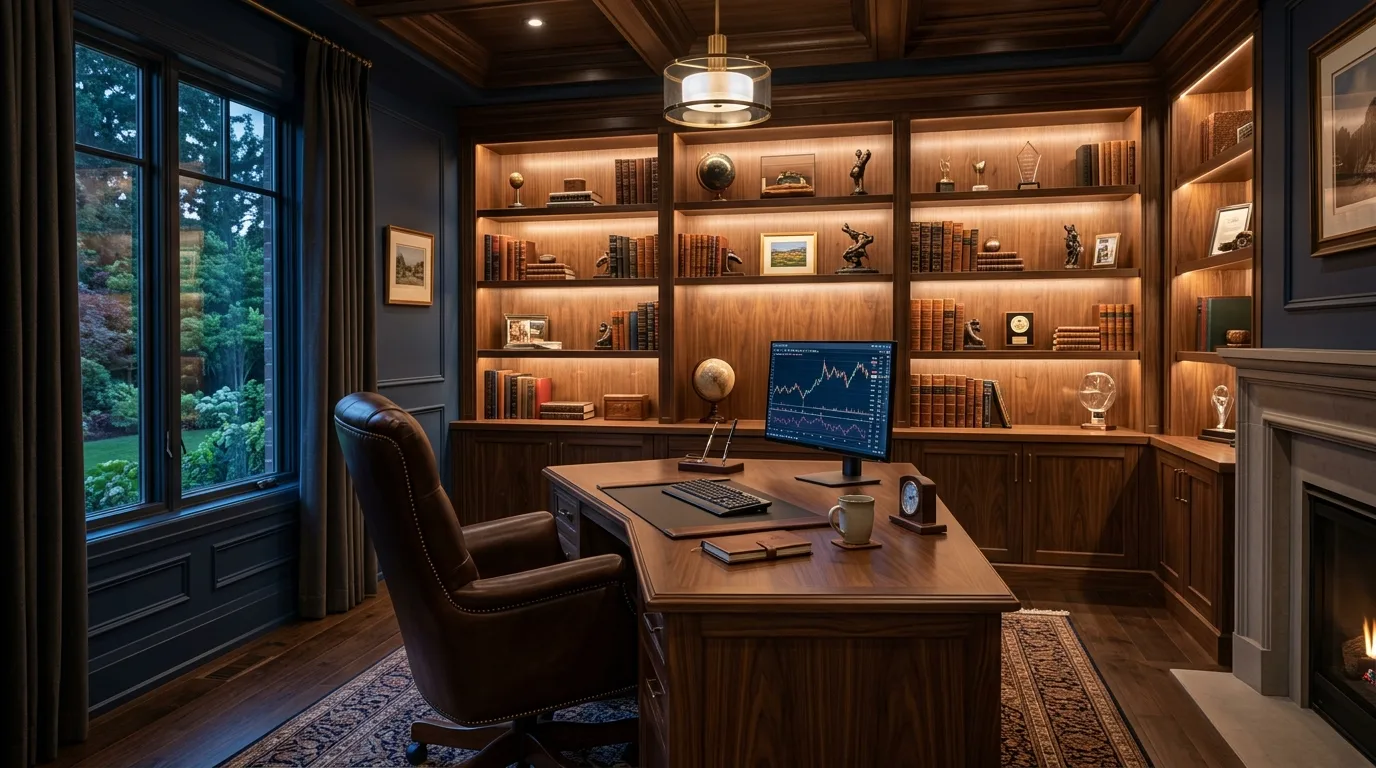
Color shapes work mood more than many office accessories do, especially in a room used for long stretches of concentration. Quiet greens, warm neutrals, soft whites, or grounded charcoals can all help the space feel clearer and more stable while still carrying personality.
Make a small office feel open and useful
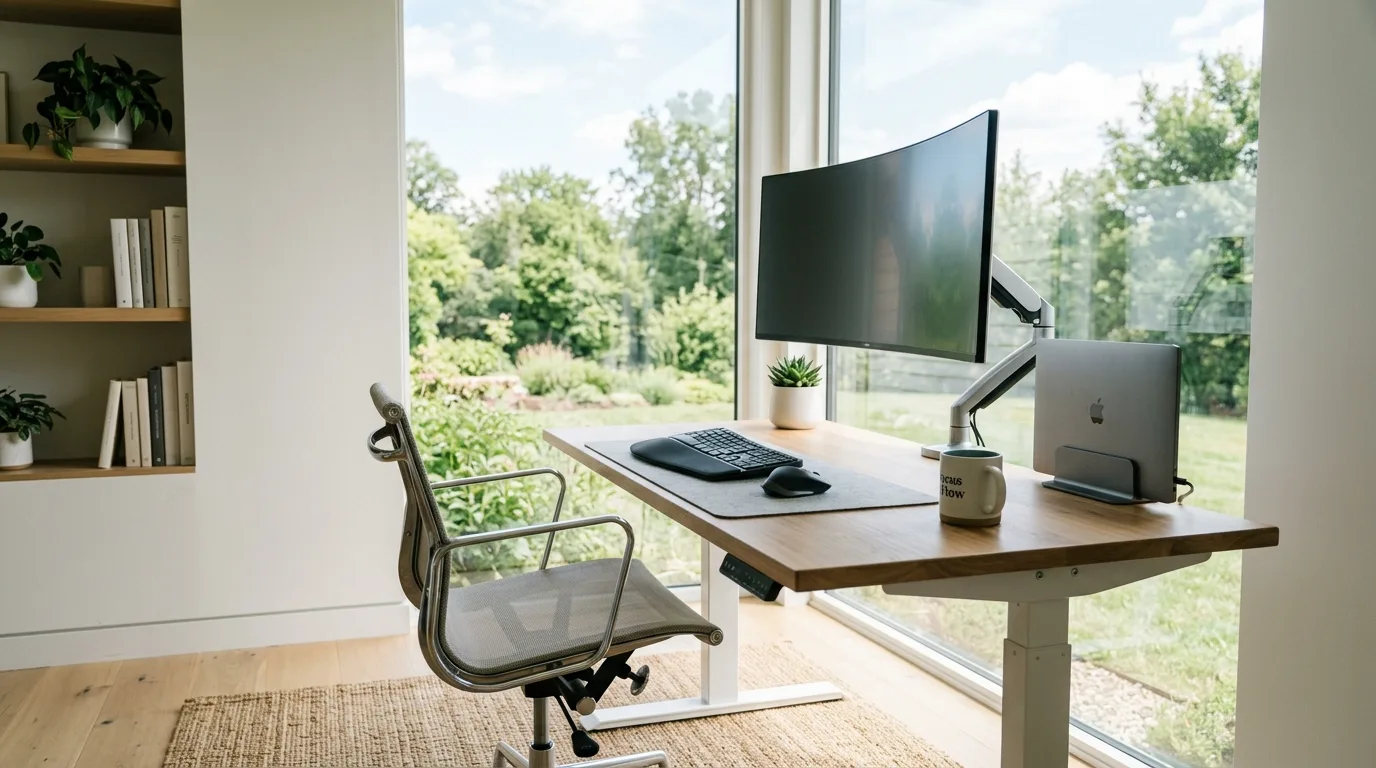
A small office feels more open when bulky pieces are reduced and the layout gives movement enough priority. Floating storage, lighter finishes, and carefully scaled furniture can make a tighter room feel much more usable without pretending it has more square footage than it does.
Let texture soften the room without clutter
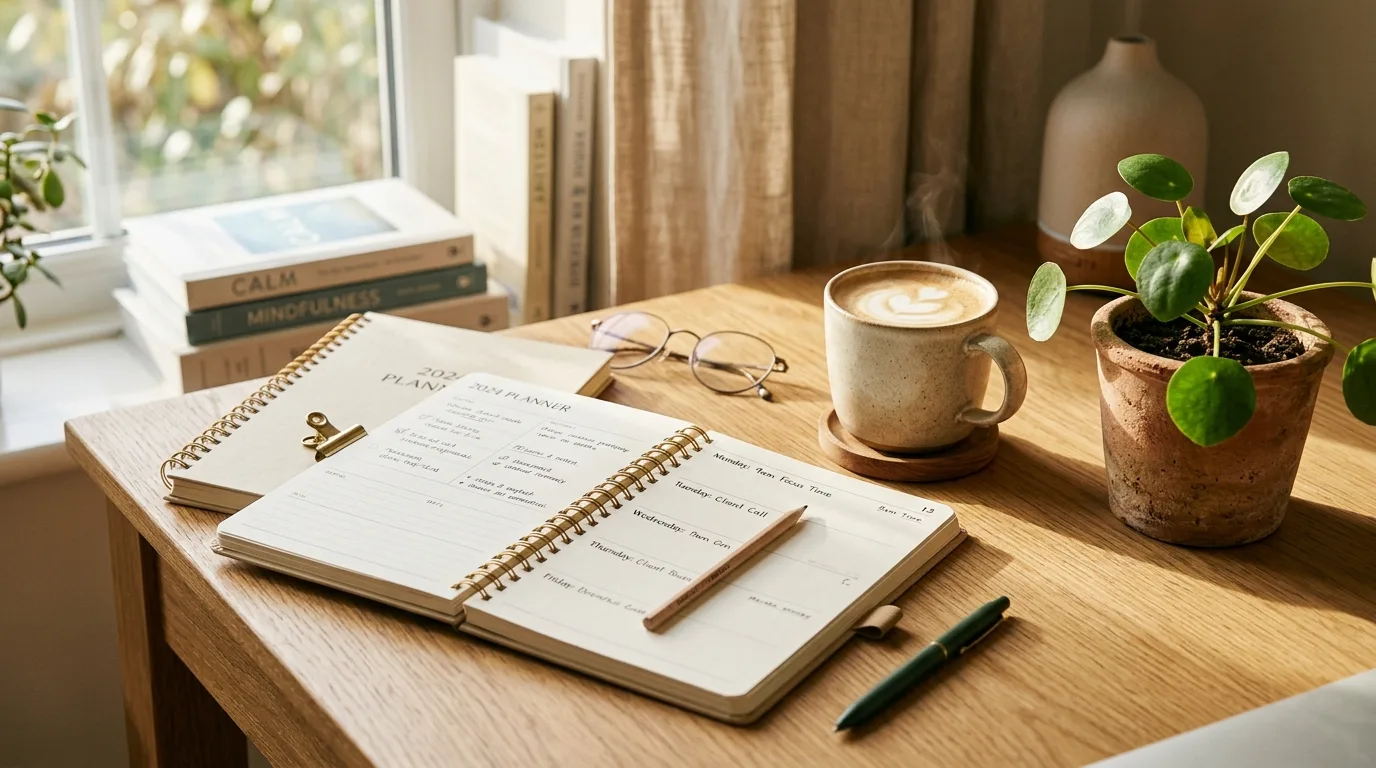
Texture helps a home office avoid feeling cold, but it has to be used with restraint. Wood, upholstery, rugs, and soft window treatments can make the room feel warmer and more complete while still protecting the focus-friendly quality that the space needs.
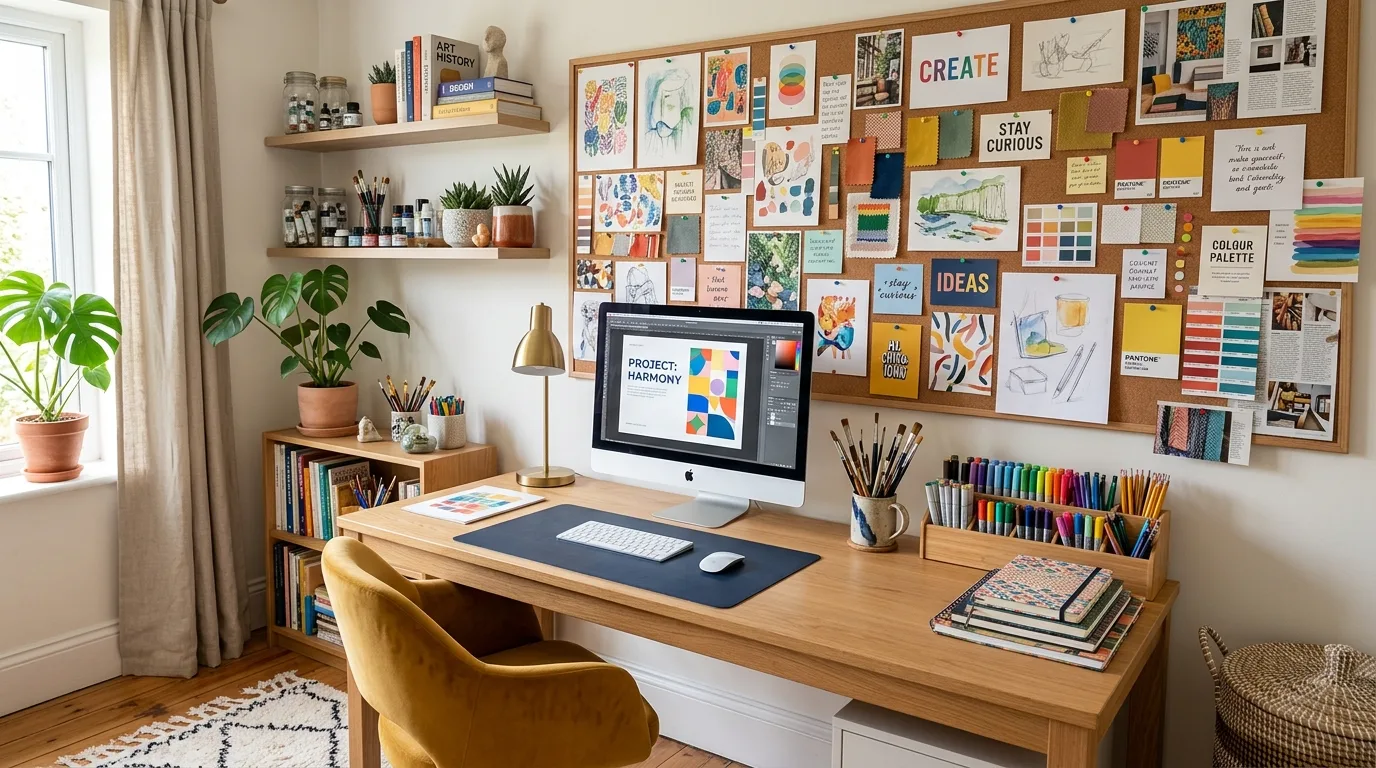
Use zoning if the office shares another room
A shared office or office corner works better when the work zone is visually defined from the start. Rugs, shelving, wall color, or furniture placement can all help separate the workspace from the rest of the room so it feels more intentional and easier to mentally enter.
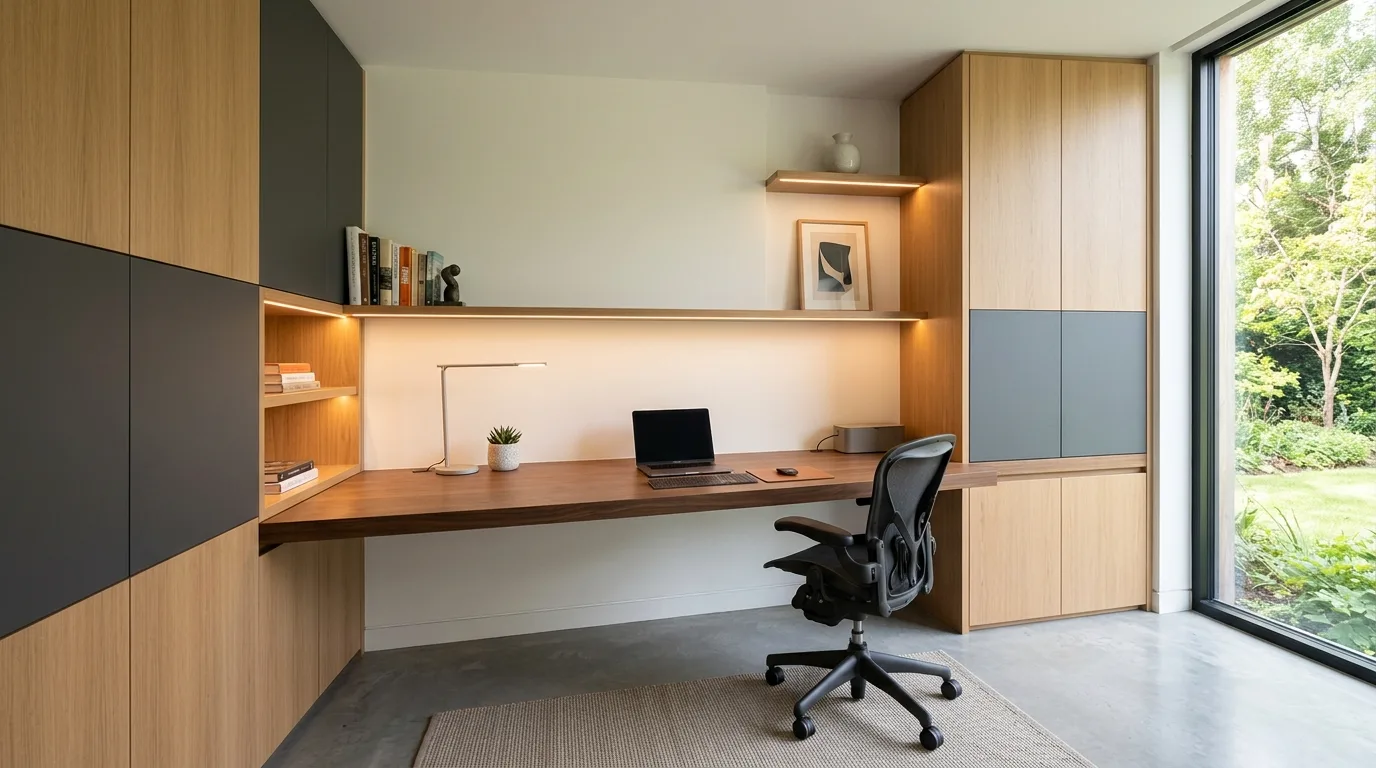
Finish with a setup that supports consistent work
The most productive home offices are the ones that support consistency rather than occasional bursts of motivation. Once the desk, lighting, storage, and visual atmosphere are all pulling in the same direction, the room starts helping the work happen instead of getting in its way.