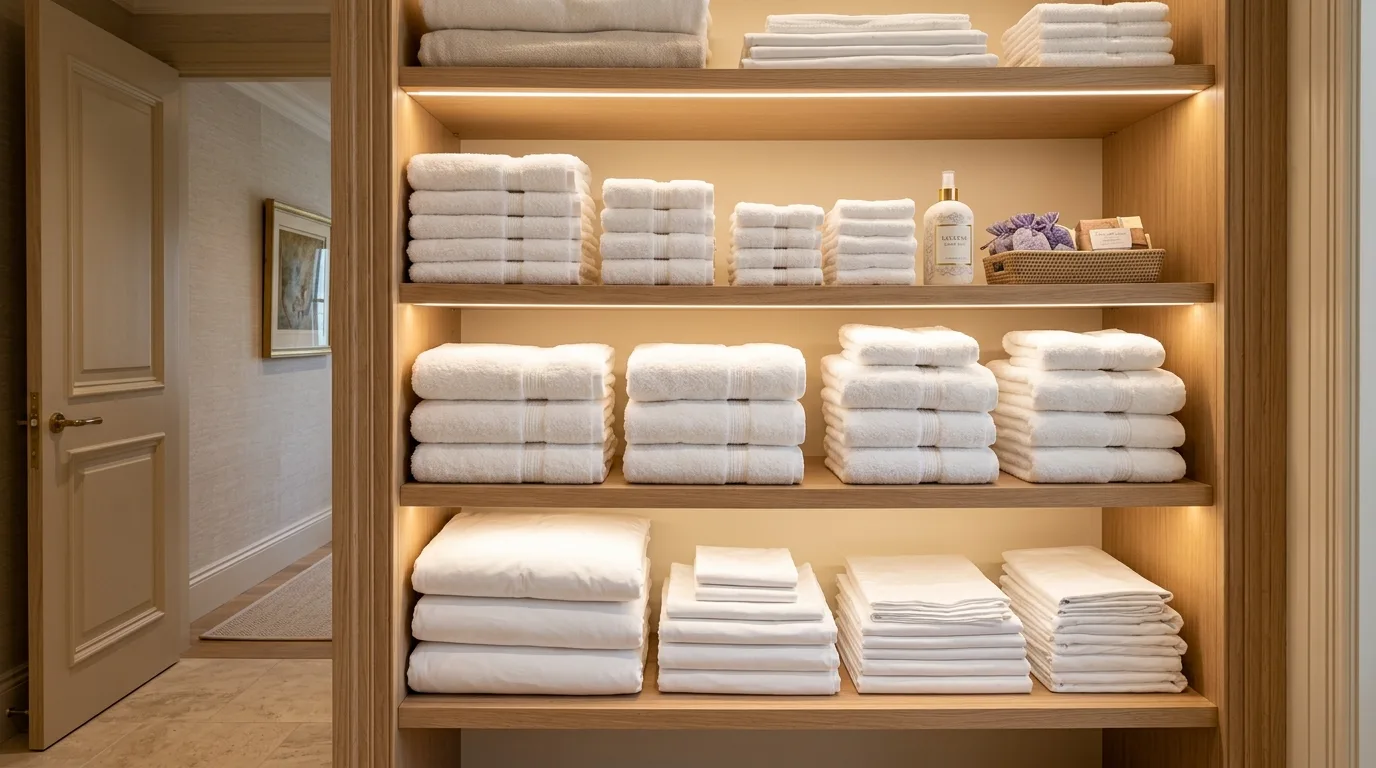
A linen closet becomes messy quickly when categories are unclear or deep shelves hide what is already there. The right system makes it easier to grab what you need and much easier to put things back where they belong.
Good linen storage is less about perfection and more about visibility. Once towels, sheets, toiletries, and extras are grouped in a clear way, the closet starts working with your routine instead of against it.
Group linens by type before anything else
Grouping linens by type is what turns a linen closet from a pile of soft goods into a system you can actually use. Once towels, sheets, blankets, and extras each have their own area, the closet becomes much easier to maintain and much faster to navigate.
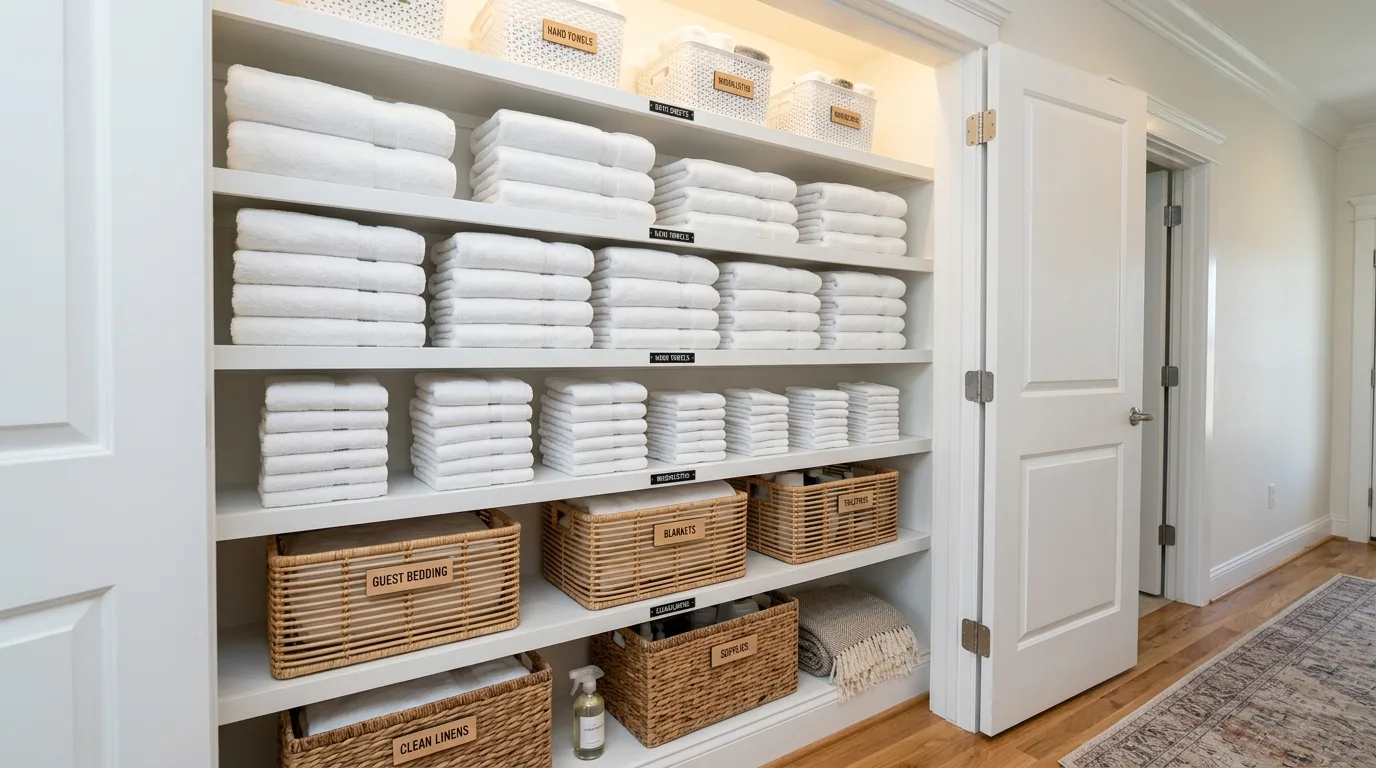
Use baskets for categories that slip easily
Baskets are especially useful in a linen closet because they keep smaller, less stackable items from drifting across shelves. They also make it easier to separate categories like guest toiletries, pillowcases, and cleaning cloths without requiring the entire closet to be visually perfect all the time.
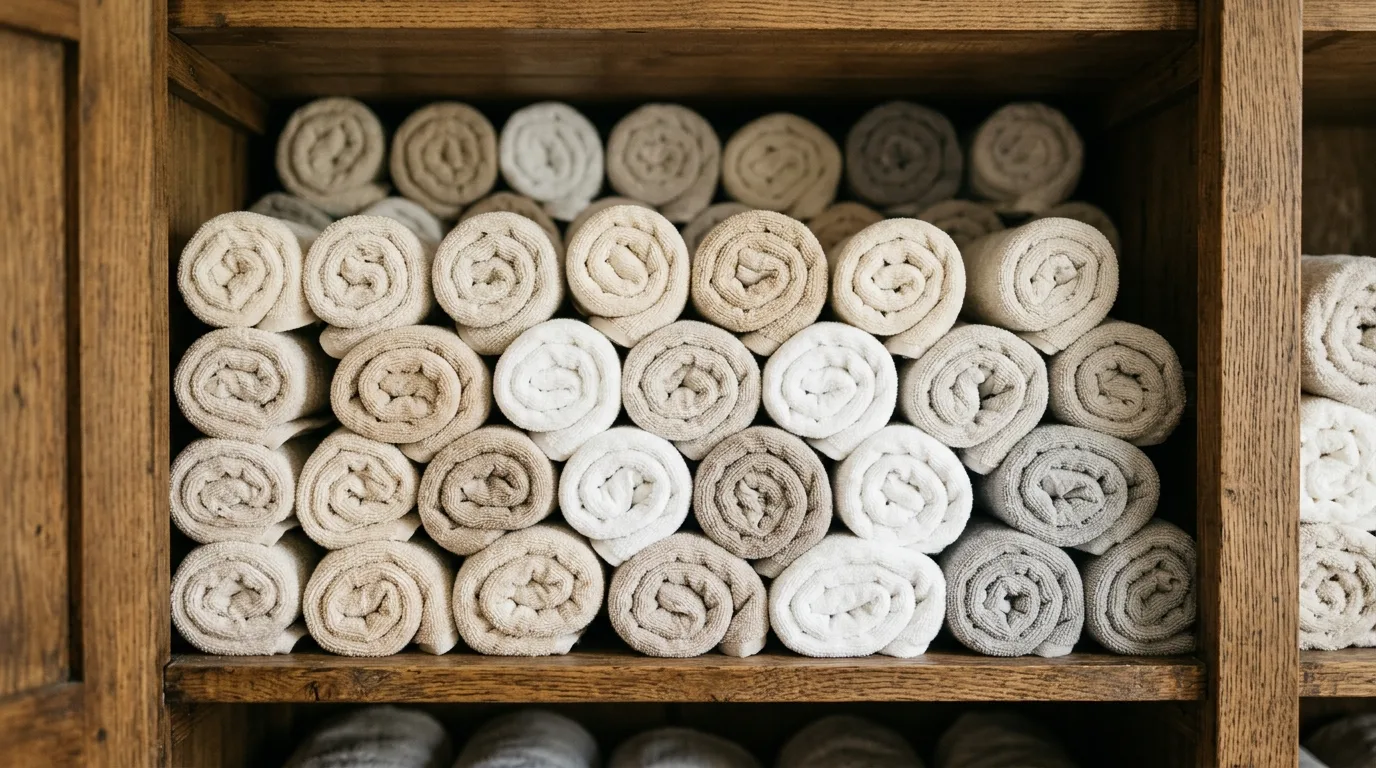
Label shelves so the system stays intact
Labels help a linen closet stay organized after the first big clean-up, which is usually the hardest part to maintain. When shelves and baskets are clearly marked, the system becomes easier for everyone in the house to follow and much less dependent on memory or guesswork.
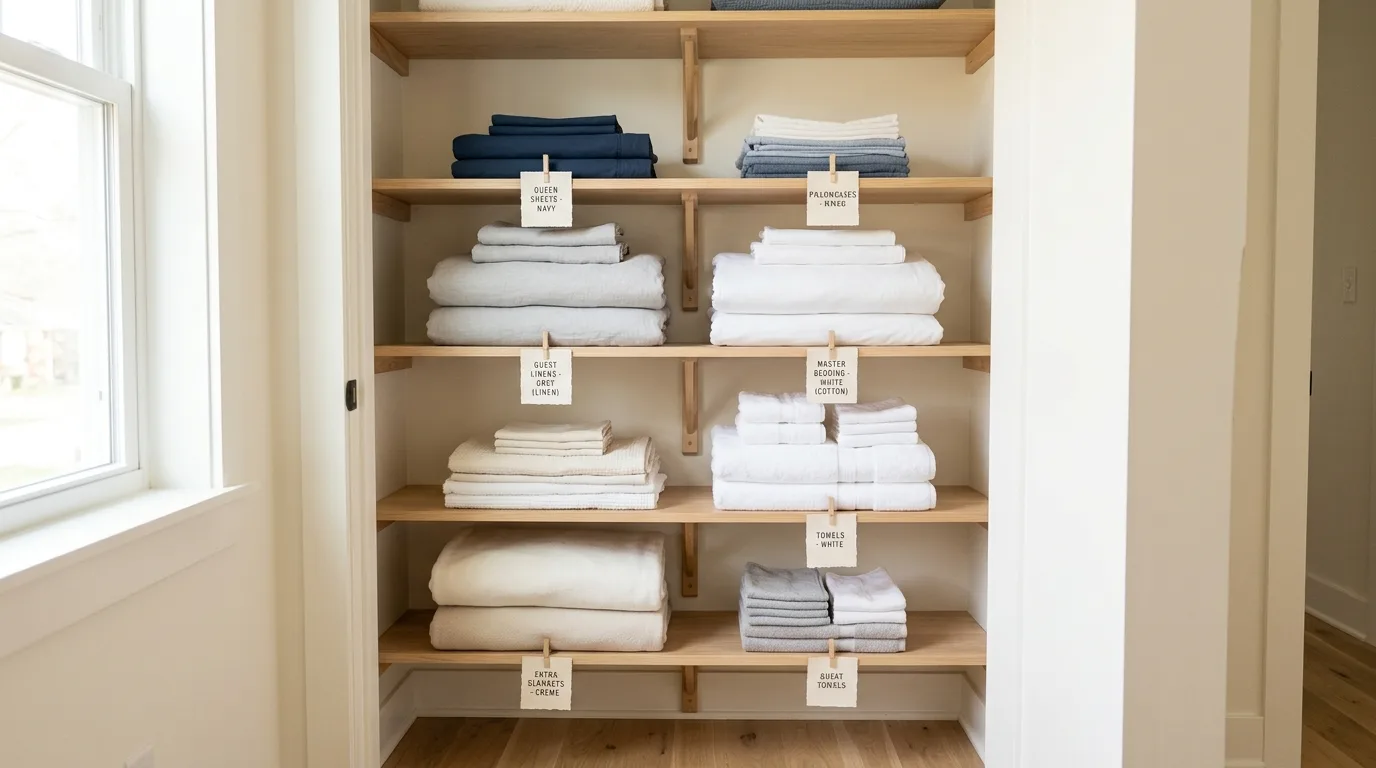
Stack towels by size for cleaner access
Stacking towels by size creates cleaner lines on the shelf and reduces the collapse that happens when everything is folded differently. It also makes restocking simpler, since you can see quickly what is running low and what is already taking up too much room.
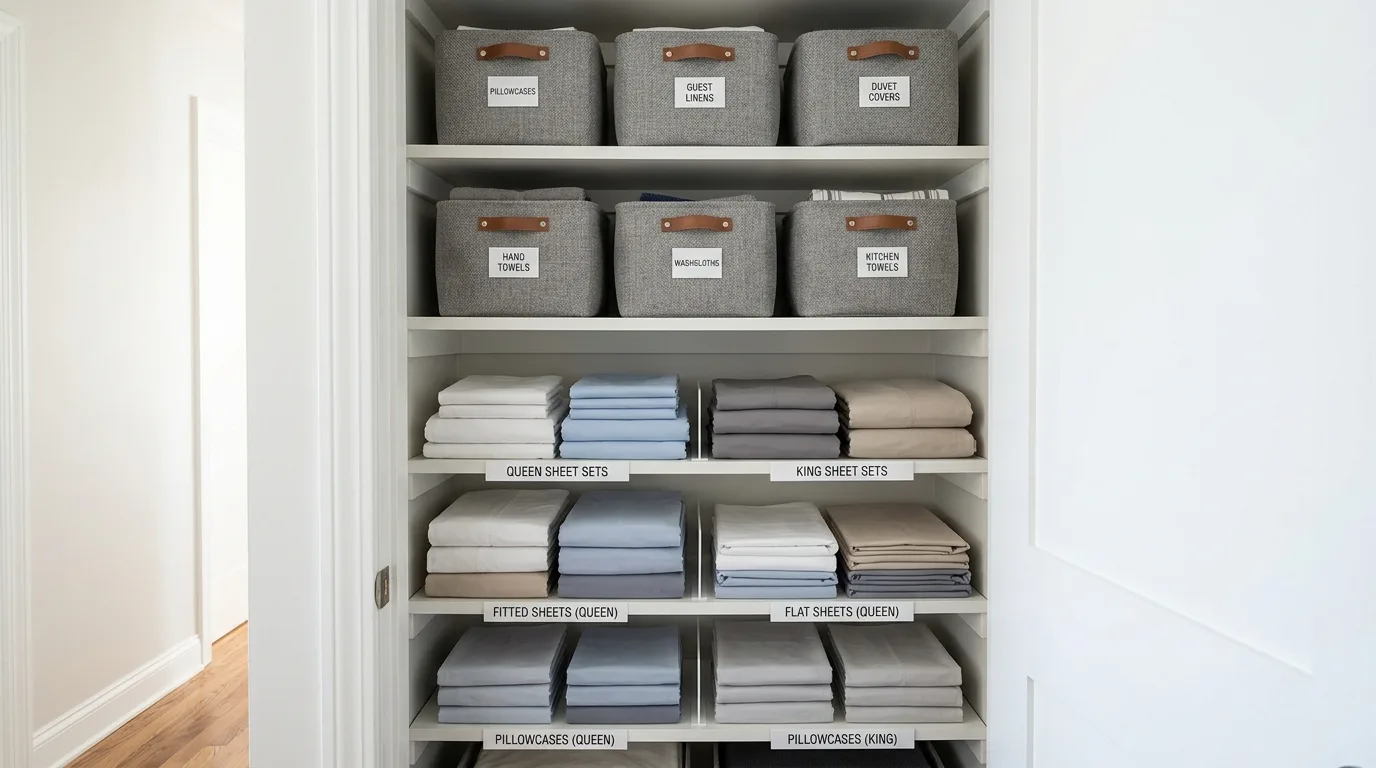
Keep extra bedding contained and visible
Extra bedding becomes much easier to manage when it is contained by set instead of scattered between shelves. Keeping sheet sets together or storing them in one consistent category cuts down on digging and makes guest prep or seasonal swaps much less frustrating.
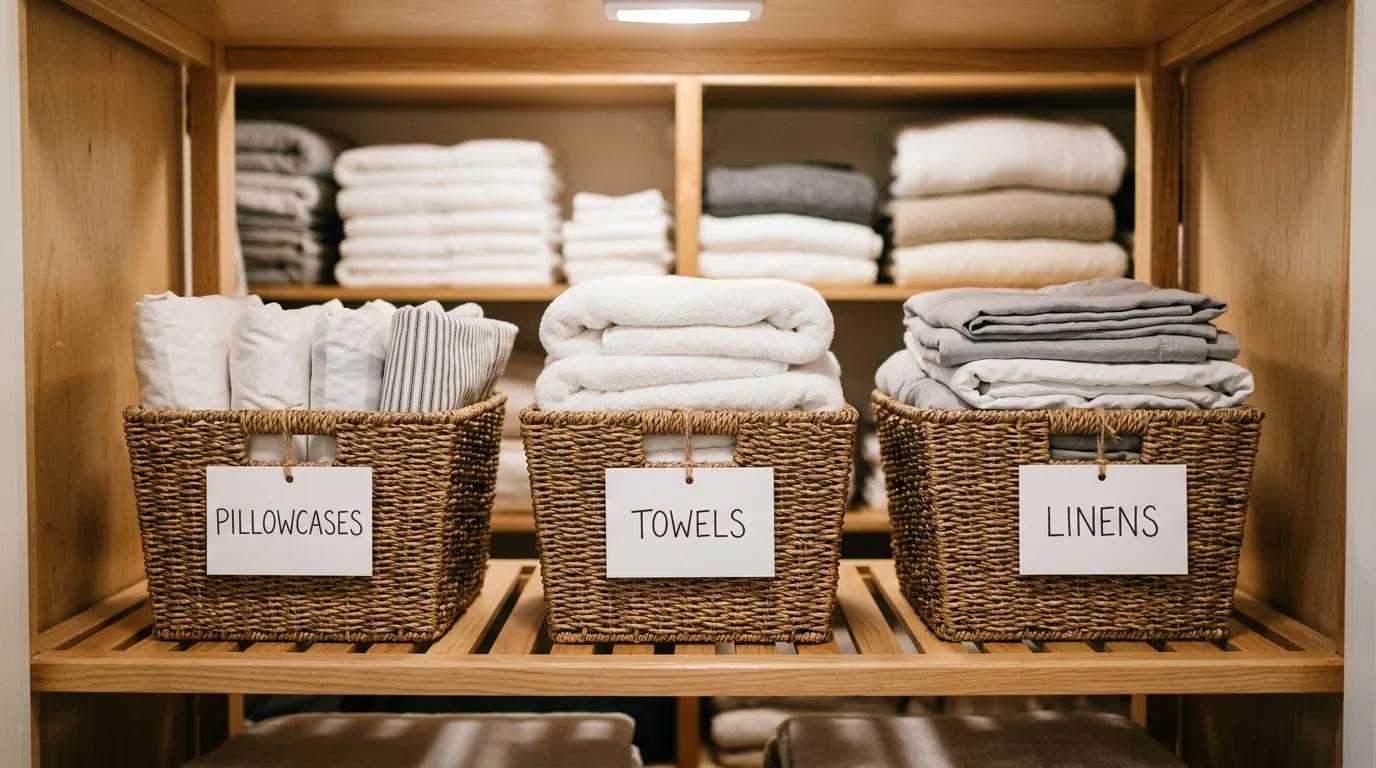
Use bins for toiletries and overflow supplies
Bins are ideal for toiletries and extra household supplies because those categories tend to contain a lot of mismatched packaging. Once grouped into containers, they become easier to pull out, check, and return without turning the whole closet into a visual mess.
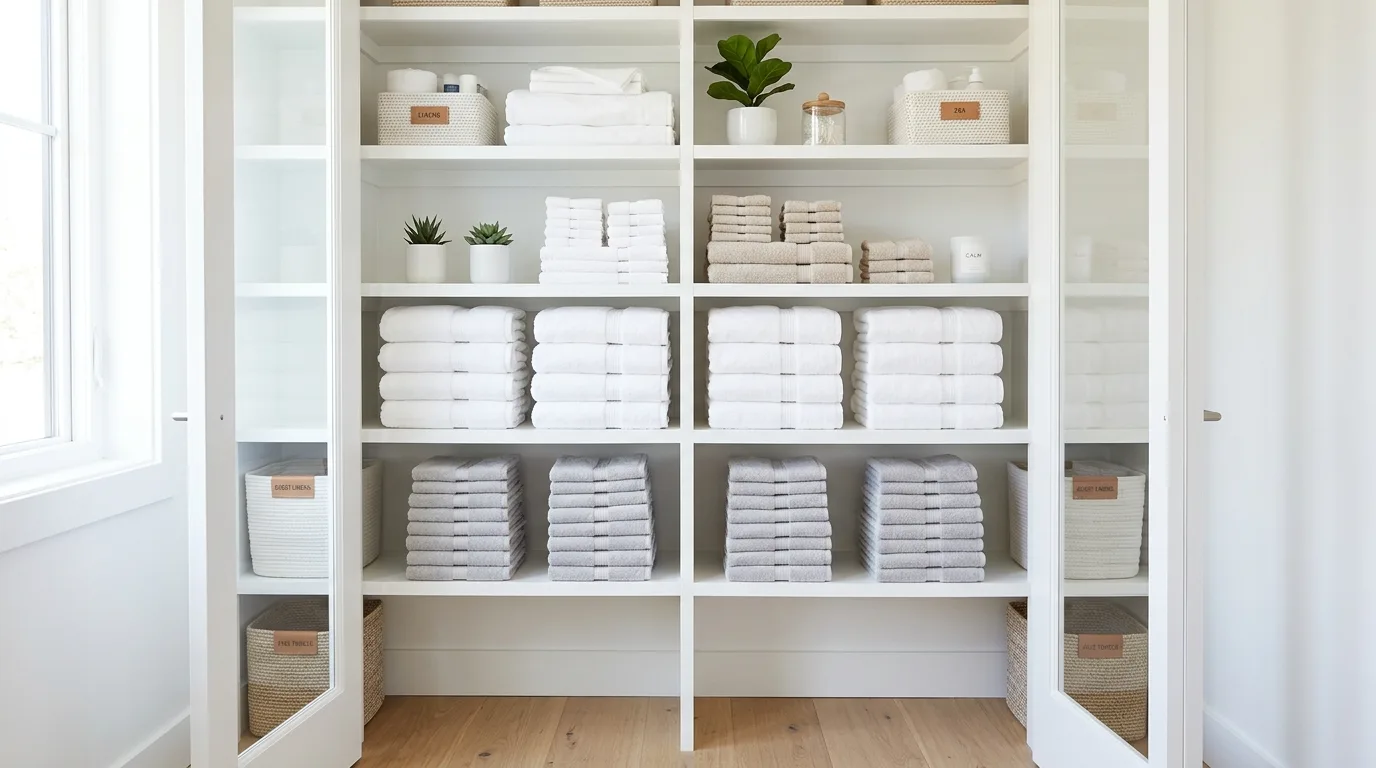
Store seasonal items higher up and out of the way
Seasonal items should live on the least convenient shelves because they simply do not need prime access. That one shift often frees the most practical storage zones for the things you reach for every week, which improves the entire closet without adding anything new.
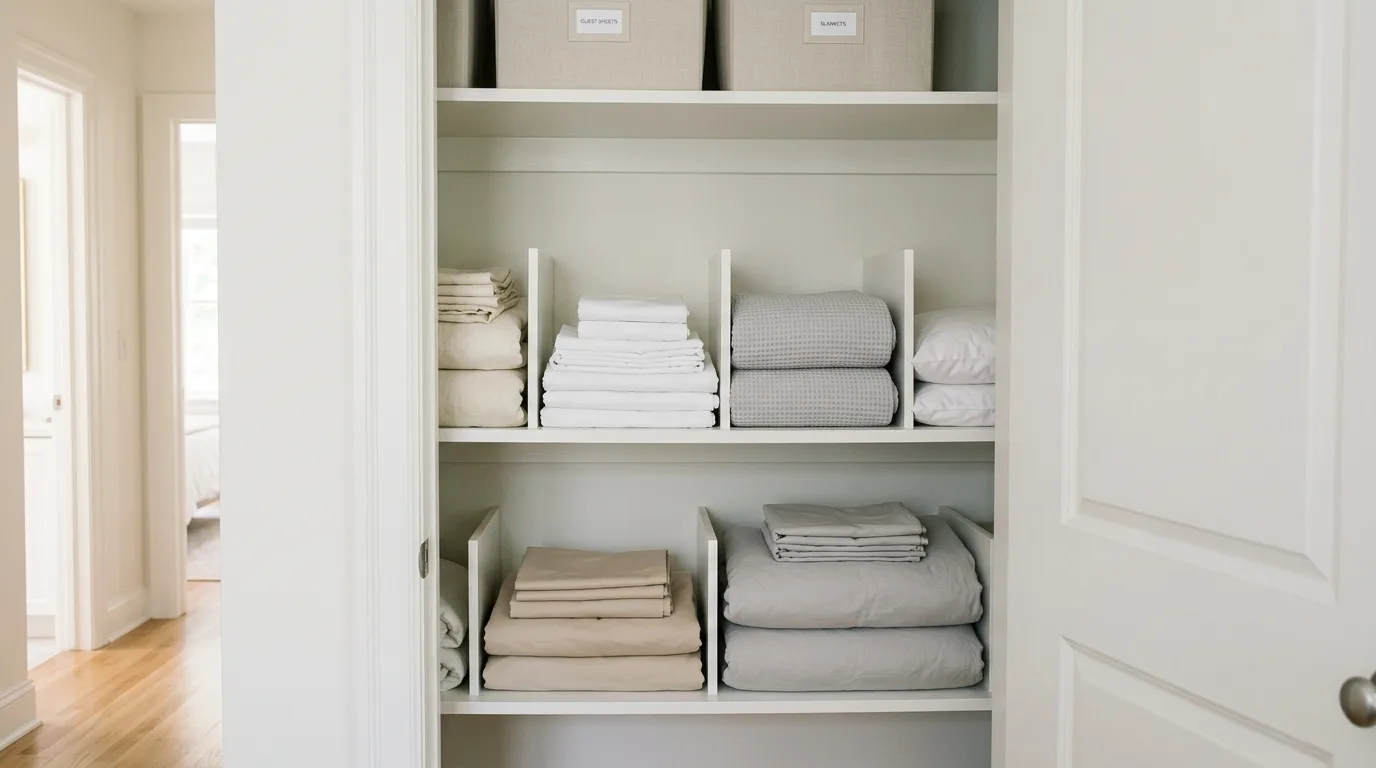
Create easy reach zones for daily basics
Daily basics need the easiest reach zones in the closet or the system will never stay consistent. Towels, washcloths, and common household refills should feel almost effortless to grab, because convenience is what keeps organization from slipping in the middle of busy routines.
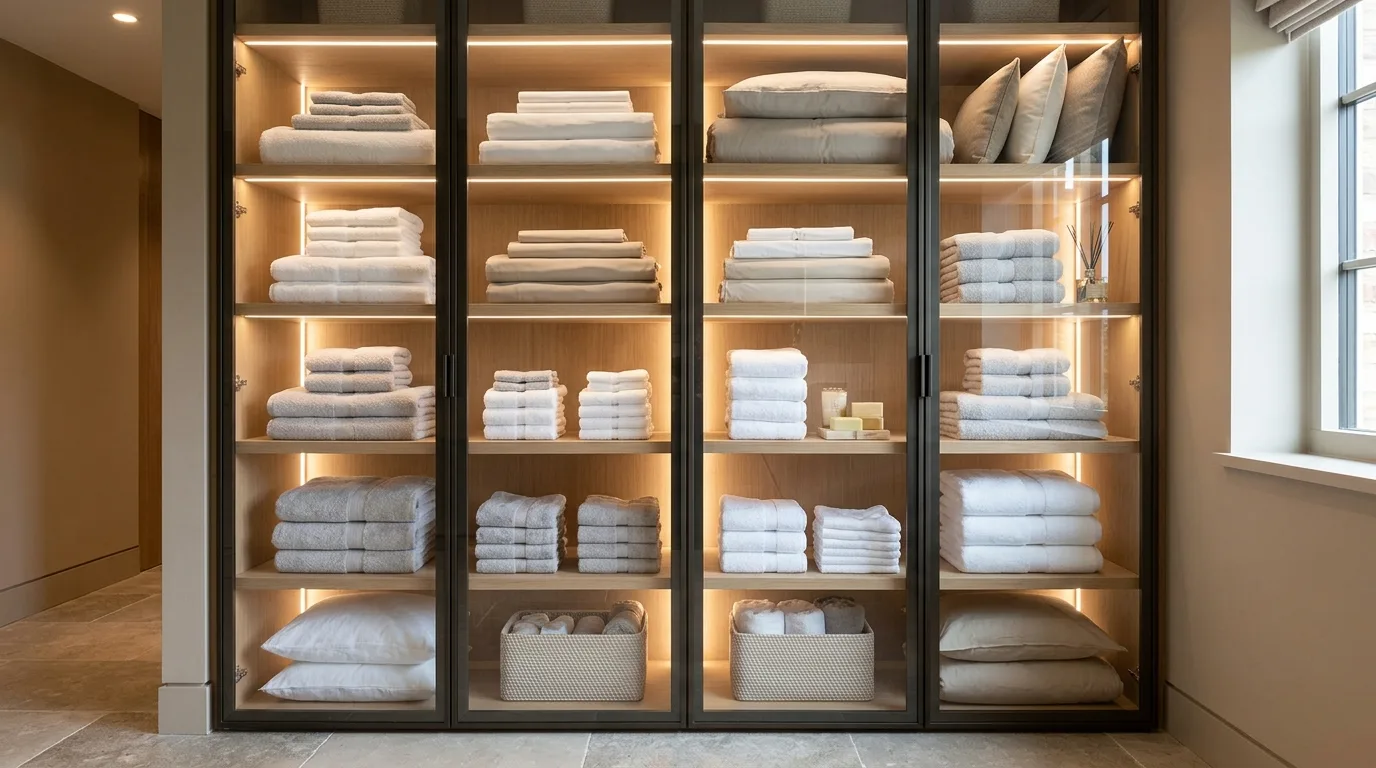
Keep the color palette simple where possible
A simple color palette can make a linen closet feel calmer even when the shelves are full. Coordinated towels, sheets, and baskets are not required, but reducing visual randomness where possible helps the whole space look more intentional and easier to keep in order.
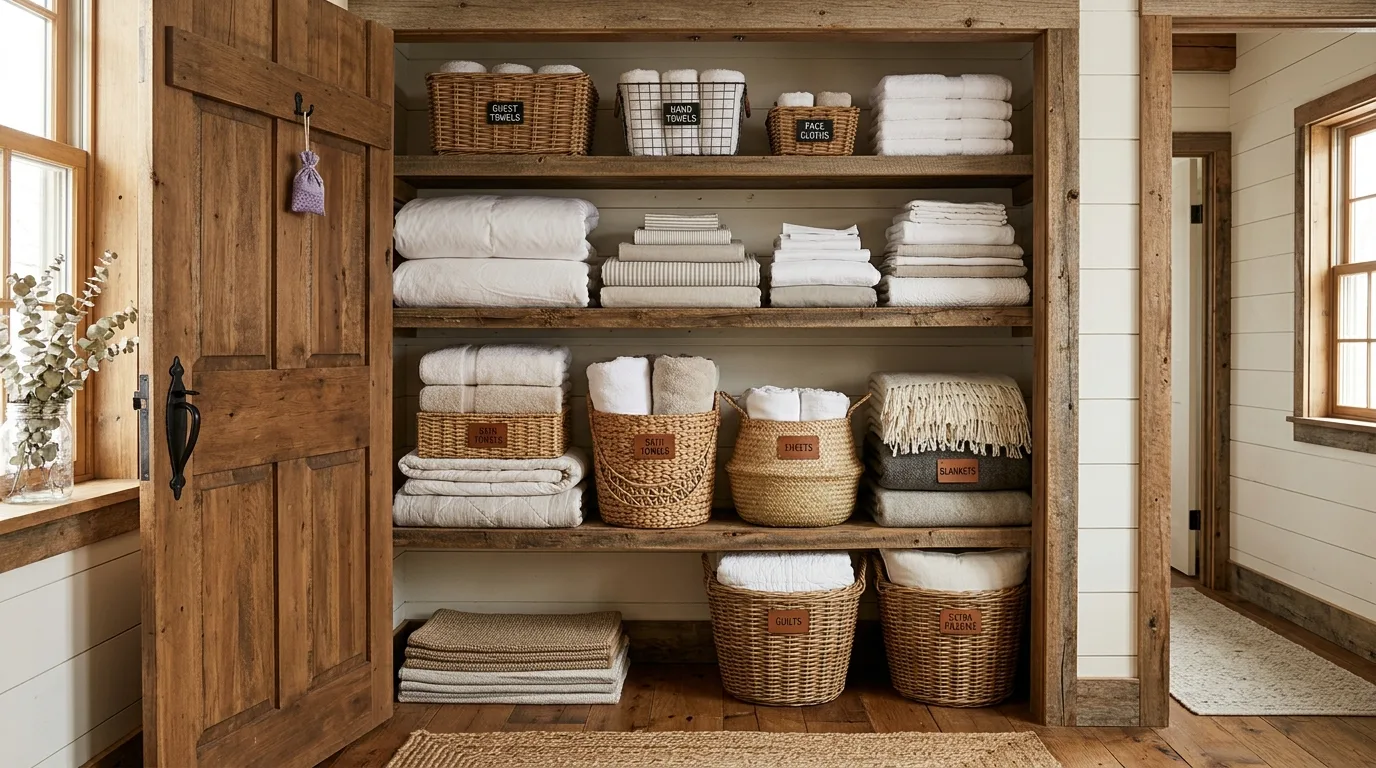
Use shelf dividers to stop collapse and drift
Shelf dividers are most helpful when stacks tend to lean or collapse over time. They give each category a boundary, which keeps folded items neater and stops the closet from slowly blending into one soft, frustrating wall of fabric and overflow.
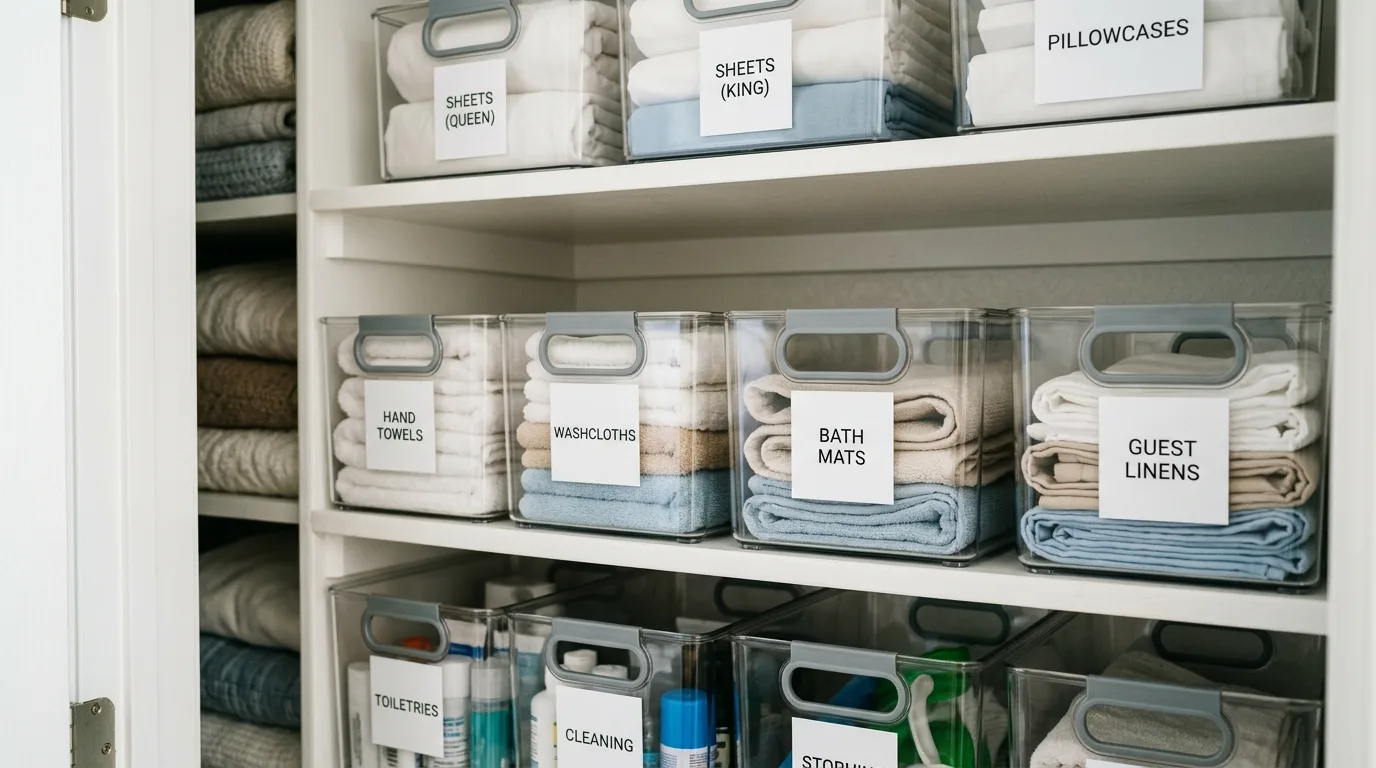
Fold consistently so stacks stay manageable
Consistent folding matters because it gives the closet predictability in both look and function. When the dimensions of each stack are similar, the shelves are easier to fill, easier to restock, and much less likely to become unstable after a few quick grab-and-go moments.
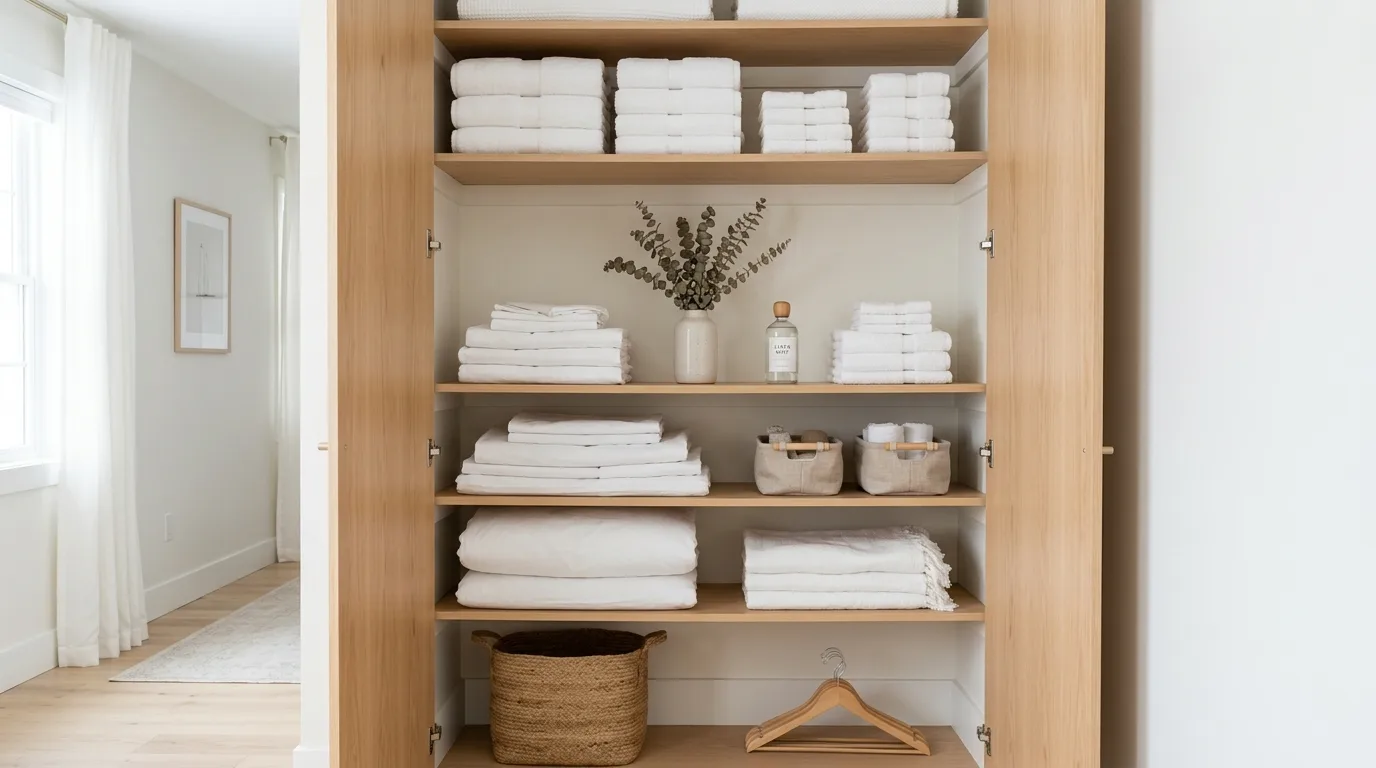
Make deep shelves easier to navigate
Deep shelves often waste space because the back half disappears behind the front layer of items. Creating simple front-and-back categories, using bins, or limiting how many types go on one shelf helps that depth become usable rather than just hidden storage.
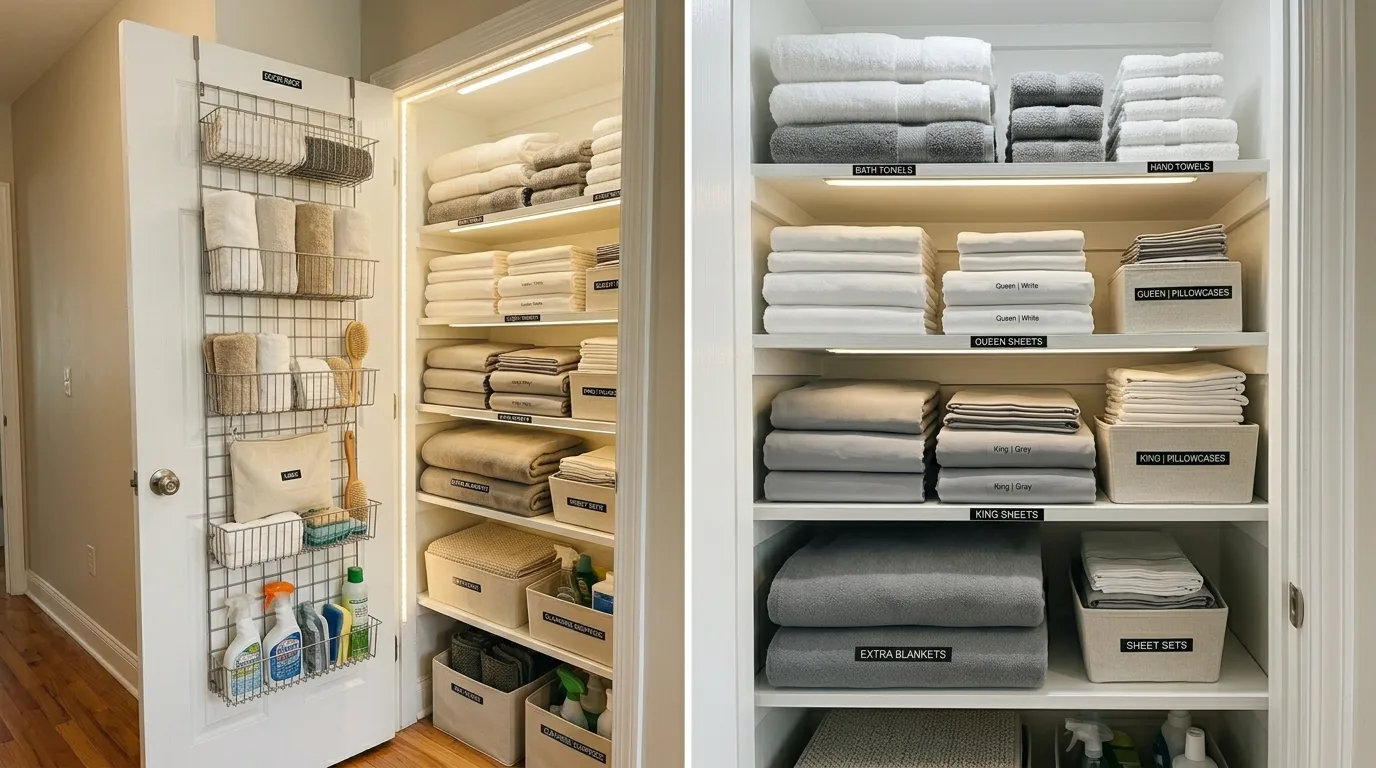
Finish with a closet that stays orderly longer
A tidy linen closet lasts longer when the layout actually reflects how the house functions week to week. Once the categories, access, and folding logic line up with real habits, the closet starts feeling orderly in a durable way instead of neat only for a day or two.